A Moment Frozen in Renaissance Virtue
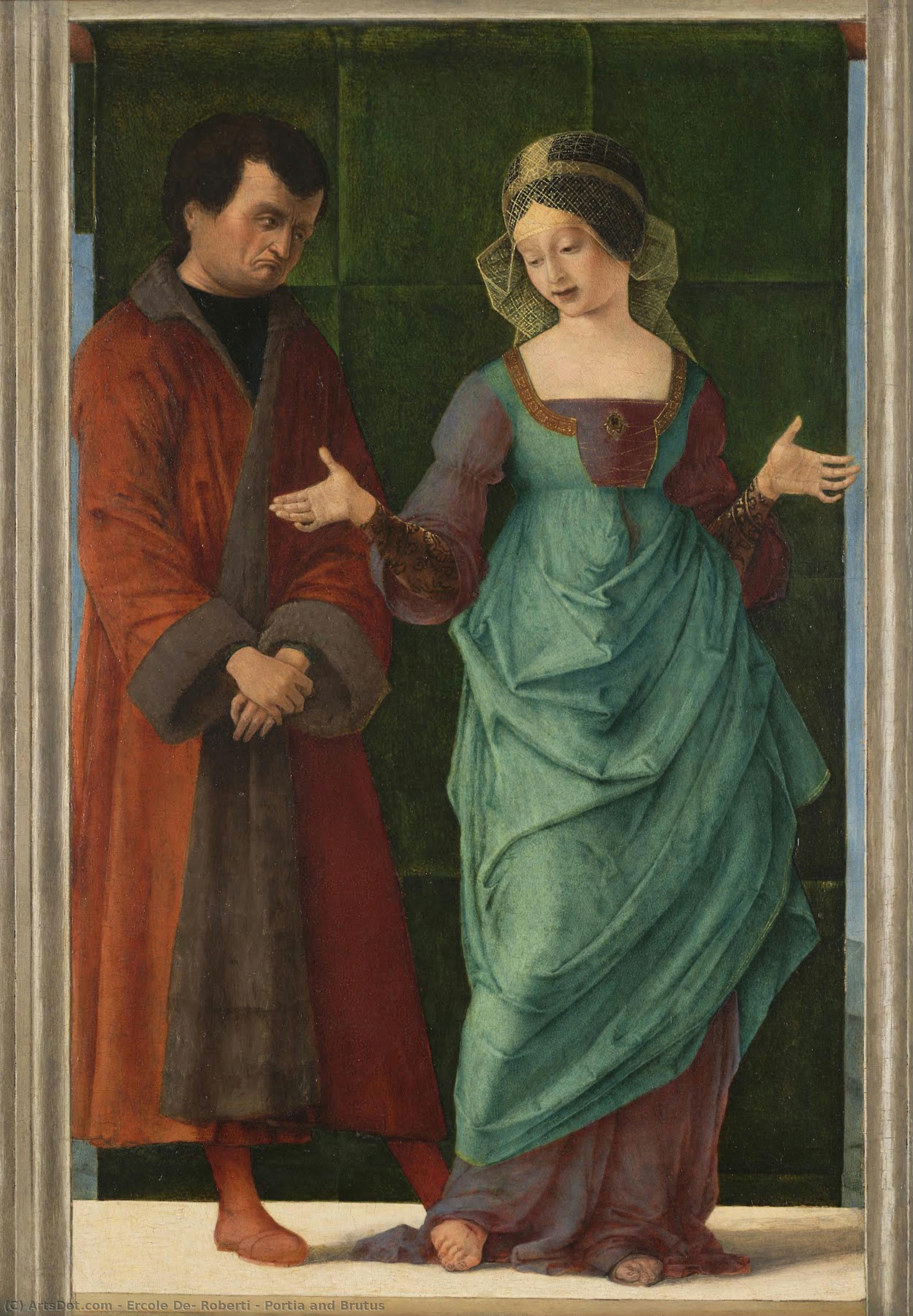
This exquisite panel captures a scene steeped in classical virtue and dramatic tension. Depicting Portia alongside Brutus, the artwork transports us directly into the charged atmosphere of late Republican Rome, filtered through the sophisticated lens of the Italian Renaissance. The composition immediately draws the eye to the two central figures—the man clad in rich red robes and the woman elegantly dressed in green. They stand together, seemingly engaged in a profound moment of shared contemplation or hushed conversation, their gazes directed toward something just beyond the viewer's sight. This sense of shared focus imbues the piece with an immediate intimacy, inviting us to wonder at the nature of the event unfolding around them.
The Hand of Ercole de’ Roberti
The masterful touch belongs to Ercole de’ Roberti, a painter whose career was deeply intertwined with the cultured patronage of Ferrara. De’ Roberti possessed a distinctive style—one that blended meticulous detail with an almost palpable mystical intensity. His ability to render figures with such lifelike presence, even within a complex narrative setting populated by background figures, speaks to his profound technical skill. The painting itself, dated to 1486, showcases the height of his engagement with humanist ideals, allowing him to weave together historical drama with devotional resonance.
Symbolism and Enduring Fortitude
The subject matter is rich with symbolic weight. Portia herself embodies virtues such as fidelity and patriotism; her story, involving a self-inflicted wound before the assassination of Julius Caesar, speaks volumes about unwavering commitment to principle. By presenting this narrative, de’ Roberti elevates the portrait beyond mere likeness into an allegory of moral fortitude. The contrast between the vibrant green of the woman's attire and the deep red of the man’s robe adds a visual counterpoint that mirrors the internal tensions—the conflict between personal feeling and civic duty—that defined the era.
Creating an Atmosphere of Renaissance Grandeur
For the discerning collector or designer, this piece offers more than just decoration; it offers narrative depth. The sense of depth achieved by the artist, with figures receding into the background while maintaining connection to the foreground subjects, gives the reproduction a dynamic quality perfect for grand reception rooms or libraries. Owning this work is to invite a fragment of Renaissance intellectualism and dramatic humanism into your space—a conversation piece that whispers tales of ancient heroism and enduring personal sacrifice.