 Preview
 Send
Send Share
Share
 Details

 Download
 Similars
 X-Ray
X-Ray Diaporama
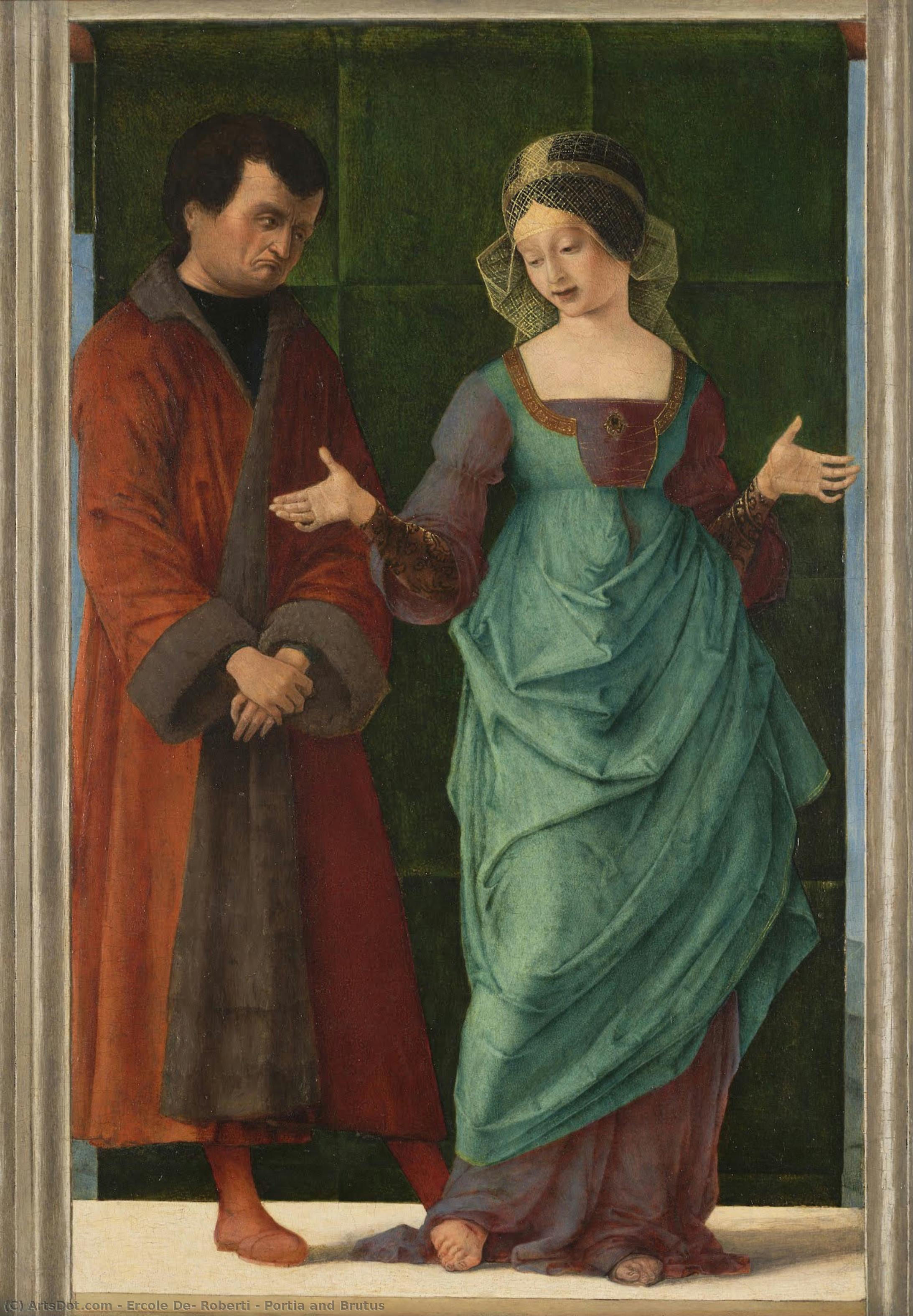
Portia and Brutus
 Oil On Canvas
- WallArt
- Early Renaissance
 1486
1486- Renaissance
 48.0 x 34.0 cm
 Kimbell Art Museum
 Read More
Hand Made Oil Reproduction
Hand-painted oil on canvas in your size and frame, made to order by our artists. ( Buy Print Buy Image)




P118B $10

P118H $10

P118W $10

P438Z $10

P508JH $12

P508YH $12

P805H $10

P805Z $10

P919BZ $10

P919G $10

P919XJ $10

P959ZH $10

P968JZ $12

W106C $8

W218G $10

W218JH $8

W218Y $10

W307PJ $10

W316G $10

W316PJ $8

W316Y $10

W398PJ $8

W4111J $10

W500HY $15

W500JH $15

W692G $12

W849H $8

W940BG $15

W953PJ $8




Pick from our preset sizes that match the artwork's original proportions.

You may enter your own dimensions to fit a specific frame or space. If your selected size does not match the original image's proportions, we will either crop the artwork or extend the painting with additional hand-painted elements. A digital mockup will be sent for your approval before production begins.
Please note that the on-screen preview does not reflect the actual cropping or extension. Only the mockup will accurately show the final composition.
While custom sizes are available, we recommend selecting a dimension from the predefined list to preserve the original proportions.
After order, ArtsDot.com team will email client for instructions and provide a mockup preview
Worldwide Delivery () in 3/4 weeks instead of standard 5 weeks. (16 August). No compromise on quality.

Free Worldwide Express Shipping

High-Quality Linen Canvas

Full Shipping Insurance

Customs Tax Refund Guarantee

True Color Matching Guarantee

60-Day Return Policy (Defects Only)

100% Money-Back Guarantee

Bulk Discount Offer
 Glass option is only available in size under 110 CM

Portia and Brutus
Reproduction Medium
Reproduction Size
-


Total Price
$ 263
Artwork Description
A Moment Frozen in Renaissance Virtue
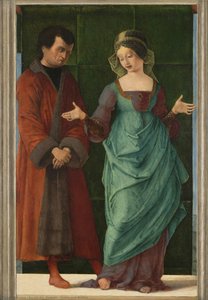
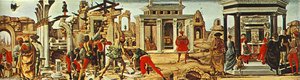
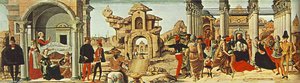
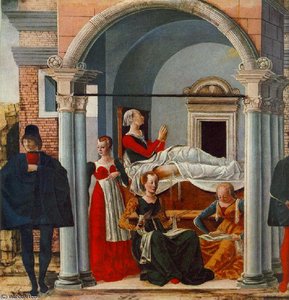
This exquisite panel captures a scene steeped in classical virtue and dramatic tension. Depicting Portia alongside Brutus, the artwork transports us directly into the charged atmosphere of late Republican Rome, filtered through the sophisticated lens of the Italian Renaissance. The composition immediately draws the eye to the two central figures—the man clad in rich red robes and the woman elegantly dressed in green. They stand together, seemingly engaged in a profound moment of shared contemplation or hushed conversation, their gazes directed toward something just beyond the viewer's sight. This sense of shared focus imbues the piece with an immediate intimacy, inviting us to wonder at the nature of the event unfolding around them.
The Hand of Ercole de’ Roberti
The masterful touch belongs to Ercole de’ Roberti, a painter whose career was deeply intertwined with the cultured patronage of Ferrara. De’ Roberti possessed a distinctive style—one that blended meticulous detail with an almost palpable mystical intensity. His ability to render figures with such lifelike presence, even within a complex narrative setting populated by background figures, speaks to his profound technical skill. The painting itself, dated to 1486, showcases the height of his engagement with humanist ideals, allowing him to weave together historical drama with devotional resonance.
Symbolism and Enduring Fortitude
The subject matter is rich with symbolic weight. Portia herself embodies virtues such as fidelity and patriotism; her story, involving a self-inflicted wound before the assassination of Julius Caesar, speaks volumes about unwavering commitment to principle. By presenting this narrative, de’ Roberti elevates the portrait beyond mere likeness into an allegory of moral fortitude. The contrast between the vibrant green of the woman's attire and the deep red of the man’s robe adds a visual counterpoint that mirrors the internal tensions—the conflict between personal feeling and civic duty—that defined the era.
Creating an Atmosphere of Renaissance Grandeur
For the discerning collector or designer, this piece offers more than just decoration; it offers narrative depth. The sense of depth achieved by the artist, with figures receding into the background while maintaining connection to the foreground subjects, gives the reproduction a dynamic quality perfect for grand reception rooms or libraries. Owning this work is to invite a fragment of Renaissance intellectualism and dramatic humanism into your space—a conversation piece that whispers tales of ancient heroism and enduring personal sacrifice.
Related Artworks

Artist Biography
A Ferrarese Master: The Life and Art of Ercole de' Roberti
Ercole de’ Roberti, born in Ferrara around 1451, remains a somewhat enigmatic figure within the pantheon of Renaissance artists. His relatively short life – he died in 1496 – belies a profound impact on Ferrarese painting and a distinctive style that blended meticulous detail with an almost mystical intensity. Unlike many of his contemporaries who benefited from extensive workshop training or patronage networks, de’ Roberti's path to artistic prominence appears largely self-directed, fueled by innate talent and a keen observation of the world around him. Ferrara at the time was under the rule of the Este family, known for their sophisticated court and burgeoning interest in humanist ideals; however, de’ Roberti did not seem to be directly tied to the ducal patronage as some other artists were. Instead, he garnered commissions from prominent local families and religious institutions, establishing a reputation for portraits that captured not merely likeness but also psychological depth.Early Influences and Artistic Development
Pinpointing de’ Roberti's early influences is challenging due to the scarcity of documented training. It is believed he initially worked as a goldsmith, an occupation which undoubtedly honed his precision and eye for detail – qualities that would become hallmarks of his painting style. The influence of Cosmè Tura, another leading Ferrarese artist known for his dramatic compositions and intricate patterns, is evident in de’ Roberti's early works. However, de’ Roberti quickly moved beyond mere imitation, developing a unique approach characterized by a softer modeling of forms, a more naturalistic rendering of drapery, and an increased emphasis on emotional expression. His palette, while still rich and vibrant, tended towards cooler tones than Tura’s often fiery hues. He also demonstrated a fascination with Northern European painting, particularly the work of Jan van Eyck, evident in his meticulous attention to texture and light. This synthesis of diverse influences resulted in a style that was distinctly Ferrarese yet uniquely de’ Roberti's own.Major Achievements: Portraits and Polyptychs
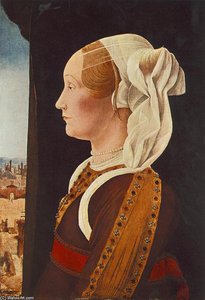
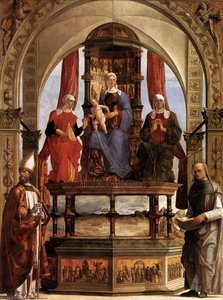
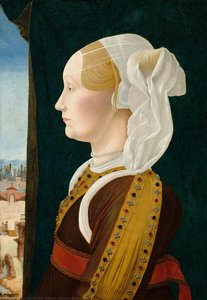
De’ Roberti is best known for his portraits, which stand as remarkable achievements in Renaissance portraiture. His Portrait of Ginevra Bentivoglio, painted around 1475-80, exemplifies his ability to convey both the sitter's aristocratic status and her inner life. The subject’s gaze is direct and penetrating, suggesting intelligence and strength, while the delicate rendering of her clothing and jewelry speaks to her wealth and refinement. He wasn’t limited to portraits; he also excelled in complex altarpieces. His masterpiece, the Griffoni Polyptych (1475-79), commissioned for the church of San Francesco in Ferrara, is a monumental work that showcases his technical skill and compositional ingenuity. The polyptych depicts scenes from the life of Saint Francis alongside portraits of the Griffoni family, seamlessly integrating religious narrative with secular commemoration. The intricate details of the architectural setting, the expressive faces of the figures, and the harmonious color scheme all contribute to the polyptych’s enduring power. Another significant work is his St John the Baptist, a painting that reveals his mastery of anatomy and emotional intensity.Technique and Symbolism
De’ Roberti's technique was characterized by meticulous layering of paint, creating a luminous surface with subtle gradations of tone. He employed tempera on wood panel as his primary medium, allowing for precise detail and vibrant color. His compositions were often complex and carefully planned, reflecting the humanist emphasis on order and harmony. Beyond technical skill, de’ Roberti imbued his works with symbolic meaning. The objects depicted in his portraits – jewelry, clothing, books – were not merely decorative but served as indicators of the sitter's social status, intellectual interests, and moral character. In his religious paintings, he drew upon traditional iconography while also incorporating contemporary symbolism, creating a rich tapestry of meaning that resonated with his audience. He was known for using drapery to create dynamic forms and convey emotion; the folds often seem to move and breathe, adding life and vitality to his figures.Historical Significance and Legacy
Despite his relatively short career, Ercole de’ Roberti left an indelible mark on Ferrarese painting. His influence can be seen in the work of subsequent generations of artists, including Francesco del Cossa and Lorenzo Costa. He helped to establish Ferrara as a major center of Renaissance art, rivaling Florence and Venice in its artistic innovation. While his output was limited, the quality and originality of his surviving works ensure his place among the most important painters of the 15th century.- Rediscovery: De’ Roberti's work remained relatively obscure for centuries, but has been increasingly recognized in recent decades as a significant contribution to Renaissance art.
- Influence on Later Artists: His emphasis on psychological realism and meticulous detail influenced many subsequent painters.
- Preservation of Works: The preservation of his major works, such as the Griffoni Polyptych, allows for continued study and appreciation of his artistic genius.
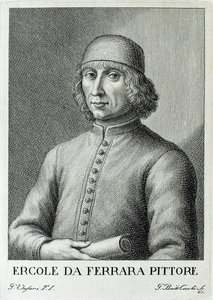
ercole de' roberti
1451 - 1496 , Italy
Related Articles
F.A.Q.: Multi-Panel Group Set Art – A Sophisticated Decor Solution for Elite Collectors
Discover 's exquisite multi-panel art sets – a sophisticated decor solution for elite collectors. Custom designs, premium reproductions & expert guidance. Elevate your space with lasting beauty.
25 Klimt Masterpieces: A Journey Through Iconic Art & Decor
Delve into the world of Gustav Klimt with our top 25 masterpieces! Explore his iconic paintings – 'The Kiss,' 'Portrait of Adele,' and more. Discover museum-quality reproductions & curated decor ideas. Explore the full collection online at ArtsDot.com.
Cosmè Tura: Rediscovering the Ferrarese Master & His Distinctive Style
Discover Cosmè Tura (1430-1495), founder of the Ferrara School. Explore his unique style, key artworks & lasting influence. Expert insights for collectors.
Oil on Panel Masters: 10 Paintings That Revolutionized Art |
Journey through 10 legendary 'Oil on Panel' masterpieces by Van Eyck, Bosch & Bruegel. Explore the stories behind these iconic Renaissance & Baroque paintings and find museum-quality art reproductions to elevate your home decor. Discover all masterpieces on !
Top 10 Masterpieces for Your Living Room: Iconic Paintings & Art Decor Ideas |
Transform your living room with iconic art! Explore our guide to the Top 10 most famous paintings – from Van Gogh's Starry Night to Mona Lisa. Discover artist stories, techniques & find museum-quality reproductions for timeless decor. Explore the full collection on