The Enigmatic World of Cosmè Tura: Beyond Vasari’s Shadow
 Wikipedia: Cosmè Tura
Cosmè Tura (Italian pronunciation: [koˈzmɛ tˈtuːra]; c. 1430 – 1495), also known as Il Cosmè or Cosimo Tura, was an Italian early-Renaissance (or Quattrocento) painter and considered one of the founders of the School of Ferrara. He provided a great c...
Cosmè Tura, a name that resonates with both admiration and bewilderment amongst art historians, occupies a singular position in the Italian Renaissance. Often overshadowed by his Florentine contemporaries, and initially dismissed by Giorgio Vasari as eccentric – even “demonic” – Tura was, in fact, a pivotal figure in establishing the distinctive Ferrarese School of painting. To understand Tura is to delve into a world steeped in courtly intrigue, innovative technique, and a profoundly personal artistic vision that defied easy categorization. Born around 1430 in Ferrara, his origins were humble – his father was a shoemaker – yet he rose to become the principal painter at the Este court, a position he held with remarkable consistency for decades. This wasn’t merely a matter of talent; it spoke to an ability to navigate the complex political and aesthetic demands of one of Italy's most sophisticated ducal families.
Vasari’s assessment, penned decades after Tura’s death in 1495, has long colored perceptions of the artist. He described a restless energy, a constant reworking of compositions, and an almost obsessive attention to detail that bordered on the grotesque. However, modern scholarship reveals a far more nuanced picture – one of an artist deeply engaged with contemporary theological debates, humanist thought, and the specific symbolic language of the Ferrarese court. Tura wasn’t simply eccentric; he was exploring new visual territories, pushing the boundaries of representation, and forging a style uniquely his own.
Courtly Patronage & Artistic Innovation in Renaissance Ferrara
The School of Ferrara was a group of painters which flourished in the Duchy of Ferrara during the Renaissance. Ferrara was ruled by the Este family, well known for its patronage of the arts. Patronage was extended with the ascent of Ercole d'Este I i...
The context of Ferrara is crucial to understanding Tura's art. The Este family were not merely patrons but active shapers of their court’s cultural identity. Borso d'Este, who elevated Ferrara to the status of a duchy in 1452, and his successor Ercole I, fostered an environment where artistic innovation was actively encouraged – though always within carefully defined parameters. The court commissioned lavish decorations for palaces, elaborate frescoes for chapels, and numerous panel paintings that served as potent symbols of their power and piety. Tura’s role extended beyond simply executing commissions; he was involved in the design of entire decorative schemes, overseeing workshops and collaborating with other artists.
This patronage fostered a distinctive Ferrarese aesthetic characterized by its refined elegance, intricate detail, and often melancholic atmosphere. Unlike the classical clarity favored in Florence, or the vibrant colorism of Venice, Ferrarese painting embraced a more linear style, influenced by North Italian traditions and Andrea Mantegna’s sculptural approach. Tura masterfully blended these influences with his own unique sensibility, creating works that are both visually arresting and intellectually stimulating.
Decoding Tura's Style: Expressive Lines, Mystical Landscapes, and Decorative Detail
 Cosmè Tura
Discover Cosmè Tura (1430-1495), founder of the Ferrara School! Explore his expressive lines, decorative detail & innovative oil painting techniques – a key Early Renaissance artist.
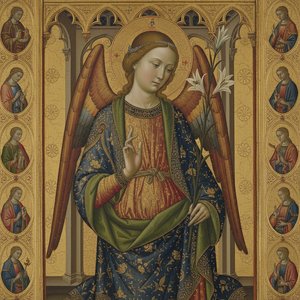
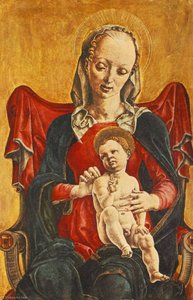
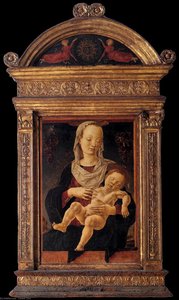
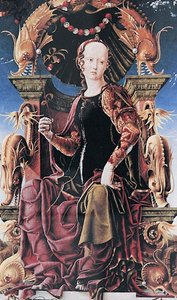
What immediately distinguishes Tura’s work is its extraordinary use of line. His figures are often defined by sinuous contours, their drapery rendered with a rhythmic energy that seems to animate the very fabric. This emphasis on line isn't merely decorative; it conveys a sense of inner tension and spiritual fervor. His landscapes, too, are far from conventional. They are not attempts at realistic representation but rather evocative settings imbued with symbolic meaning. Often featuring jagged rocks, swirling clouds, and distant vistas, they create an atmosphere of otherworldly mystery.
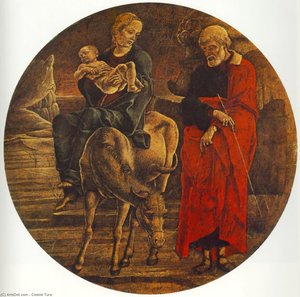
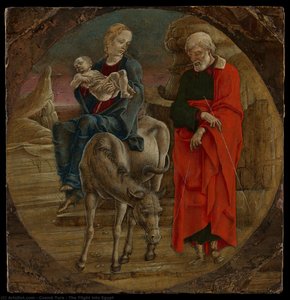
The decorative detail in Tura’s paintings is equally striking. He lavished attention on the rendering of fabrics, jewels, and architectural elements, creating surfaces that shimmer with texture and light. This meticulous approach wasn't simply about showcasing technical skill; it was a way of imbuing his works with a sense of preciousness and spiritual significance. Consider The Flight into Egypt, where the intricate patterns on Mary’s robe and the detailed rendering of the landscape contribute to an overall impression of mystical beauty.
Key Works & Lasting Influence: 'The Flight into Egypt', Portraits, and Altarpieces
 The Flight into Egypt
Cosmè Tura's 'The Flight into Egypt' depicts the Holy Family's escape with expressive lines & mystical landscapes, showcasing Renaissance artistry.
Several key works exemplify Tura's distinctive style. The Flight into Egypt, a masterpiece housed in the Pinacoteca Nazionale in Ferrara, showcases his expressive lines, mystical landscapes, and masterful use of color. The composition is dynamic and unconventional, with the Holy Family depicted against a backdrop of dramatic rock formations and swirling clouds. His portraits, such as the Portrait of a Young Man, reveal a remarkable psychological insight, capturing the sitter’s personality with subtle nuance.
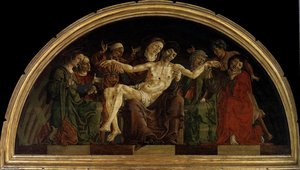
Tura also excelled in creating altarpieces for Ferrarese churches. These works often feature complex compositions and elaborate symbolism, reflecting the theological concerns of the period. His pyramidal compositions, dramatic lighting effects, and detailed realism demonstrate his mastery of oil painting techniques – a medium he helped to popularize in Ferrara. The influence of Tura extended beyond his immediate circle of followers, shaping the development of Ferrarese art for generations.
Tura’s Technique: Materials, Composition, and the Ferrara School Legacy
Tura was an innovator in his use of materials and techniques. He experimented with different oil paint formulations, achieving a remarkable range of textures and effects. His compositions are often characterized by their complexity and dynamism, reflecting a deliberate rejection of classical ideals of balance and harmony. He frequently employed underdrawing to meticulously plan his compositions, resulting in works that are both carefully constructed and visually arresting.
The Ferrara School, founded by Tura, continued to flourish after his death, producing a number of talented artists who carried on his legacy. While later painters often adopted a more refined style, they retained Tura’s emphasis on linear expression, decorative detail, and psychological insight. His influence can be seen in the works of Francesco del Cossa, Ercole de' Roberti, and other prominent Ferrarese masters.
Collecting Cosmè Tura Today: A Guide for Discerning Connoisseurs
Acquiring a work by Cosmè Tura is an investment not only in artistic beauty but also in a significant piece of Renaissance history. Given the relative scarcity of his paintings, works by Tura are highly sought after by collectors and museums alike. Authenticity is paramount; careful provenance research is essential. The market for Ferrarese painting has seen increasing appreciation in recent years, reflecting a growing recognition of Tura’s importance.
When considering a purchase, pay close attention to the condition of the panel, the quality of the paint surface, and the presence of any restorations. Consult with reputable art experts and auction houses before making a decision. At ArtsDot.com, we offer meticulously crafted reproductions of Tura’s masterpieces, allowing you to experience the beauty and complexity of his work firsthand. Whether you are a seasoned collector or simply an admirer of Renaissance art, Cosmè Tura offers a world of artistic discovery waiting to be explored.