 Preview
 Send
Send Share
Share
 Details

 Download
 Similars
 X-Ray
X-Ray Diaporama
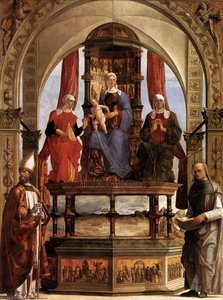
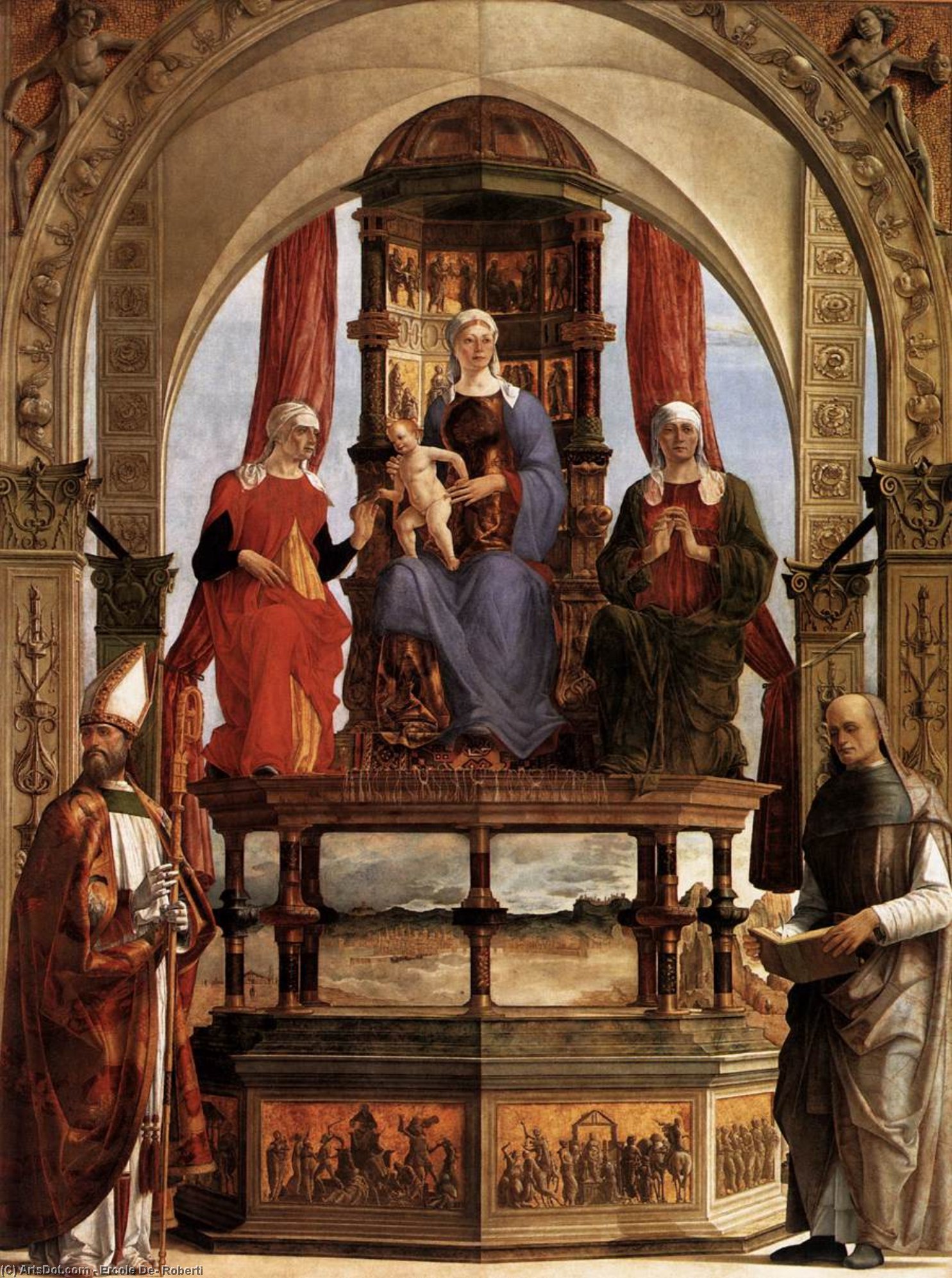
Madonna with Child and Saints
 Oil On Canvas
- WallArt
- Early Renaissance
 1480
1480- Renaissance
 323.0 x 240.0 cm
 Pinacoteca di Brera
 Read More
Hand Made Oil Reproduction
Hand-painted oil on canvas in your size and frame, made to order by our artists. ( Buy Print Buy Image)




P118B $10

P118H $10

P118W $10

P438Z $10

P508JH $12

P508YH $12

P805H $10

P805Z $10

P919BZ $10

P919G $10

P919XJ $10

P959ZH $10

P968JZ $12

W106C $8

W218G $10

W218JH $8

W218Y $10

W307PJ $10

W316G $10

W316PJ $8

W316Y $10

W398PJ $8

W4111J $10

W500HY $15

W500JH $15

W692G $12

W849H $8

W940BG $15

W953PJ $8




Pick from our preset sizes that match the artwork's original proportions.

You may enter your own dimensions to fit a specific frame or space. If your selected size does not match the original image's proportions, we will either crop the artwork or extend the painting with additional hand-painted elements. A digital mockup will be sent for your approval before production begins.
Please note that the on-screen preview does not reflect the actual cropping or extension. Only the mockup will accurately show the final composition.
While custom sizes are available, we recommend selecting a dimension from the predefined list to preserve the original proportions.
After order, ArtsDot.com team will email client for instructions and provide a mockup preview
Worldwide Delivery () in 3/4 weeks instead of standard 5 weeks. (17 August). No compromise on quality.

Free Worldwide Express Shipping

High-Quality Linen Canvas

Full Shipping Insurance

Customs Tax Refund Guarantee

True Color Matching Guarantee

60-Day Return Policy (Defects Only)

100% Money-Back Guarantee

Bulk Discount Offer
 Glass option is only available in size under 110 CM

Madonna with Child and Saints
Reproduction Medium
Reproduction Size
-


Total Price
$ 263
Artwork Description
The Divine Embrace: An Encounter with Ercole de' Roberti’s Madonna
To stand before this magnificent depiction of the Madonna with Child and Saints is to step directly into the luminous, deeply spiritual atmosphere of the early Italian Renaissance. Painted around 1480 by Ercole de' Roberti, this work transcends mere portraiture; it is a profound meditation on divinity, humanity, and eternal grace. The composition immediately draws the eye to the central grouping—the Virgin Mary cradling the Christ Child—a tableau vivant of sacred intimacy. Yet, the scene is richly populated, featuring flanking angels and several attendant figures whose presence anchors the divine narrative within a tangible, earthly setting suggested by the nearby chair, bench, and table.
A Masterpiece of Ferrarese Mysticism
Ercole de' Roberti, a master hailing from Ferrara, imbued his work with a unique intensity that sets it apart from some of his more celebrated contemporaries. His style possesses a meticulous detail, almost jewel-like in its rendering, yet this precision never sacrifices emotional depth. One can sense the Ferrarese touch—a blend of sophisticated courtly elegance mixed with an undercurrent of mystical fervor. The handling of light within the painting is masterful; it seems to emanate not just from an external source, but from the very holiness of the figures themselves, illuminating the book resting upon the table, perhaps symbolizing revealed scripture or divine knowledge.
Symbolism Woven into Sacred Form
Every element in this grand composition whispers a story. The Virgin Mary’s gentle bearing contrasts beautifully with the solemnity of the surrounding saints and angels. These figures are not merely decorative additions; they act as spiritual witnesses, guiding the viewer's contemplation toward the central mystery. Consider the inclusion of the book: it speaks to the enduring power of doctrine and wisdom passed down through generations. The arrangement itself—the careful placement of every person against the backdrop of domestic yet sacred furnishings—suggests that the divine narrative is unfolding within the very fabric of human experience, making this piece deeply resonant for any space meant for contemplation or gathering.
Bringing Renaissance Grandeur Home
For those who seek to infuse a room with the timeless gravitas and breathtaking artistry of the Quattrocento, a reproduction of this Madonna offers an unparalleled opportunity. The scale of the original (323 x 240 cm) speaks to its monumental presence, and even in a scaled reproduction, the richness of de' Roberti’s technique—the subtle modeling of flesh, the vibrant drapery folds, the solemn gazes—remains palpable. Owning this piece is not simply acquiring art; it is curating an atmosphere steeped in history, devotion, and unparalleled artistic genius.
Related Artworks
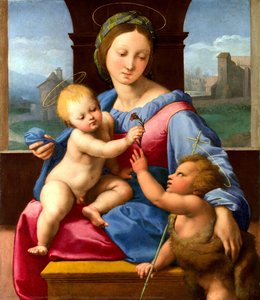
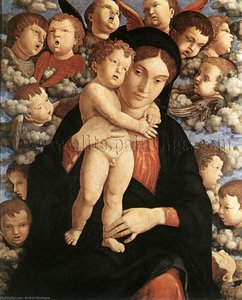
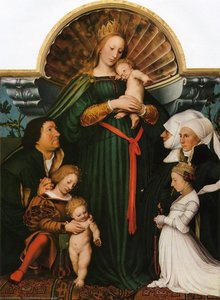
Artist Biography
A Ferrarese Master: The Life and Art of Ercole de' Roberti
Ercole de’ Roberti, born in Ferrara around 1451, remains a somewhat enigmatic figure within the pantheon of Renaissance artists. His relatively short life – he died in 1496 – belies a profound impact on Ferrarese painting and a distinctive style that blended meticulous detail with an almost mystical intensity. Unlike many of his contemporaries who benefited from extensive workshop training or patronage networks, de’ Roberti's path to artistic prominence appears largely self-directed, fueled by innate talent and a keen observation of the world around him. Ferrara at the time was under the rule of the Este family, known for their sophisticated court and burgeoning interest in humanist ideals; however, de’ Roberti did not seem to be directly tied to the ducal patronage as some other artists were. Instead, he garnered commissions from prominent local families and religious institutions, establishing a reputation for portraits that captured not merely likeness but also psychological depth.Early Influences and Artistic Development
Pinpointing de’ Roberti's early influences is challenging due to the scarcity of documented training. It is believed he initially worked as a goldsmith, an occupation which undoubtedly honed his precision and eye for detail – qualities that would become hallmarks of his painting style. The influence of Cosmè Tura, another leading Ferrarese artist known for his dramatic compositions and intricate patterns, is evident in de’ Roberti's early works. However, de’ Roberti quickly moved beyond mere imitation, developing a unique approach characterized by a softer modeling of forms, a more naturalistic rendering of drapery, and an increased emphasis on emotional expression. His palette, while still rich and vibrant, tended towards cooler tones than Tura’s often fiery hues. He also demonstrated a fascination with Northern European painting, particularly the work of Jan van Eyck, evident in his meticulous attention to texture and light. This synthesis of diverse influences resulted in a style that was distinctly Ferrarese yet uniquely de’ Roberti's own.Major Achievements: Portraits and Polyptychs
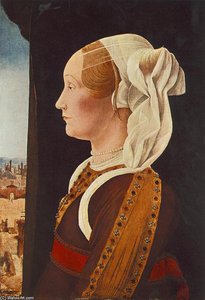
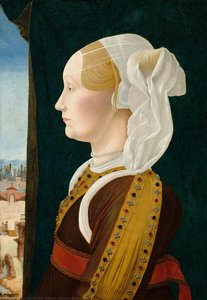
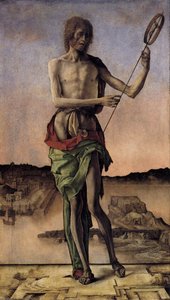
De’ Roberti is best known for his portraits, which stand as remarkable achievements in Renaissance portraiture. His Portrait of Ginevra Bentivoglio, painted around 1475-80, exemplifies his ability to convey both the sitter's aristocratic status and her inner life. The subject’s gaze is direct and penetrating, suggesting intelligence and strength, while the delicate rendering of her clothing and jewelry speaks to her wealth and refinement. He wasn’t limited to portraits; he also excelled in complex altarpieces. His masterpiece, the Griffoni Polyptych (1475-79), commissioned for the church of San Francesco in Ferrara, is a monumental work that showcases his technical skill and compositional ingenuity. The polyptych depicts scenes from the life of Saint Francis alongside portraits of the Griffoni family, seamlessly integrating religious narrative with secular commemoration. The intricate details of the architectural setting, the expressive faces of the figures, and the harmonious color scheme all contribute to the polyptych’s enduring power. Another significant work is his St John the Baptist, a painting that reveals his mastery of anatomy and emotional intensity.Technique and Symbolism
De’ Roberti's technique was characterized by meticulous layering of paint, creating a luminous surface with subtle gradations of tone. He employed tempera on wood panel as his primary medium, allowing for precise detail and vibrant color. His compositions were often complex and carefully planned, reflecting the humanist emphasis on order and harmony. Beyond technical skill, de’ Roberti imbued his works with symbolic meaning. The objects depicted in his portraits – jewelry, clothing, books – were not merely decorative but served as indicators of the sitter's social status, intellectual interests, and moral character. In his religious paintings, he drew upon traditional iconography while also incorporating contemporary symbolism, creating a rich tapestry of meaning that resonated with his audience. He was known for using drapery to create dynamic forms and convey emotion; the folds often seem to move and breathe, adding life and vitality to his figures.Historical Significance and Legacy
Despite his relatively short career, Ercole de’ Roberti left an indelible mark on Ferrarese painting. His influence can be seen in the work of subsequent generations of artists, including Francesco del Cossa and Lorenzo Costa. He helped to establish Ferrara as a major center of Renaissance art, rivaling Florence and Venice in its artistic innovation. While his output was limited, the quality and originality of his surviving works ensure his place among the most important painters of the 15th century.- Rediscovery: De’ Roberti's work remained relatively obscure for centuries, but has been increasingly recognized in recent decades as a significant contribution to Renaissance art.
- Influence on Later Artists: His emphasis on psychological realism and meticulous detail influenced many subsequent painters.
- Preservation of Works: The preservation of his major works, such as the Griffoni Polyptych, allows for continued study and appreciation of his artistic genius.
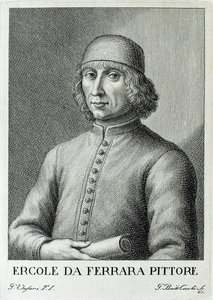
ercole de' roberti
1451 - 1496 , Italy
Related Articles
Giclée Prints: Archival Quality & Aesthetic Nuances for the Discerning Collector
Explore the world of giclée prints with ArtsDot. Learn about archival quality, aesthetic nuances & investment potential. Expert guidance for discerning art collectors seeking museum-quality reproductions and lasting value.
Raphael's Masterpieces: 25 Iconic Paintings & Renaissance Art for Your Home
Explore 25 breathtaking Raphael paintings! Journey through the Italian Renaissance with masterpieces like 'School of Athens' & iconic Madonnas. Find museum-quality art reproductions and elevate your home decor on ArtsDot.com.

The Enduring Legacy of Fine Art Prints: Technique, History & Aesthetic Impact
Explore the rich history & techniques of fine art prints. Discover investment potential, assess authenticity, and learn how to preserve your collection with expert guidance. Trusted insights for discerning collectors.

Echoes of Time: Exploring the Enduring Appeal & Historical Context of Vintage Art Prints
Explore the captivating world of vintage art prints! Discover their history, collecting tips & enduring appeal. Expert insights on chromolithography and building a legacy collection with ArtsDot.
The Enduring Legacy of Printmaking: Techniques, Themes & Artistic Innovation Across Centuries
Explore the rich history of printmaking with ArtsDot. Discover techniques from intaglio to lithography, learn about collecting valuable prints & find museum-quality reproductions. Expert insights for art enthusiasts and collectors.