Ernst Haeckel (1834-1919) was a German zoologist & artist who popularized Darwin's work. Known for stunning 'Art Forms of Nature' illustrations, coined biological terms like ecology & phylogeny. Influenced Art Nouveau & scientific thought.
Discover the Smithsonian Libraries and Archives in Washington, D.C., where illuminated manuscripts and American art papers offer an unmissable journey through history, inviting you to explore a legacy of global knowledge.
A Window into Victorian Scientific Wonder: Haeckel’s “Tafel 77 – Basia. Siphonophorae”
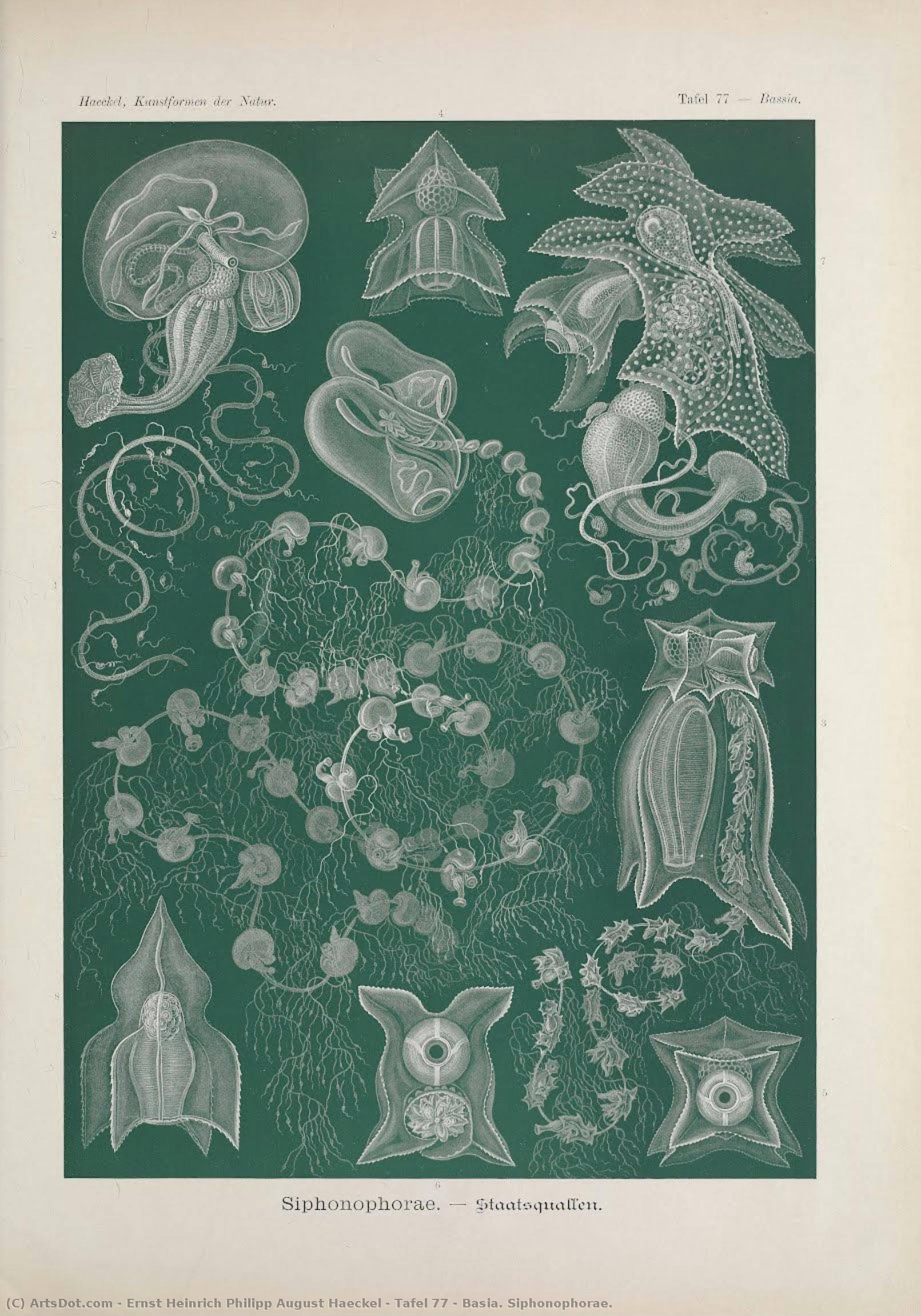
Ernst Haeckel's "Tafel 77 - Basia. Siphonophorae," a deceptively simple black and white photograph capturing a meticulously rendered watercolor painting, transcends mere botanical illustration; it embodies the spirit of Victorian scientific inquiry and artistic innovation. Created in 1904, this artwork represents more than just a depiction of jellyfish – siphonophores – it’s a testament to Haeckel's groundbreaking approach to visualizing complex biological phenomena. The photograph itself serves as an elegant gateway into understanding Haeckel’s vision, showcasing the intricate detail achieved through his artistic process.
The Science Behind the Beauty: Haeckel’s Biological Philosophy
Ernst Heinrich Philipp August Haeckel (1834-1919), a German biologist and philosopher, revolutionized our comprehension of life's interconnectedness. Driven by an unwavering belief in Darwinian evolution – though he vehemently opposed Mendel’s genetic theory – Haeckel championed the concept of “Ontogeny recapitulates phylogeny,” arguing that embryonic development mirrors evolutionary history. This philosophical stance profoundly influenced his artistic endeavors, prompting him to seek visual representations that communicated scientific truths with unparalleled clarity and beauty. He wasn't merely documenting organisms; he was striving to convey their fundamental relationships within the grand scheme of nature.
Technique and Style: Victorian Watercolor Precision
The watercolor painting itself exemplifies the meticulous craftsmanship characteristic of Victorian botanical illustration. Haeckel’s studio assistants painstakingly recreated the jellyfish specimens using delicate washes of pigment, layering translucent hues to capture subtle variations in texture and luminescence. The resulting image possesses a remarkable level of realism, achieved through careful observation and painstaking execution. Notice the masterful use of shading—a hallmark of Art Nouveau aesthetics—to sculpt the forms of the jellyfish and create depth within the composition. This technique reflects Haeckel’s commitment to scientific accuracy combined with an appreciation for artistic elegance.
Symbolism: Jellyfish as Representations of Complexity and Transformation
Beyond its technical brilliance, “Tafel 77” carries symbolic weight. Jellyfish, often perceived as ethereal and vulnerable creatures drifting aimlessly in the ocean currents, represent both fragility and adaptability—themes central to Haeckel’s philosophical framework. Their pulsating bells and trailing tentacles symbolize dynamism and transformation, mirroring the ceaseless processes of evolution. The artist deliberately chose this subject matter to illustrate the interconnectedness of life forms and the constant flux inherent in biological systems.
Emotional Resonance: A Legacy of Wonder
Viewing this reproduction evokes a feeling of quiet contemplation—a connection to the natural world and an appreciation for scientific discovery. Haeckel’s artwork speaks to our innate fascination with the mysteries of life, reminding us that even seemingly insignificant organisms hold profound secrets about the history of our planet. Like many Victorian artworks, “Tafel 77 – Basia. Siphonophorae” invites viewers to contemplate the beauty and complexity of existence—a legacy that continues to inspire artists and collectors alike.