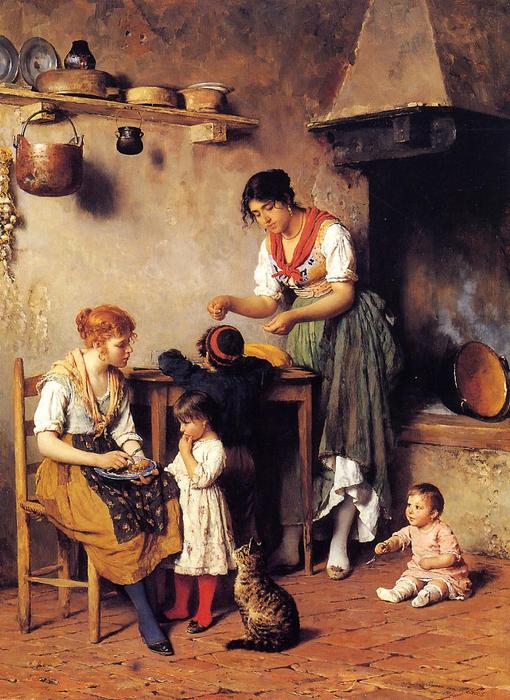
Mother's Little Helper by Eugen von Blaas: A Glimpse of Domestic Bliss
- Artist: Eugen von Blaas (1843-1932)
- Date: 1884
- Medium: Oil on panel
- Size: Unknown
Subject and Composition
“Mother’s Little Helper,” painted in 1884 by Eugen von Blaas, offers a tender portrayal of domestic life. The artwork depicts a mother lovingly attending to her two young children within the cozy confines of a rustic kitchen. The composition is carefully structured around this central familial interaction. A triangular arrangement emphasizes the mother at the apex, with her children forming the base, drawing the viewer's eye directly to their connection. Supporting details like pots and pans artfully arranged on shelves add depth and contribute to the overall narrative of everyday life in a humble home.
Style and Technique: Academic Realism
Von Blaas’s style is firmly rooted in late 19th-century academic realism, characterized by its meticulous attention to detail and idealized representation. Drawing inspiration from Dutch Golden Age genre painting, the work focuses on capturing scenes of everyday life with a sense of authenticity and grace. The technique involves careful brushwork and subtle blending, creating a luminous quality through the likely use of glazes. The artist demonstrates mastery of light and shadow, enhancing the realism and depth of the scene. Lines are soft and blended, avoiding sharp outlines to create a gradual transition between forms.
Color Palette and Emotional Impact
The color palette is dominated by earthy tones – browns, greens, and creams – evoking a sense of warmth and tranquility. Touches of red in the mother's scarf and clothing accents provide subtle visual interest. This restrained yet harmonious use of color contributes to the painting’s rustic feel and reinforces the theme of domestic comfort. The diffused, natural lighting entering from an unseen source on the left illuminates the figures and objects within the kitchen, casting soft shadows that add depth and dimension. The overall effect is one of profound tenderness and familial love, evoking feelings of warmth, security, and contentment.
Symbolism and Historical Context
“Mother’s Little Helper” reflects a broader cultural fascination with idealized depictions of family life during the late 19th century. It portrays an image of domestic harmony and maternal devotion that resonated with Victorian values. The presence of a cat adds a touch of domesticity and charm, further enhancing the scene's appeal. The painting’s focus on everyday moments elevates the ordinary to the realm of art, celebrating the beauty and importance of family life within a humble setting.