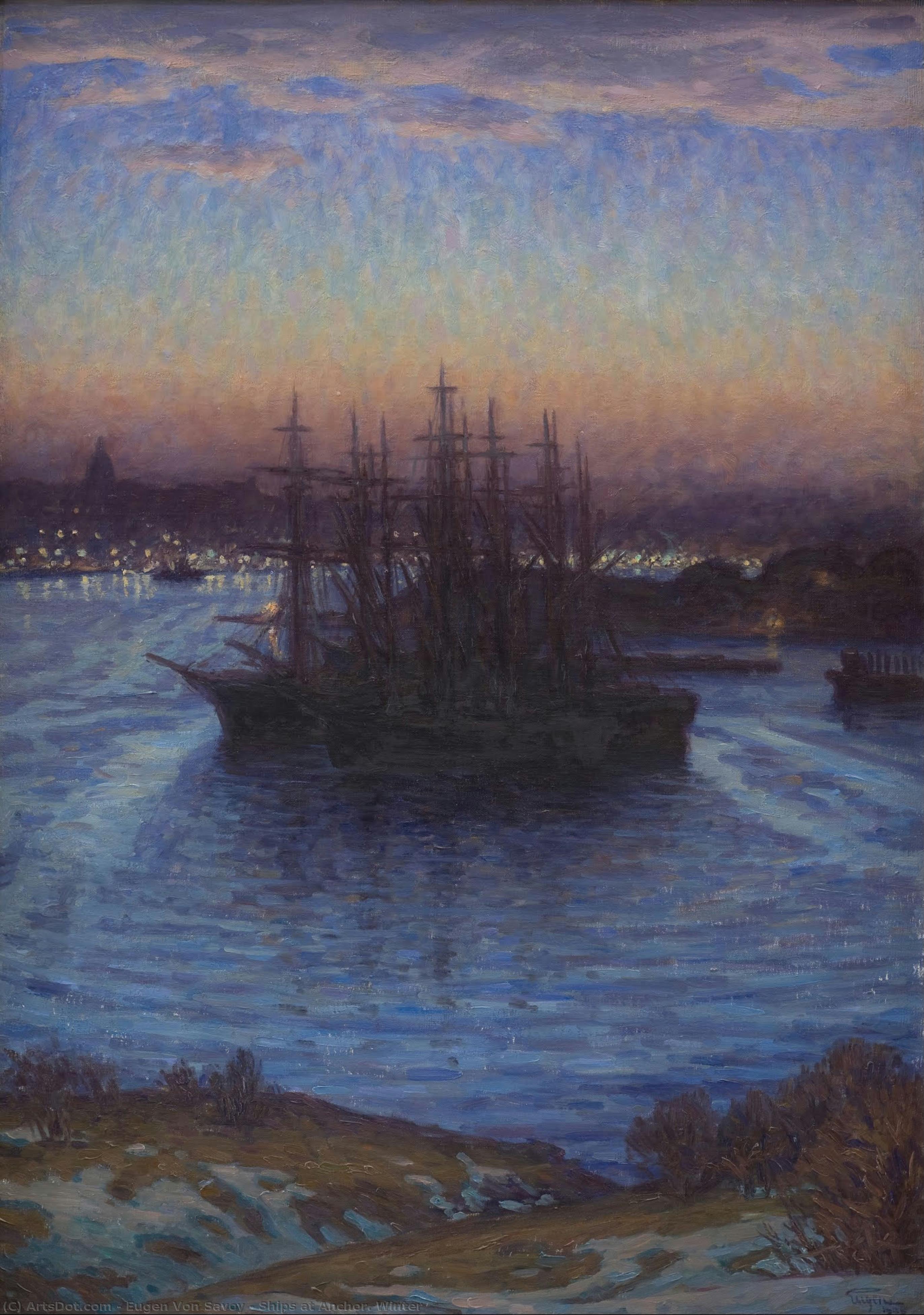
Prince Eugen’s evocative winter seascape captures Stockholm’s skerries with vibrant hues and ethereal atmosphere—a hallmark of Nordic art around 1900. Explore this stunning reproduction by Johannes Vermeer, a master of light and color, and bring the tranquility of Waldemarsudde's twilight view home.
Explore the life & art of Prince Eugene of Savoy – a renowned military leader & Baroque patron. Discover his legacy at Vienna’s Stadtpalais Prinz Eugen museum.
Experience the National Gallery of Denmark in Copenhagen through its breathtaking European masterpieces and Golden Age Nordic art, offering an immersive journey through history that invites you to explore its treasures.
A Winter’s Embrace: Prince Eugen's Ships at Anchor
The painting “Ships at Anchor. Winter” by Prince Eugen von Savoy is more than just a picturesque seascape; it embodies the spirit of Nordic art around 1900 and speaks to a profound contemplation of beauty and stillness. Painted in 1908, this artwork captures a twilight scene from Stockholm’s skerries—the narrow inlets and bays surrounding the city—offering viewers an intimate glimpse into Prince Eugen's personal surroundings and artistic vision.
Style and Technique: Atmospheric Impressionism
Eugen von Savoy’s approach to painting distinguishes itself as atmospheric impressionism. Rather than striving for photographic realism, he prioritized conveying mood and sensation above all else. Thick brushstrokes layered upon brushstrokes create a palpable sense of texture—the rough surface of the rocks against which the ships are anchored, the shimmering expanse of the icy water—drawing inspiration from Impressionist masters like Claude Monet and Pierre-Auguste Renoir. Savoy’s masterful use of color is particularly noteworthy; he employs muted hues – predominantly blues, greys, and ochres – to evoke the melancholic beauty of winter twilight. These colors aren't merely descriptive; they contribute significantly to the painting’s emotional resonance.
Historical Context: Scandinavia’s Artistic Renaissance
The painting emerged during a period of significant artistic flourishing in Scandinavia. Prince Eugen was not simply an artist but also a prominent figure within Swedish cultural life, actively engaged in patronage and collecting art alongside influential Danish counterparts like L.A. Ring and Hammershøi. This milieu fostered experimentation and innovation, propelling artists to explore new expressive possibilities—particularly the depiction of landscapes imbued with psychological depth. The painting reflects this broader artistic movement’s preoccupation with capturing fleeting moments of experience and conveying intangible emotions.
Symbolism: Tranquility and Reflection
Beyond its aesthetic qualities, “Ships at Anchor” carries symbolic weight. The anchored ships represent stability amidst change, mirroring the artist's own life journey—a royal lineage marked by both privilege and responsibility. More subtly, the twilight sky symbolizes contemplation and introspection, inviting viewers to pause and consider the beauty of the natural world. The stillness of the harbor scene speaks to a desire for serenity and escape from the pressures of daily existence – themes that resonate deeply with the humanist sensibilities of the era.
Emotional Impact: Capturing Ephemeral Beauty
Ultimately, “Ships at Anchor” succeeds in transporting the viewer into a realm of quiet contemplation. Savoy’s skillful manipulation of light and color creates an ethereal atmosphere, fostering a feeling of wonder and melancholy. It's a painting that lingers in the mind long after viewing, prompting reflection on themes of beauty, solitude, and the passage of time—a testament to Prince Eugen’s enduring legacy as one of Scandinavia’s most celebrated artists.