Eugenia Belín Sarmiento
San Juan (Puerto Rico)
Argentina
1860
1906
1952
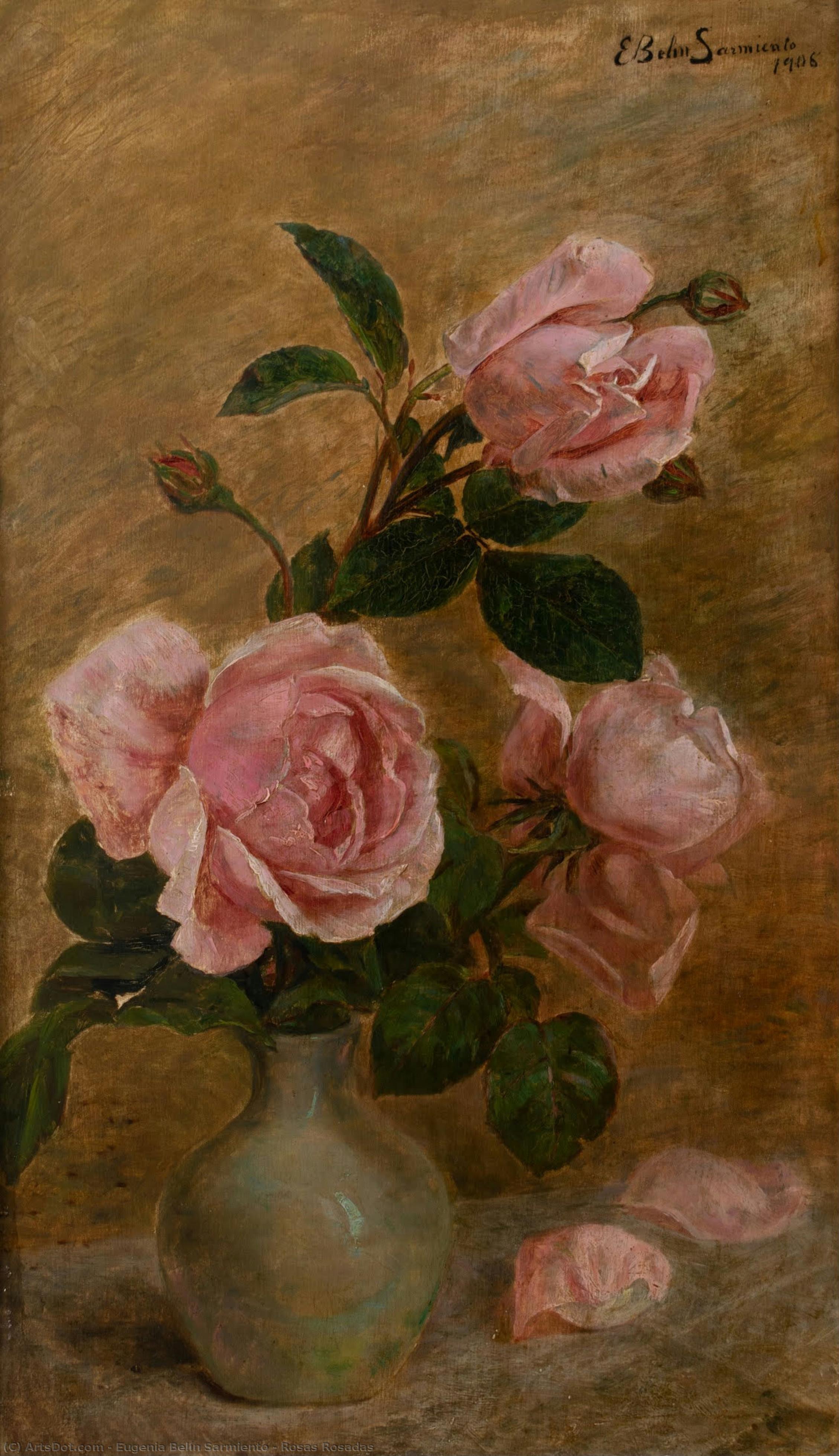
Two-dimensional framed artwork. Still life. Representation of a bouquet of roses in a greenish-toned vase, resting on a table. The composition has a background in greenish ocher tones. The bouquet is made up of three roses, one of them with two buds, the taller stem sticking out above the other two. Two fallen petals are
Eugenia Belín Sarmiento (1860-1952): Argentine painter renowned for Impressionistic portraits, especially of her grandfather, President Domingo Faustino Sarmiento. Explore her captivating still lifes & historical works.
Explore Argentina's soul at Museo Histórico Sarmiento – Buenos Aires! Witness the birth of the nation’s capital & delve into Domingo Faustino Sarmiento’s life through exquisite art reproductions.
A Delicate Bloom Amidst Legacy: Exploring Eugenia Belín Sarmiento’s “Rosas Rosadas”
“Rosas Rosadas,” painted in 1906 by Argentine artist Eugenia Belín Sarmiento, transcends mere botanical representation; it embodies a profound connection to familial history and the burgeoning Impressionistic movement. This captivating still life captures a bouquet of roses nestled within a subtly shaded vase upon a wooden table—a deceptively simple composition that speaks volumes about artistic vision and personal sentiment.
Style and Technique: Embracing Impressionistic Light
Sarmiento’s approach aligns seamlessly with the tenets of Impressionism, prioritizing fleeting moments of light and color over meticulous detail. Unlike academic painting traditions of her time, which sought to faithfully reproduce reality, Belín Sarmiento skillfully employs loose brushstrokes—characteristic of Impressionists like Monet and Renoir—to convey an atmospheric impression rather than a photographic likeness. The muted greens of the vase’s base and the table surface create a tranquil backdrop that allows the vibrant hues of the roses to dominate the visual field. Careful layering of glazes contributes to the painting's luminous quality, capturing the way sunlight filters through the petals and casts delicate shadows across their surfaces.
Historical Context: Argentina Under Sarmiento’s Influence
The artwork’s creation coincided with Domingo Faustino Sarmiento’s presidency—a period marked by significant reforms aimed at bolstering Argentine education and fostering intellectual discourse. Belín Sarmiento's grandfather, a staunch advocate for liberal ideals and cultural enrichment, undoubtedly instilled in her a deep appreciation for beauty and artistic expression. This familial connection is palpable not only in the artist’s biographical details but also subtly reflected in the painting’s serene mood—a testament to the enduring legacy of Sarmiento’s progressive vision. The Impressionist style itself was gaining traction across Europe during this era, representing a deliberate break from realism and embracing subjective experience as central to artistic endeavor.
Symbolism: Roses – Remembrance and Renewal
Roses have long held symbolic significance throughout Western art history—representing love, beauty, passion, and remembrance. In “Rosas Rosadas,” the three roses—one bearing two buds—likely symbolize resilience and hope amidst life’s challenges. The fallen petals scattered beneath the vase serve as poignant reminders of transience and decay, juxtaposed against the enduring vibrancy of the blossoms themselves. This duality underscores a broader thematic concern with capturing the ephemeral nature of beauty and conveying an emotional resonance that transcends literal depiction.
Emotional Impact: Tranquility and Nostalgia
The painting’s overall effect is one of quiet contemplation—a feeling evoked by its harmonious color palette, soft brushstrokes, and evocative lighting. “Rosas Rosadas” invites viewers to pause and appreciate the subtle nuances of visual perception, fostering a sense of nostalgia for a bygone era while simultaneously celebrating the enduring power of artistic beauty. It’s a piece that speaks to the human desire for solace and contemplation—a timeless meditation on nature's grace and the complexities of memory.