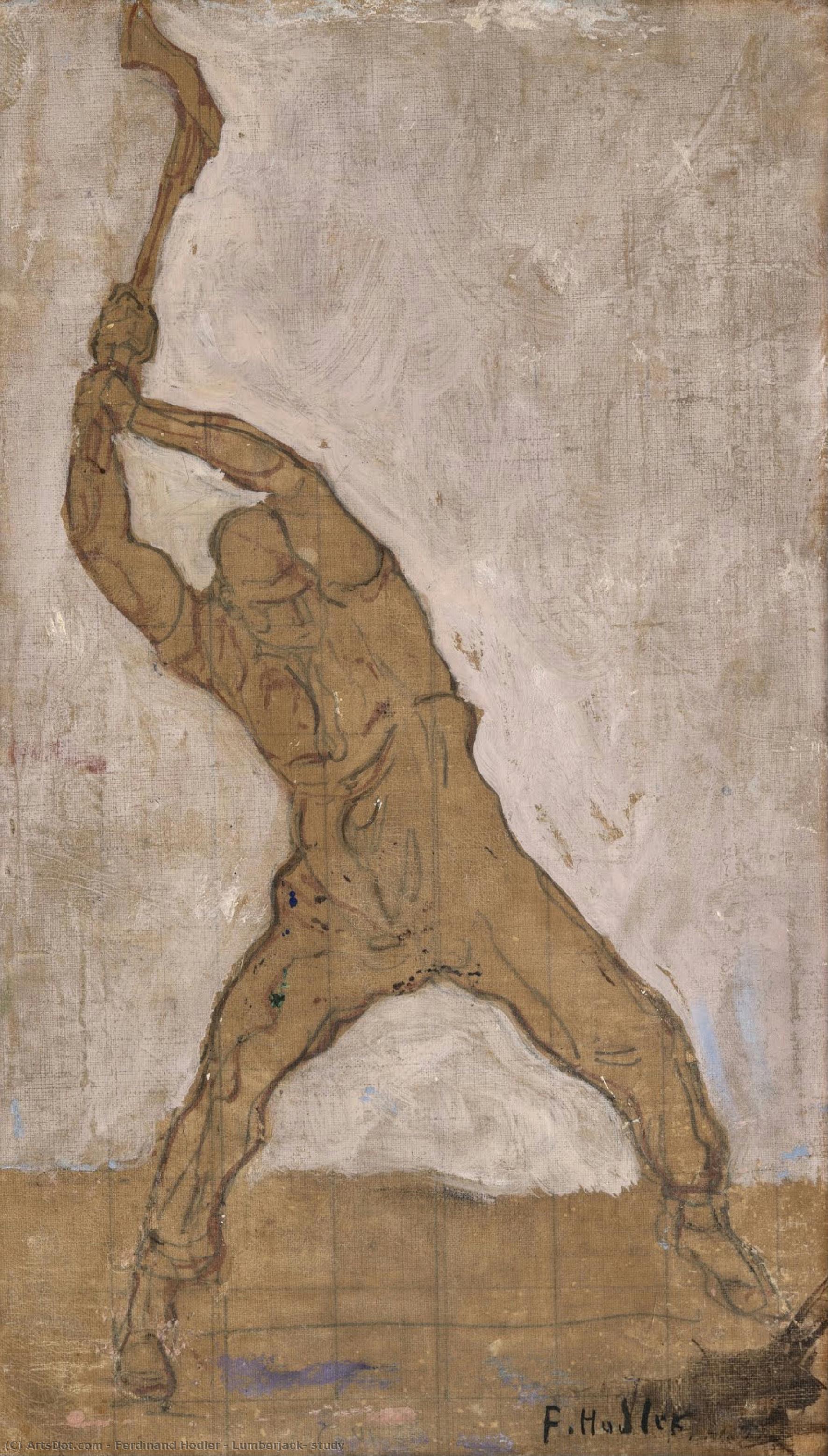
Lumberjack, study

Ferdinand Hodler's 'Lumberjack,' created in 1910, embodies the Symbolist aesthetic with its dynamic composition and masterful use of line. This powerful depiction portrays a lumberjack mid-swing, conveying strength and focus against a tranquil sky.


Ferdinand Hodler (1853 - 1918)

Explore the captivating world of Ferdinand Hodler, Swiss Symbolist painter renowned for his evocative landscapes & pioneering 'parallelism'. Discover hand-painted reproductions of his masterpieces at ArtsDot.

National Gallery of Bosnia and Herzegovina (Sarajevo, Bosnia and Herzegovina)

Explore Bosnia & Herzegovina's rich art scene at the National Gallery in Sarajevo! Discover 6000+ works, including Ferdinand Hodler pieces, Yugoslavian masters, icons, and contemporary art. A cultural gem since 1946.

A Moment Frozen in Motion: Exploring Ferdinand Hodler’s “Lumberjack”

  • Subject Matter & Composition The artwork depicts a solitary lumberjack, powerfully poised with a baseball bat held aloft—a striking juxtaposition of physicality and anticipation. Hodler eschews grand landscapes or complex narratives, focusing instead on capturing the essence of a single decisive action: the imminent swing of the bat. This deliberate simplification serves to amplify the drama inherent in the scene.
  • Style & Technique Hodler’s signature style is undeniably rooted in Symbolism, characterized by muted tonal palettes and an emphasis on expressive brushstrokes that prioritize mood over precise representation. The painting utilizes a masterful black and white technique—a hallmark of Hodler's artistic practice—allowing for nuanced gradations of light and shadow to convey emotion and heighten visual impact. Thick impasto creates textural surfaces that contribute to the overall feeling of dynamism.
  • Historical Context Created in 1910, “Lumberjack” emerged during a period of significant artistic experimentation within Switzerland. Hodler’s work aligns with broader trends toward abstraction and psychological exploration prevalent throughout European Symbolism, reacting against Impressionistic realism. The painting reflects the anxieties surrounding industrialization and societal change—themes frequently addressed by artists grappling with the complexities of modernity.
  • Symbolic Resonance Beyond its depiction of physical action, “Lumberjack” carries symbolic weight. The lumberjack figure embodies resilience and determination, confronting challenges head-on—a motif that resonates deeply within Hodler’s oeuvre. Furthermore, the monochrome coloration contributes to a sense of timelessness and universality, elevating the image beyond mere observation into contemplation on themes of strength and perseverance.
  • Emotional Impact The painting evokes feelings of tension, anticipation, and focused intensity. Hodler skillfully captures the psychological state of the lumberjack—his unwavering gaze and muscular posture conveying a palpable sense of readiness. It’s a portrait not just of a man but of a moment frozen in time, inviting viewers to consider the profound significance of action and willpower.