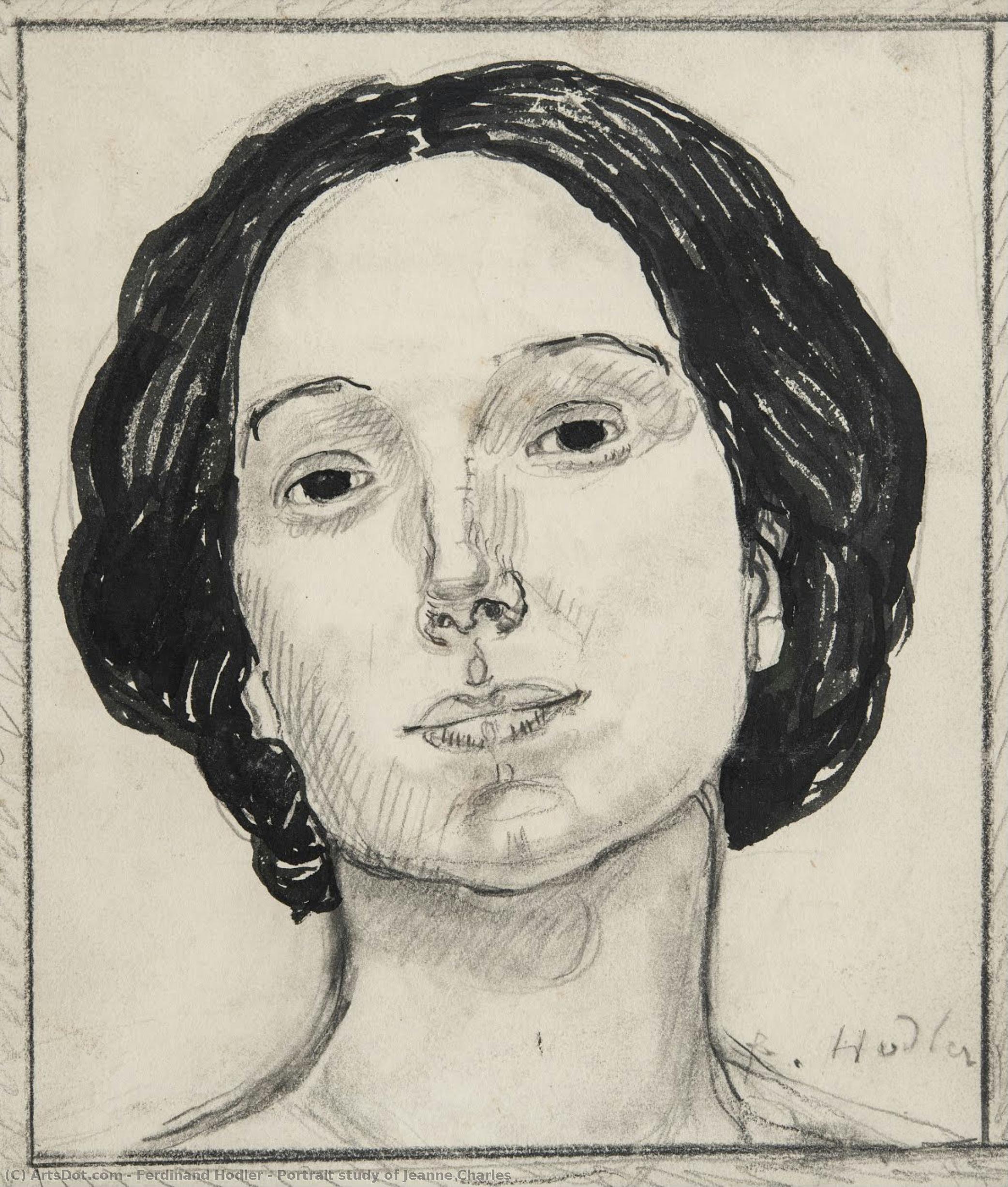
Admire Ferdinand Hodler's 'Portrait Study of Jeanne Charles' (1909), a mesmerizing Symbolist masterpiece. Delicate graphite captures serene emotion & timeless beauty through layered hues. A poignant study in contemplation.
Explore the captivating world of Ferdinand Hodler, Swiss Symbolist painter renowned for his evocative landscapes & pioneering 'parallelism'. Discover hand-painted reproductions of his masterpieces at ArtsDot.
Explore Bosnia & Herzegovina's rich art scene at the National Gallery in Sarajevo! Discover 6000+ works, including Ferdinand Hodler pieces, Yugoslavian masters, icons, and contemporary art. A cultural gem since 1946.
A Study in Quiet Contemplation: Ferdinand Hodler’s Portrait of Jeanne Charles
Ferdinand Hodler stands as a singular figure within the constellation of Swiss Symbolist painters, his oeuvre characterized by an unwavering dedication to capturing not merely likeness but profound emotional resonance. Born in Bern in 1853 amidst personal tragedy – the premature deaths of his father and two brothers profoundly shaping his worldview – Hodler channeled these experiences into an artistic exploration deeply rooted in contemplation and imbued with a distinctive visual language. This portrait study, executed in 1909, exemplifies precisely this approach, offering a glimpse into Hodler’s masterful technique and the enduring power of symbolic representation.
The Artist's Vision: Hodler's Symbolist Style
Hodler’s artistic philosophy revolved around rejecting academic conventions in favor of an intensely subjective vision. He eschewed meticulous realism, opting instead for “parallelism,” a technique pioneered by him and championed by fellow artists Maurice Denis and Gustave Moreau. This method involved layering colors—often muted hues—to create an illusion of depth and luminosity without resorting to traditional shading. The resulting images possess a dreamlike quality, prioritizing mood and emotion over precise anatomical accuracy. In this portrait, Hodler achieves this ethereal effect through subtle tonal variations that soften the contours of Jeanne Charles’ face, fostering a sense of serenity and introspection.
Detailed Examination: Technique and Composition
The drawing itself is rendered in graphite on paper, demonstrating Hodler's meticulous attention to detail. Observe the careful delineation of facial features—the expressive eyes gazing outwards with quiet intensity—and the delicate rendering of hair strands that cascade down her shoulders. The artist’s masterful hand guides the pencil across the surface, capturing nuances of texture and light that contribute significantly to the overall impression. Furthermore, Hodler skillfully employs a compositional arrangement that draws the viewer's gaze inwards, emphasizing Jeanne Charles’ central presence while subtly framing her face with surrounding darkness—a deliberate choice reflecting the artist’s preoccupation with psychological depth. The inclusion of a small mole above her left cheekbone adds an element of characterization, hinting at a hidden vulnerability beneath the surface composure.
Historical Context and Symbolism's Resonance
Hodler’s work emerged during a period marked by intellectual ferment—the burgeoning influence of Nietzschean philosophy and the exploration of subconscious realms. Symbolist artists sought to transcend literal representation, aiming instead to evoke emotions and ideas through evocative imagery and suggestive color palettes. The portrait embodies this spirit, inviting contemplation on themes of femininity, beauty, and perhaps even mortality. The dark hair and necklace serve as visual anchors, grounding the figure within a specific context—a subtle allusion to traditional iconography associated with Virgin Mary depictions. Hodler’s deliberate use of symbolism elevates the image beyond mere likeness, transforming it into a conduit for profound psychological insight.
Emotional Impact: A Moment Frozen in Time
Ultimately, Hodler's Portrait Study of Jeanne Charles transcends its formal qualities to convey an arresting emotional impact. The artist captures not just a visual representation but also a palpable sense of stillness and contemplation—a testament to his ability to distill complex feelings into a single frame. It’s a piece that lingers in the mind long after viewing, prompting reflection on themes of inner peace and artistic sensitivity. Like all great art, it speaks directly to the human spirit, inviting viewers to engage with its beauty and contemplate its enduring significance.