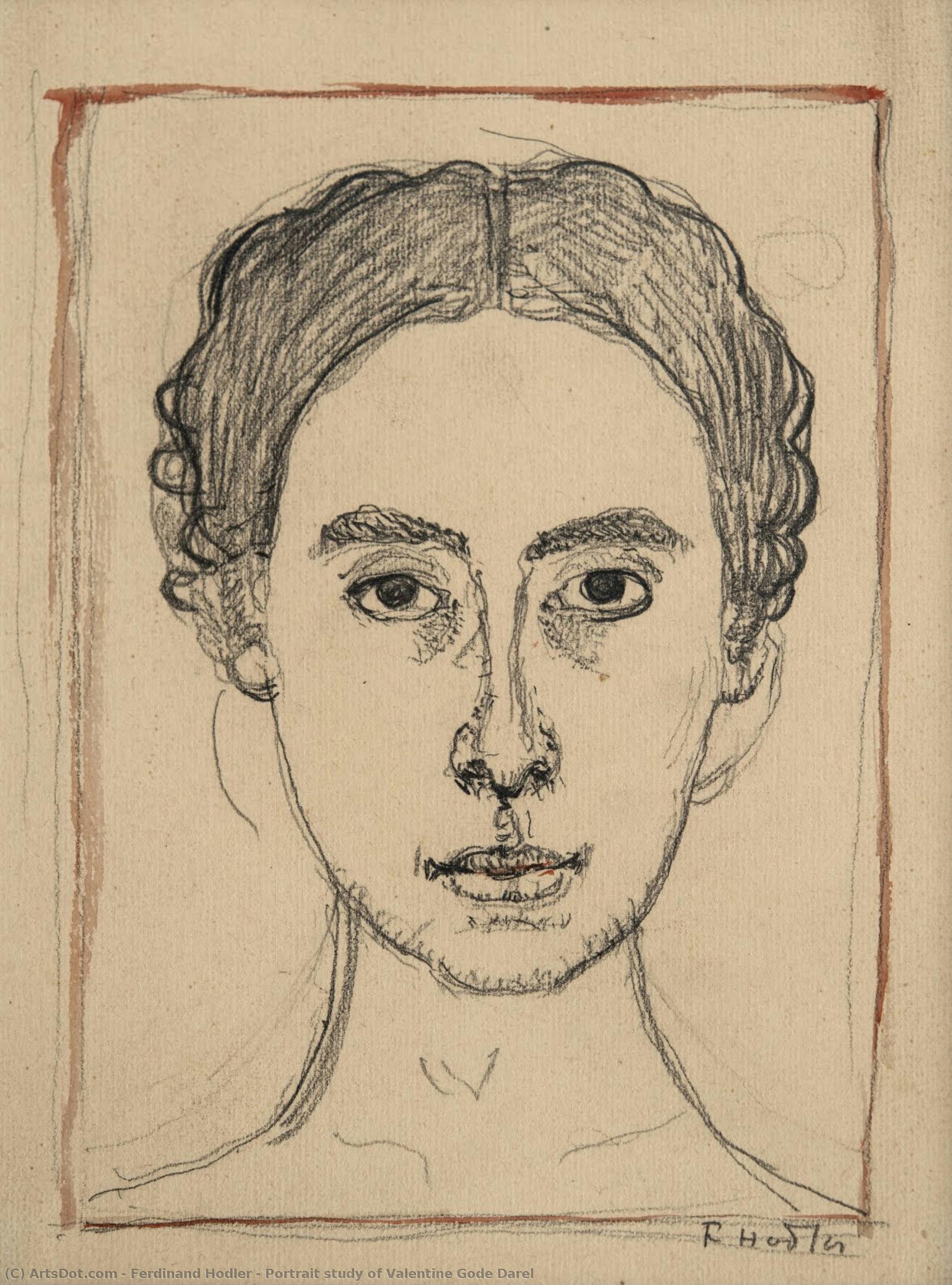
This striking portrait study by Ferdinand Hodler portrays a woman in profile, adorned with flowing hair and an intense gaze. Rendered in black and white with a vibrant red background, it exemplifies Expressionist principles and explores themes of loss and fleeting beauty.
Explore the captivating world of Ferdinand Hodler, Swiss Symbolist painter renowned for his evocative landscapes & pioneering 'parallelism'. Discover hand-painted reproductions of his masterpieces at ArtsDot.
Explore Bosnia & Herzegovina's rich art scene at the National Gallery in Sarajevo! Discover 6000+ works, including Ferdinand Hodler pieces, Yugoslavian masters, icons, and contemporary art. A cultural gem since 1946.
A Study in Sorrowful Beauty: Ferdinand Hodler’s Portrait of Valentine Gode Darel
Ferdinand Hodler's "Portrait study of Valentine Gode Darel" transcends mere representation; it embodies the profound spirit of Expressionism and whispers tales of contemplation on mortality, a hallmark of Hodler’s artistic vision. Painted in 1909, this watercolor sketch captures not just an image but an emotion—a palpable sense of melancholy interwoven with exquisite detail. The artwork resides within Sarajevo, Bosnia & Herzegovina.
Subject Matter and Composition
The portrait depicts Valentine Gode Darel, a woman presented in profile, her gaze directed outwards, hinting at introspection rather than outward engagement. Hodler skillfully employs a simplified compositional structure—primarily focused on the female figure—allowing for an intense concentration of visual energy on her face. The subtle drapery behind her adds depth to the image and contributes to the overall atmosphere of quiet solemnity.
Stylistic Influences: Expressionism and Symbolism
Hodler’s artistic approach firmly anchors itself within the burgeoning Expressionist movement, which prioritized conveying inner feelings and psychological states over objective observation. However, “Portrait study” retains elements of Symbolism—a tradition Hodler embraced—characterized by veiled references to deeper meanings beyond the surface appearance. The muted color palette—dominated by reds and browns—amplifies the emotional resonance of the piece, mirroring the artist’s preoccupation with themes of loss and remembrance.
Technique: Watercolor Rendering
Hodler's masterful technique lies in his delicate watercolor rendering. He achieves remarkable tonal gradation through layering thin washes of pigment, creating textures that mimic skin tones and capturing subtle nuances of light and shadow. The meticulous attention to detail—particularly evident in the depiction of her eyes—demonstrates Hodler’s dedication to conveying psychological depth. The artist's use of dry brushstrokes adds a textural element that enhances the artwork's expressive qualities.
Historical Context: Late 19th Century Swiss Art
“Portrait study” emerged during a period of significant artistic innovation in Switzerland, where artists were actively experimenting with new styles and mediums to articulate their experiences of the era. Hodler’s work reflects the broader cultural anxieties surrounding death and decay prevalent at the time—themes explored extensively by Symbolist painters like Edvard Munch and Gustav Klimt. It stands as a testament to Hodler's ability to distill complex emotions into a single, arresting visual statement.
Emotional Impact: A Meditation on Vulnerability
Ultimately, “Portrait study of Valentine Gode Darel” succeeds in evoking a profound emotional response from the viewer. The image confronts us with an unflinching portrayal of vulnerability—a quiet dignity born from confronting mortality. Hodler’s masterful execution captures not just likeness but also spirit, inviting contemplation on themes of beauty amidst sorrow and reminding us of the enduring power of art to communicate intangible feelings. It's a piece that lingers in the mind long after viewing, prompting reflection on life’s transient nature and the importance of cherishing moments of profound connection.