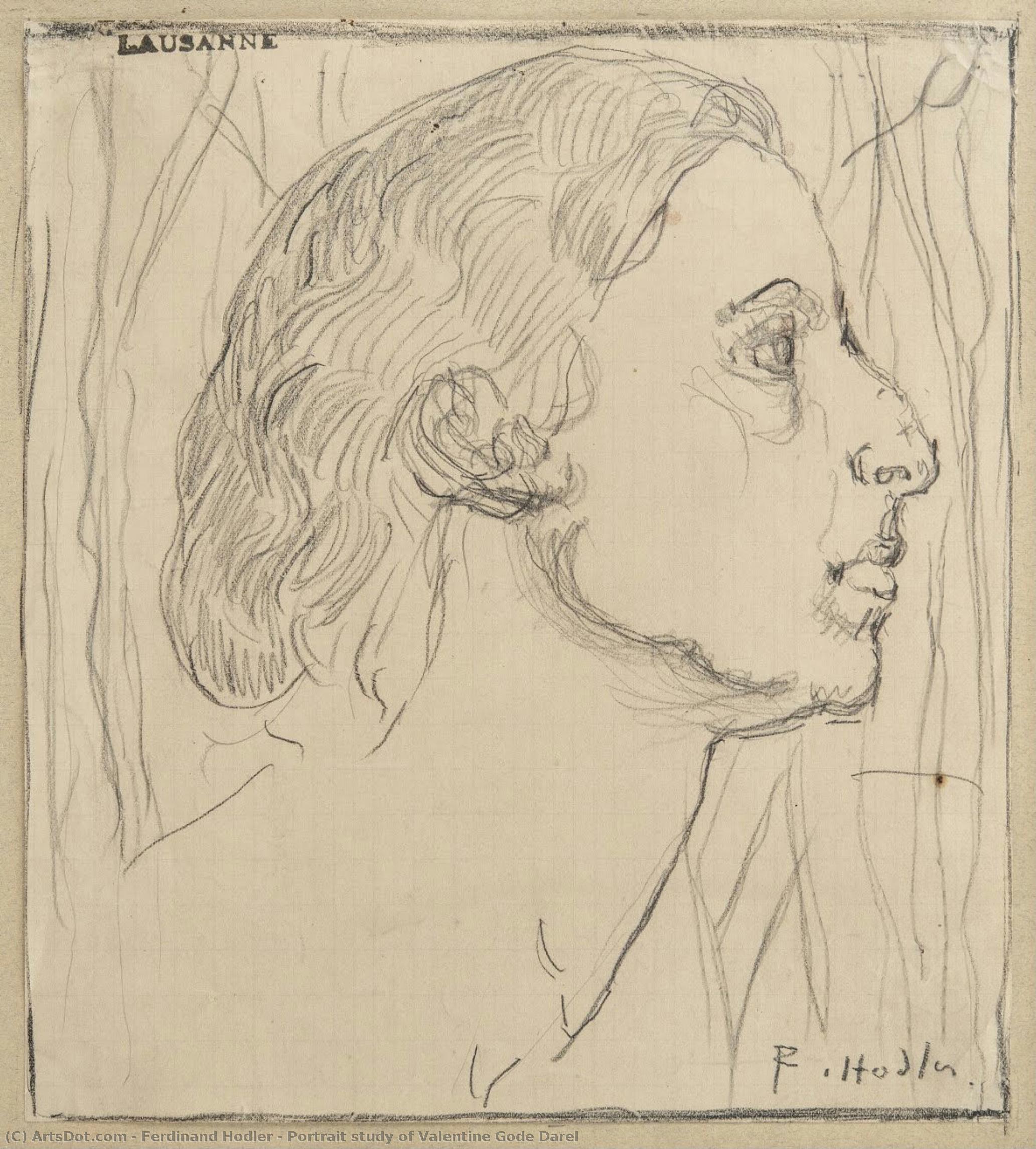
Hodler’s exploration of vulnerability is evident in ‘The Dying Valentine,’ a watercolor sketch showcasing muted tones and textural richness. This piece exemplifies his artistic legacy.
Explore the captivating world of Ferdinand Hodler, Swiss Symbolist painter renowned for his evocative landscapes & pioneering 'parallelism'. Discover hand-painted reproductions of his masterpieces at ArtsDot.
Explore Bosnia & Herzegovina's rich art scene at the National Gallery in Sarajevo! Discover 6000+ works, including Ferdinand Hodler pieces, Yugoslavian masters, icons, and contemporary art. A cultural gem since 1946.
A Study in Quiet Sorrow: Ferdinand Hodler’s Portrait of Valentine Gode Darel
Ferdinand Hodler, a titan amongst Swiss Symbolist painters, bequeathed to us not merely images but profound meditations on the human condition. His oeuvre is characterized by an unwavering gaze upon mortality and an exquisite sensitivity to the ethereal beauty residing within the commonplace—qualities powerfully realized in “Portrait Study of Valentine Gode Darel,” executed in 1909. This unassuming watercolor sketch transcends its formal simplicity, offering a glimpse into Hodler’s deeply personal artistic philosophy.
The Essence of Expressionism: Technique and Composition
Hodler's masterful technique—primarily watercolor—allowed him to achieve remarkable tonal subtlety and textural richness. He eschewed the meticulous realism favored by many contemporaries, opting instead for loose brushstrokes that convey emotion rather than precise representation. The composition itself is deliberately understated; Valentine Gode Darel’s face dominates the canvas, positioned in a profile view that emphasizes her stillness and introspection. Hodler skillfully employs chiaroscuro—the dramatic interplay of light and shadow—to sculpt the contours of her visage, highlighting the delicate planes of her cheekbones and forehead. The muted palette – predominantly browns and greys – reinforces the melancholic mood, mirroring the artist’s preoccupation with themes of loss and remembrance.
Symbolism Rooted in Observation: Valentine Gode Darel's Face as Emblem
Beyond mere visual depiction lies a deeper symbolic resonance within “Portrait Study.” Hodler’s choice to depict Valentine Gode Darel’s eyes closed speaks volumes about the artist’s contemplation of inner experience and the elusive nature of consciousness. Eyes, traditionally symbols of perception and awareness, are rendered shut here, suggesting a retreat from the external world into a realm of profound reflection—a motif recurrent throughout Hodler's work. The inclusion of a necklace adds an element of elegance and ornamentation, yet simultaneously serves as a reminder of transient beauty and the inevitability of decay. These subtle details contribute to the overall impression of quiet sorrow, encapsulating Hodler’s belief that true artistic expression stems from observing and interpreting the world around us with unwavering honesty.
Historical Context: The Swiss Symbolist Movement
Hodler's artistic vision aligns perfectly with the broader currents of the Swiss Symbolist movement—a reaction against Impressionism’s fleeting depiction of sensory experience. Artists like Hodler sought to convey spiritual truths through evocative imagery and symbolic language, prioritizing emotion over factual accuracy. Influenced by Nietzschean philosophy and Wagnerian opera, Symbolists aimed to penetrate beneath the surface appearances of reality, accessing a realm of subconsciousness and mythic archetypes. “Portrait Study” embodies this ethos, inviting viewers to engage in a dialogue with its melancholic beauty and prompting contemplation on existential questions.
Emotional Resonance: A Window into Hodler’s Soul
Ultimately, "Portrait Study of Valentine Gode Darel" succeeds as an artwork not merely for its technical prowess but for its ability to evoke profound emotional responses. The artist's sensitivity to the human face—particularly its expression of vulnerability and sorrow—resonates powerfully across time. It is a piece that compels us to confront our own mortality, to appreciate the fleeting beauty of existence, and to recognize the enduring power of art to illuminate the deepest recesses of the human psyche. Like “The Dying Valentine,” this sketch exemplifies Hodler’s unwavering commitment to capturing the essence of emotion through masterful technique and symbolic representation—a legacy that continues to inspire artists and collectors alike.