Explore the vibrant world of Eugène Delacroix, a leading French Romantic artist! Discover his dramatic scenes, exotic themes & masterful use of color. See iconic works like 'Liberty Leading the People'. #Delacroix #Romanticism #FrenchArt
Discover the Bibliothèque de l'École des Beaux-Arts in Paris! Explore a historic art library with rare books, periodicals, and study spaces. Perfect for art enthusiasts, students, and researchers seeking French art history and design resources.
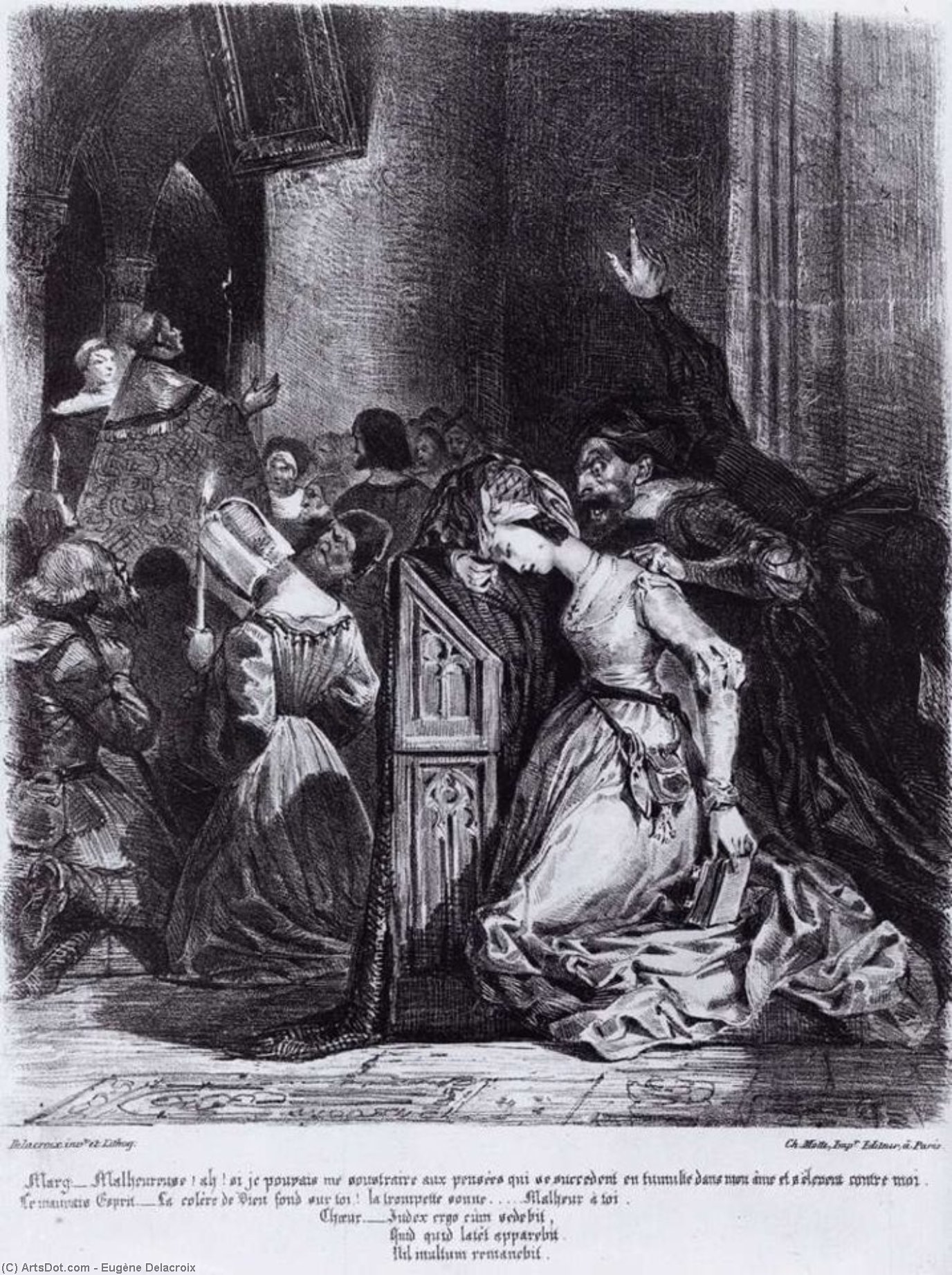
A Tempest of Faith: Delacroix’s “Margarete in Church”
Ferdinand Victor Eugène Delacroix's "Margarete in Church," completed in 1828, is not merely a depiction of a religious scene; it’s an immersive plunge into the heart of Romantic fervor. This monumental engraving, measuring 260 x 220 cm, captures a moment of profound spiritual intensity – a chaotic gathering around a central figure, likely a priest or religious leader, consumed by what appears to be a miraculous event. The sheer dynamism of the composition immediately commands attention, drawing the viewer into a swirling vortex of supplication, awe, and perhaps even unsettling hysteria. Delacroix’s masterful command of the engraving technique elevates this scene beyond a simple illustration, transforming it into a powerful testament to human emotion and belief.
Baroque Drama in Black and White
Executed with meticulous precision on paper using ink, “Margarete in Church” is firmly rooted in the Baroque tradition. Delacroix’s approach echoes the dramatic lighting, heightened emotionalism, and intricate detail characteristic of that era. The artist employs a dense network of thick, expressive lines – hatching and cross-hatching – to build up tonal variations and simulate texture with remarkable skill. Notice how the figures are rendered not as idealized forms but as intensely human, their faces etched with a spectrum of emotions: hope flickering in some eyes, despair clinging to others. The overlapping forms and varying levels of detail create a convincing sense of depth, drawing us into the crowded space and intensifying the feeling of urgency.
- Line Work: Delacroix’s signature thick lines define every contour, creating a palpable sense of movement and energy.
- Hatching & Cross-Hatching: These techniques skillfully build up tonal values, mimicking light and shadow with dramatic effect.
- Perspective: A slightly elevated perspective enhances the scene's dynamism and emphasizes the scale of the gathering.
Symbolism of Devotion
Beyond its technical brilliance, “Margarete in Church” is rich in symbolic elements. The candles held aloft by the figures are potent emblems of illumination and faith, their flickering flames mirroring the spiritual fervor of the scene. The gestures of supplication – outstretched hands, bowed heads – speak to a deep yearning for divine intervention. The composition itself suggests a moment of crisis or revelation, a pivotal point in the narrative where belief is tested and ultimately reaffirmed. Delacroix’s ability to convey such complex emotions through a monochromatic medium speaks volumes about his artistic genius.
A Legacy of Romantic Intensity
Created during a period of profound social and political change in France, “Margarete in Church” reflects the broader Romantic movement's emphasis on emotion, individualism, and the sublime. Delacroix’s work challenged the prevailing Neoclassical style, paving the way for future generations of artists to embrace subjective experience and explore the darker aspects of human nature. This engraving stands as a powerful reminder of Delacroix’s enduring legacy – a testament to his ability to capture the raw power of faith, emotion, and the human spirit. Its dramatic intensity continues to resonate with viewers today, solidifying its place as a cornerstone of Romantic art.