Francesco Furini’s “The Three Graces”: A Florentine Baroque Embrace
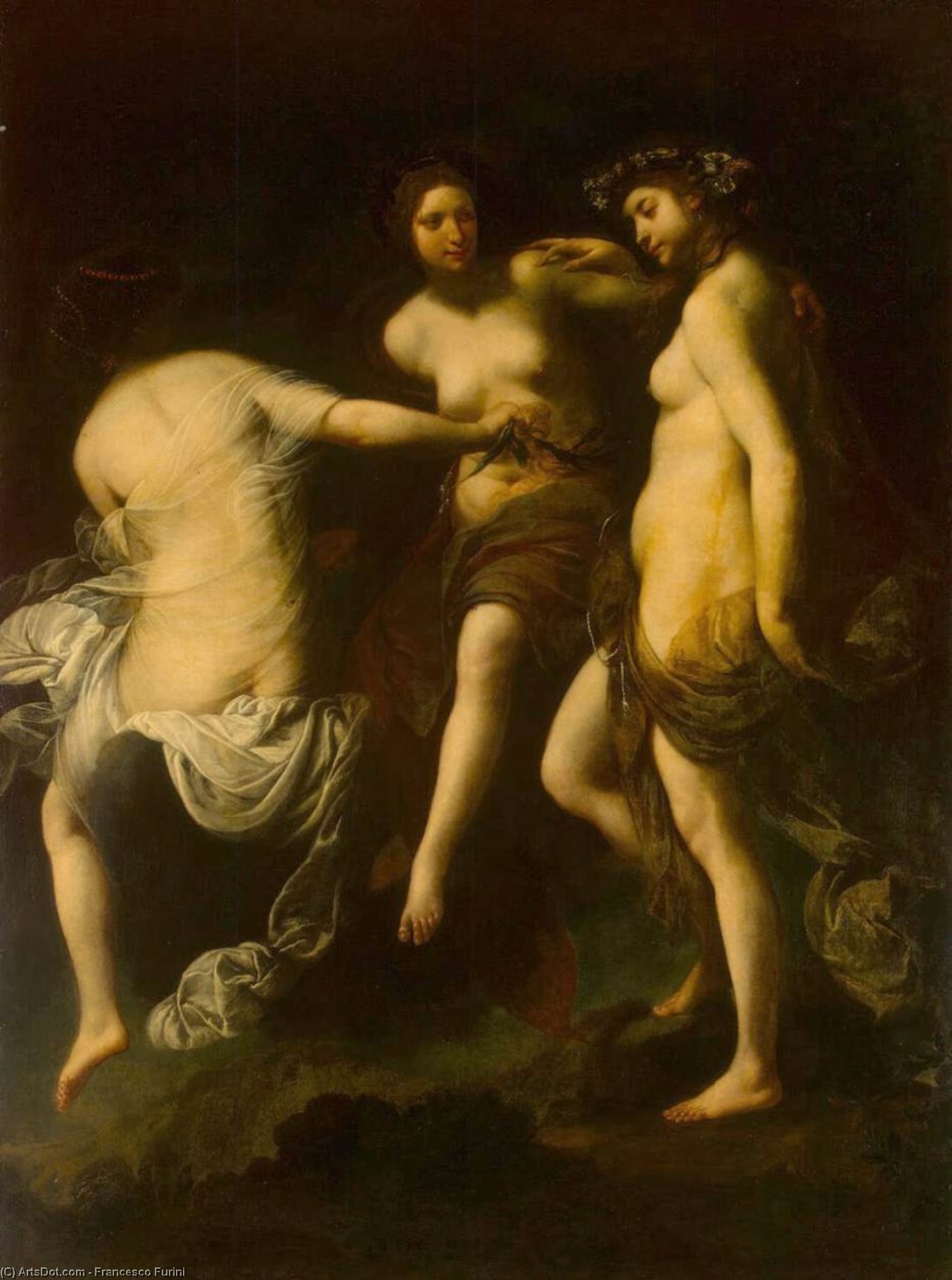
Francesco Furini's "The Three Graces," painted in 1633, is more than just a depiction of mythological figures; it’s a profound meditation on beauty, grace, and the sensual allure of the Renaissance. Emerging from the vibrant artistic milieu of Florence during the High Baroque period, Furini masterfully captures the essence of these ethereal goddesses – Euphrosyne, Aglaia, and Thalia – in a composition that resonates with both classical ideals and a distinctly Italian sensibility. The painting’s power lies not merely in its technical execution but also in its evocative portrayal of feminine beauty and the subtle interplay between light and shadow.
Furini's style is immediately recognizable as Florentine Baroque, characterized by a rich palette, dramatic lighting, and a masterful use of sfumato – a technique borrowed from Leonardo da Vinci that creates soft, hazy outlines, lending an air of mystery and sensuality to the figures. The composition itself is carefully balanced, drawing the eye across the canvas with a graceful flow. The women are not rigidly posed; instead, they appear caught in moments of quiet contemplation, their limbs subtly intertwined, suggesting a harmonious unity. This fluidity contrasts sharply with the more static depictions common in earlier Renaissance art, reflecting the Baroque’s emphasis on movement and emotion.
The Mythological Roots and Symbolism
The Three Graces – or Charites as they were known in Greek mythology – held a significant place in both Greek and Roman culture. Born from Zeus and Eurynome, they represented joy, beauty, fertility, and prosperity. Each Grace embodied a distinct aspect of these qualities: Euphrosyne, the embodiment of mirth and laughter; Aglaia, representing radiant beauty and splendor; and Thalia, symbolizing youthful grace and abundance. In Furini’s painting, these attributes are subtly conveyed through their gestures, expressions, and the overall atmosphere of serenity and delight.
The choice to depict them in a state of repose is particularly noteworthy. Rather than engaging in boisterous revelry, they seem lost in an internal contemplation, suggesting that true beauty lies not just in outward appearance but also in inner harmony and grace. The setting itself – a softly rendered landscape bathed in diffused light – further reinforces this sense of tranquility and spiritual depth. It’s a deliberate departure from the more overtly celebratory depictions found in earlier art, aligning with the Baroque's exploration of human emotion and the sublime.
Technique and Artistic Influences
Furini’s technical skill is evident in every detail of the painting. His masterful use of sfumato creates a remarkable sense of depth and atmosphere, blurring the lines between the figures and the background landscape. The delicate rendering of their skin tones, the subtle folds of their drapery, and the graceful curves of their bodies demonstrate his deep understanding of human anatomy and form. Furini’s work is heavily influenced by Caravaggio, particularly in his dramatic use of light and shadow – a technique known as chiaroscuro – which adds to the painting's emotional intensity.
Furthermore, Furini was deeply immersed in the artistic traditions of Florence, drawing inspiration from both classical antiquity and the works of his contemporaries. The influence of Raphael is particularly noticeable in the idealized beauty of the figures and their harmonious proportions. However, Furini’s work possesses a distinctly Florentine character – a sensual richness and an emotional depth that set it apart from its Italian counterparts.
A Legacy of Sensuality and Beauty
"The Three Graces" remains a captivating masterpiece, embodying the spirit of the Florentine Baroque. It is a testament to Furini’s artistic genius and his ability to capture the essence of beauty, grace, and human emotion. The painting's enduring appeal lies in its timeless depiction of feminine allure and its exploration of the profound connection between art, mythology, and the human soul. It continues to inspire artists and viewers alike, offering a glimpse into a world where beauty is not merely superficial but a reflection of inner harmony and spiritual depth.