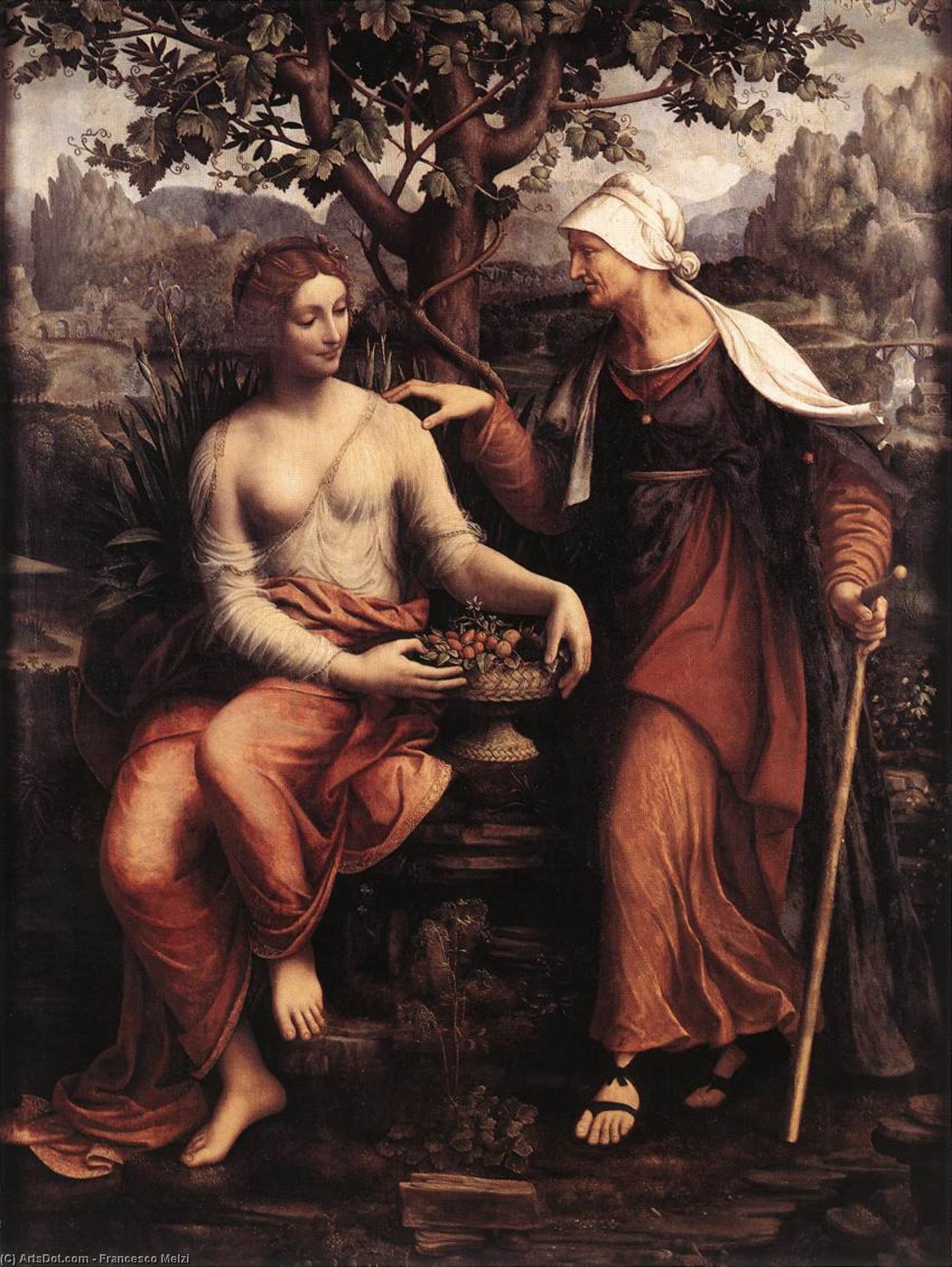
Francesco Melzi's 'Pomona and Vertumnus,' painted around 1518-1522, showcases a serene scene inspired by Ovid's Metamorphoses. Leonardo da Vinci’s stylistic impact is evident through the use of sfumato, mirroring compositions like Mona Lisa, highlighting botanical observation and symbolizing marital harmony with elm and vine imagery.
A Verdant Dialogue: Unveiling Pomona and Vertumnus
To gaze upon this exquisite depiction of Pomona and Vertumnus is to step directly into the sun-dappled, fertile heart of Renaissance mythology. The scene unfolds with an intimacy that belies its grand subject matter; it is a moment caught between conversation and burgeoning life. Here, nature itself seems to whisper secrets between two figures—the goddess of fruitfulness and the embodiment of seasonal change. The composition draws the eye immediately to the gentle exchange occurring between them. The woman, seated upon a stone bench that anchors her to the earth, exudes an air of serene contemplation, while the man stands beside her, his posture suggesting both attentive listening and vibrant energy. Their shared focus, punctuated by the fruit held delicately in their hands, transforms what might be a simple portrait into a profound meditation on bounty, time, and transformation.
The Artistry of Francesco Melzi
This masterpiece bears the unmistakable hand of Francesco Melzi, an artist whose career was deeply interwoven with the cultural currents of Milan during the early sixteenth century. While Melzi’s genius is often understood through his association with Leonardo da Vinci, this work showcases his own refined skill as a narrative painter. His technique here speaks to the polished elegance characteristic of the period—a masterful blend of detailed naturalism and idealized human form. Observe the handling of light; it seems to emanate from an unseen source filtering through the background foliage, lending a luminous quality to their skin and the rich textures of the surrounding environment. The inclusion of tangible objects, such as the two visible bowls, grounds the ethereal conversation in a moment of palpable reality.
Symbolism Woven into Nature's Tapestry
The symbolism at play is as rich as the harvest depicted. Pomona herself represents abundance and the gifts of the earth, while Vertumnus embodies metamorphosis—the passage from one season to the next, a constant state of becoming. The fruit they share is not merely decorative; it is a potent symbol of life's cyclical nature, the promise inherent in every bloom, and the sweetness found within change itself. The background tree serves as more than mere setting; it acts as a living metaphor for time’s relentless yet beautiful cycle. For the collector or decorator, this piece offers not just decoration, but a philosophical anchor—a reminder that endings are merely preparations for glorious new beginnings.
Creating an Atmosphere of Renaissance Grace
For those seeking to infuse a space with the intellectual romance and deep artistry of the Italian Renaissance, this reproduction is unparalleled. Its scale (185 x 134 cm) allows it to command attention in a grand hall or library, yet its subject matter invites quiet contemplation in a more intimate setting. The depth achieved by Melzi—the interplay between the figures, the foreground objects, and the receding natural backdrop—creates an immersive experience. Owning this piece is acquiring a dialogue across centuries; it whispers of scholarly pursuits, mythological beauty, and the enduring mystery of life’s continuous unfolding.