The Radiance of Milan: A Portrait of Nobility
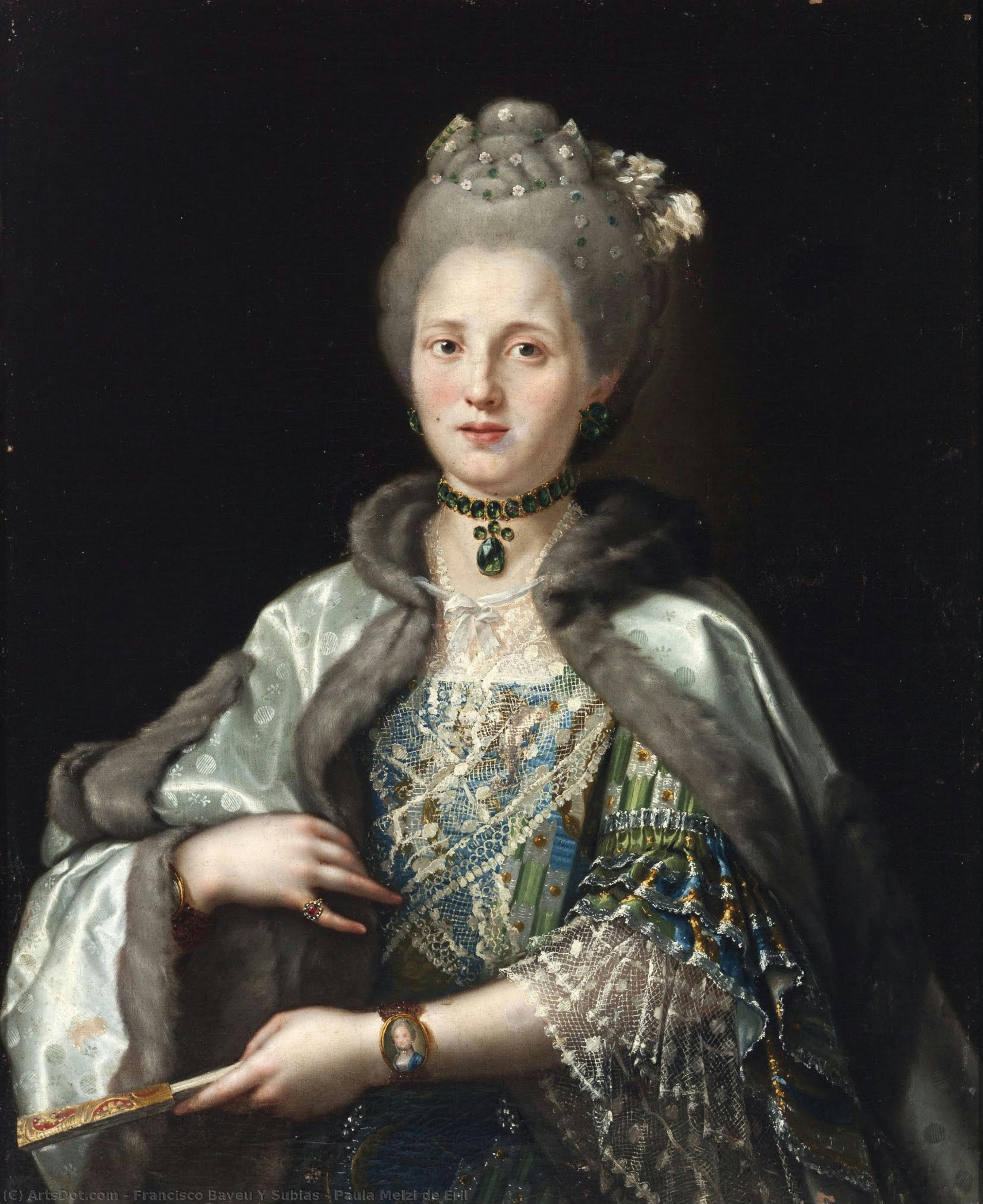
In the quiet elegance of late 18th-century portraiture, few subjects capture the essence of Enlightenment grace as profoundly as Paula Melzi de Eril. Painted by the esteemed Spanish master Francisco Bayeu y Subías, this intimate work serves as a window into a world of refined aristocracy and diplomatic splendor. Known to her contemporaries as "The Sun of Milan" due to her breathtaking beauty and luminous presence, Paula is presented here not merely as a subject, and but as an icon of elegance. The portrait captures her in a moment of poised stillness, her gaze meeting the viewer with a directness that bridges the centuries, establishing an immediate and hauntingly beautiful connection.
The composition is a masterclass in the Rococo and Neoclassical transition, where the soft, flowing lines of the subject's attire meet the disciplined structure of formal portraiture. Set against a dark, neutral background that recedes into shadow, Paula’s figure emerges with a striking clarity. This use of chiaroscuro—the dramatic interplay between light and dark—serves to sculpt her features, highlighting the delicate porcelain texture of her skin and the intricate luster of her jewelry. Every brushstroke by Bayeu seems designed to celebrate the tactile reality of her world, from the soft, inviting fur trim of her shawl to the crisp, ethereal lace adorning her sleeves.
A Symphony of Texture and Light
For the discerning collector or interior designer, this piece offers a sophisticated palette that anchors any space with timelessness. The color story is one of cool, aristocratic serenity, dominated by deep blues, muted greens, and pristine whites. These tones are punctuated by the warm, golden glints of her earrings, necklace, and the delicate ornaments in her hair, creating a visual rhythm that feels both luxurious and balanced. The artist’s technical prowess is most evident in the rendering of materials; one can almost feel the weight of the silk and the smoothness of the polished gems through the canvas.
Beyond the mere depiction of a noblewoman, the painting is rich with the subtle symbolism of her era. The fan she holds, a quintessential accessory of 18th-century high society, acts as a symbol of both social grace and the delicate language of flirtation. Her attire and jewelry are not merely decorative but serve as silent narrators of her status as a lady-in-waiting to Maria Luisa of Parma. To possess a reproduction of this work is to invite a sense of historical depth and curated luxury into a room, offering an emotional resonance that speaks of heritage, beauty, and the enduring power of the human spirit.