 Preview
 Send
Send Share
Share
 Details

 Download
 Similars
 X-Ray
X-Ray Diaporama
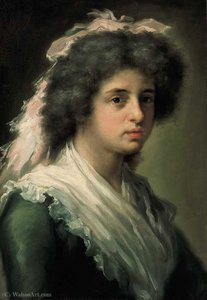
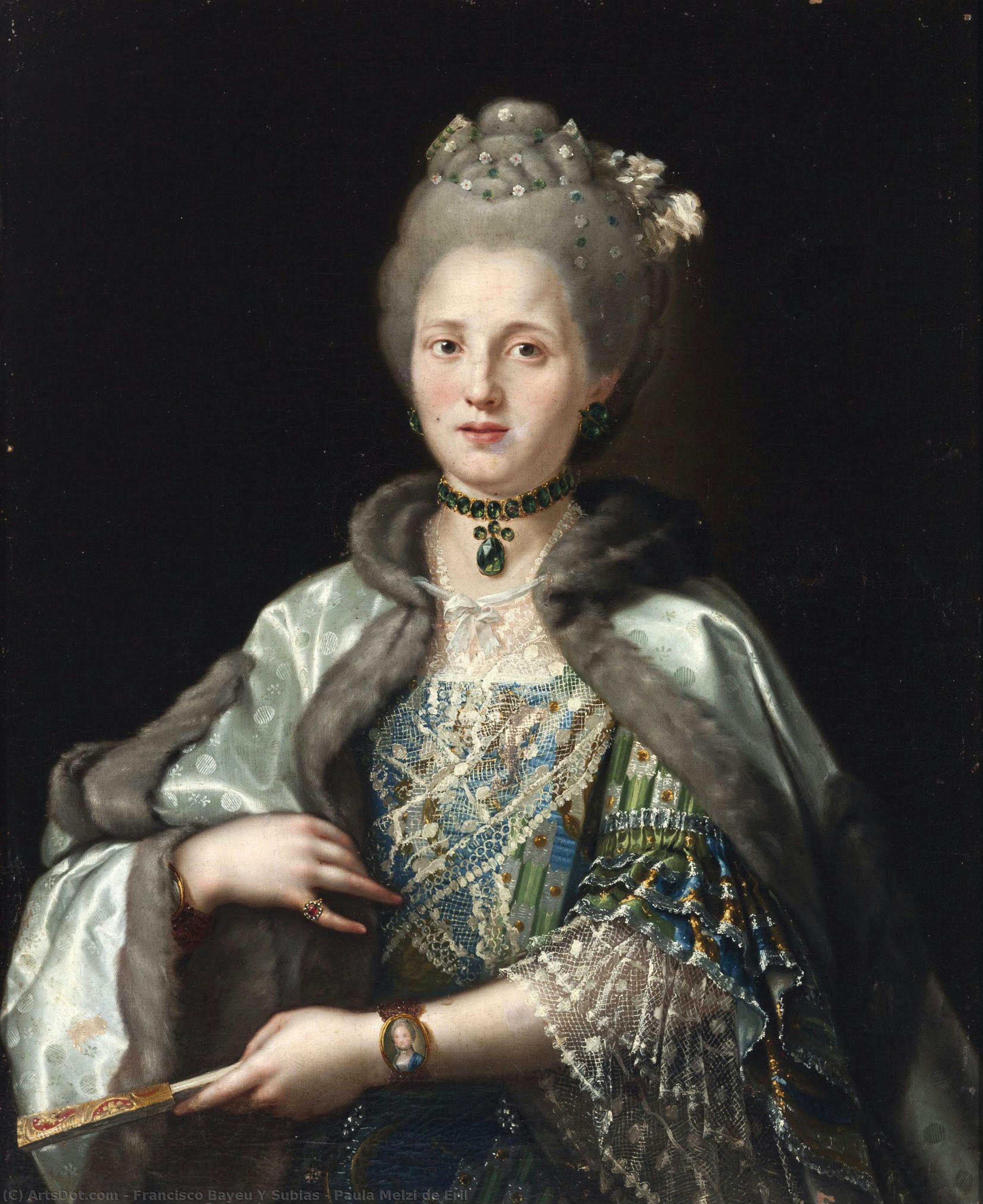
Paula Melzi de Eril
 Oil On Canvas
- WallArt
- Rococo
 Early Modern
 3.0 x 7.0 cm
 Museo de Huesca
 Read More
Hand Made Oil Reproduction
Hand-painted oil on canvas in your size and frame, made to order by our artists. ( Buy Print Buy Image)




P118B $10

P118H $10

P118W $10

P438Z $10

P508JH $12

P508YH $12

P805H $10

P805Z $10

P919BZ $10

P919G $10

P919XJ $10

P959ZH $10

P968JZ $12

W106C $8

W218G $10

W218JH $8

W218Y $10

W307PJ $10

W316G $10

W316PJ $8

W316Y $10

W398PJ $8

W4111J $10

W500HY $15

W500JH $15

W692G $12

W849H $8

W940BG $15

W953PJ $8




Pick from our preset sizes that match the artwork's original proportions.

You may enter your own dimensions to fit a specific frame or space. If your selected size does not match the original image's proportions, we will either crop the artwork or extend the painting with additional hand-painted elements. A digital mockup will be sent for your approval before production begins.
Please note that the on-screen preview does not reflect the actual cropping or extension. Only the mockup will accurately show the final composition.
While custom sizes are available, we recommend selecting a dimension from the predefined list to preserve the original proportions.
After order, ArtsDot.com team will email client for instructions and provide a mockup preview
Worldwide Delivery () in 3/4 weeks instead of standard 5 weeks. (17 August). No compromise on quality.

Free Worldwide Express Shipping

High-Quality Linen Canvas

Full Shipping Insurance

Customs Tax Refund Guarantee

True Color Matching Guarantee

60-Day Return Policy (Defects Only)

100% Money-Back Guarantee

Bulk Discount Offer
 Glass option is only available in size under 110 CM

Paula Melzi de Eril
Reproduction Medium
Reproduction Size
-


Total Price
$ 263
Artwork Description
The Radiance of Milan: A Portrait of Nobility
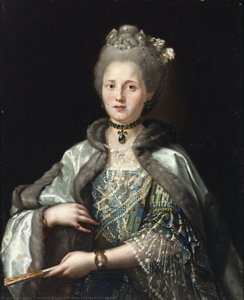
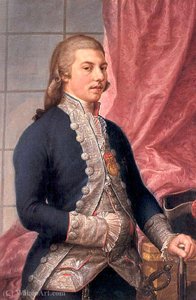
In the quiet elegance of late 18th-century portraiture, few subjects capture the essence of Enlightenment grace as profoundly as Paula Melzi de Eril. Painted by the esteemed Spanish master Francisco Bayeu y Subías, this intimate work serves as a window into a world of refined aristocracy and diplomatic splendor. Known to her contemporaries as "The Sun of Milan" due to her breathtaking beauty and luminous presence, Paula is presented here not merely as a subject, and but as an icon of elegance. The portrait captures her in a moment of poised stillness, her gaze meeting the viewer with a directness that bridges the centuries, establishing an immediate and hauntingly beautiful connection.
The composition is a masterclass in the Rococo and Neoclassical transition, where the soft, flowing lines of the subject's attire meet the disciplined structure of formal portraiture. Set against a dark, neutral background that recedes into shadow, Paula’s figure emerges with a striking clarity. This use of chiaroscuro—the dramatic interplay between light and dark—serves to sculpt her features, highlighting the delicate porcelain texture of her skin and the intricate luster of her jewelry. Every brushstroke by Bayeu seems designed to celebrate the tactile reality of her world, from the soft, inviting fur trim of her shawl to the crisp, ethereal lace adorning her sleeves.
A Symphony of Texture and Light
For the discerning collector or interior designer, this piece offers a sophisticated palette that anchors any space with timelessness. The color story is one of cool, aristocratic serenity, dominated by deep blues, muted greens, and pristine whites. These tones are punctuated by the warm, golden glints of her earrings, necklace, and the delicate ornaments in her hair, creating a visual rhythm that feels both luxurious and balanced. The artist’s technical prowess is most evident in the rendering of materials; one can almost feel the weight of the silk and the smoothness of the polished gems through the canvas.
Beyond the mere depiction of a noblewoman, the painting is rich with the subtle symbolism of her era. The fan she holds, a quintessential accessory of 18th-century high society, acts as a symbol of both social grace and the delicate language of flirtation. Her attire and jewelry are not merely decorative but serve as silent narrators of her status as a lady-in-waiting to Maria Luisa of Parma. To possess a reproduction of this work is to invite a sense of historical depth and curated luxury into a room, offering an emotional resonance that speaks of heritage, beauty, and the enduring power of the human spirit.
Related Artworks
Artist Biography
The Painter of Kings: The Life and Legacy of Francisco Bayeu y Subías
In the grand, sun-drenched corridors of 18th-century Spain, few names resonate with as much institutional prestige and technical mastery as Francisco Bayeu y Subías. Born in the historic city of Zaragoza in 1734, Bayeu emerged not merely as a painter, but as a central architect of the Spanish Neoclassical aesthetic. His journey from the provincial landscapes of Aragon to the opulent heart of the Royal Court in Madrid is a narrative of disciplined intellect and profound artistic evolution. Early training under José Luzán provided him with a foundation steeped in the dramatic, emotive traditions of the Italian Baroque, yet it was his encounter with the burgeoning Enlightenment ideals that would truly define his brushwork. Through his studies at the Academia Real de Bellas Artes de San Fernando, Bayeu began to shed the heavy shadows of the past in favor of a more luminous, structured clarity.
The trajectory of Bayeu’s career was irrevocily altered by the gravitational pull of Madrid’s artistic elite. Influenced heavily by the monumental presence of Anton Raphael Mengs and the airy, theatrical brilliance of Giovanni Battista Tiepolo, Bayeu learned to balance the weight of historical gravity with a delicate, idealized grace. This period of his life was marked by a transition toward Neoclassicism—a movement that demanded restraint, anatomical precision, and a return to the noble simplicity of antiquity. His talent was so undeniable that he was summoned to decorate the Royal Palace, a commission that placed him at the very epicenter of European power and culture. It was during this era of high courtly splendor that his life became inextricably linked with another titan of Spanish art; through his marriage to Josefa Bayeu, he formed a familial and professional bond with Francisco Goya, creating a creative nexus that would influence the direction of Spanish painting for decades.
A Mastery of Scale: From Royal Frescoes to Tapestry Design
Bayeu’s versatility was perhaps his greatest strength, allowing him to navigate between the intimate scale of portraiture and the overwhelming grandeur of architectural decoration. As the appointed Court Painter to King Charles III from 1767, he became a master of the multi-sensory environment. His work was not confined to canvas alone; he breathed life into the very walls of Spain’s most significant structures. His achievements include:
- Monumental Frescoes: Creating expansive ceiling decorations that transformed palace interiors into celestial realms, utilizing light and perspective to dissolve architectural boundaries.
- Tapestry Cartoons: Designing intricate, highly detailed preparatory paintings for the Royal Tapestry Factory, which translated fine art into woven narratives for the Spanish nobility.
- Religious Iconography: Executing profound altarpieces that maintained a sense of Neoclassical decorum while honoring the deep spiritual traditions of the Spanish Church.
- Historical Narratives: Crafting large-scale compositions that celebrated the triumphs and virtues of the Bourbon monarchy through idealized historical scenes.
The technical execution of his work often reflected a sophisticated "Flemish echo," blending the meticulous detail found in Northern traditions with the structural elegance of the Mediterranean. His ability to manage complex compositions involving numerous figures, while maintaining a sense of unified light and atmosphere, remains a testament to his rigorous academic training. Even as the art world began to shift toward the more turbulent and emotive styles of the late 18th century, Bayeu remained a steadfast guardian of order and clarity.
Historical Significance and the Twilight of an Era
The historical importance of Francisco Bayeu y Subías lies in his role as a bridge between eras. He stood at the crossroads where the lingering echoes of the Baroque met the disciplined dawn of Neoclassicism. While history often focuses on the revolutionary shadows of Goya, it was Bayeu who provided the structural and institutional framework within which much of this Spanish Golden Age flourished. His work in the Royal Palace served as a visual manifesto for the Enlightenment, projecting an image of a stable, enlightened, and culturally sophisticated monarchy.
As he navigated the complexities of court life until his death in 1795, Bayeu left behind a legacy of architectural integration and decorative excellence. He did not merely paint pictures; he designed environments. His influence can be felt in the way subsequent generations approached the concept of total art—where painting, architecture, and textile design converge to create a singular, immersive experience. Today, his oeuvre stands as a vital record of 18th-century Spanish identity, capturing a moment of profound transition, elegance, and intellectual rebirth.
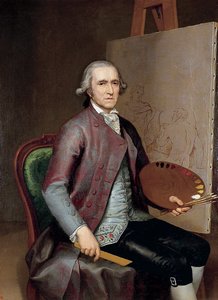
francisco bayeu y subias
1734 - 1795 , Spain
Quick Facts
- Artistic Movement Or Style: Neoclassical
- Artists Or Movements Influenced By This Artist: ['Antonio López Obrador']
- Artists Who Influenced This Artist:
- Anton Raphael Mengs
- Giovanni Battista Tiepolo
- Date Of Birth: Zaragoza, Spain (1734)
- Date Of Death: 1795
- Full Name: Francisco Bayeu y Subías
- Nationality: Spanish
- Notable Artworks:
- Portrait of Manuel Godoy
- Feliciana Bayeu
- Place Of Birth: Zaragoza, Aragon
Related Articles

Demandes Commerciales
APS ofrece reproducciones de bellas artes y encargos personalizados desde 2004. Confían en nosotros corporaciones, hoteles y coleccionistas selectos para obras de arte de calidad museística, servicio discreto y soluciones artísticas completas. ¡Póngase en contacto con nosotros para obtener un presupuesto personalizado!

Goya's Masterpieces: Explore 25 Iconic Paintings & Art Prints | ArtsDot
Delve into the world of Francisco Goya with ArtsDot. Explore 25 iconic paintings – from 'The Third of May' to his haunting Black Paintings. Discover the stories, techniques & emotions behind these Spanish masterpieces. Find museum-quality art reproductions for your home at ArtsDot.com!
Rafael de Penagos: A Study in Spanish Portraiture & Artistic Identity
Explore the life & art of Rafael de Penagos, a leading Spanish Art Deco illustrator. Discover his iconic 'Penagos Woman', commercial work, and lasting legacy. Learn about this pivotal figure in 20th-century Spanish art history.

A riguardo di noi
Découvrez notre histoire ! Nous apportons l'art de classe mondiale dans votre vie grâce à une sélection experte, des créations personnalisées et des aperçus gratuits. Approuvé par les particuliers et les entreprises depuis 2000.
Maurice Quentin de La Tour: Light, Shadow & the Rococo Portrait
Explore the captivating world of Maurice Quentin de La Tour, a master of Rococo portraiture. Discover his innovative pastel techniques, intimate depictions of French aristocracy, and lasting artistic legacy. Learn more at ArtsDot.