A Portrait of Refined Grace: Madame Drouais by François Hubert Drouais
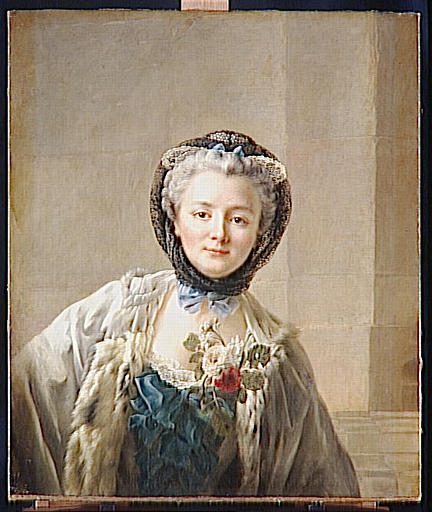
François Hubert Drouais’s “Madame Drouais” is more than just a portrait; it's a meticulously crafted window into the opulent world of 18th-century French aristocracy. Painted around 1758, this captivating work captures the essence of Madame Drouais – likely Anne-Françoise Doré, wife of the artist himself – as a figure of quiet dignity and understated elegance. The painting immediately draws the eye with its soft palette of muted beiges, grays, blues, and delicate pinks, colors characteristic of the Rococo period’s emphasis on subtlety and refinement. Drouais masterfully employs layering techniques, building up thin glazes of oil paint to achieve a remarkable sense of depth and luminosity, creating a surface that seems both smooth and subtly textured.
The composition itself is a testament to the era's artistic conventions, yet imbued with a distinctly personal touch. Madame Drouais occupies a slightly off-center position within the frame, her gaze directed directly at the viewer – an intimate gesture of connection rarely found in formal portraits of the time. Her attire—a gown adorned with delicate floral embellishments, a luxurious fur stole draped across her shoulders, and an elaborate headdress—is not merely decorative; it speaks volumes about her status and wealth. The careful rendering of fabrics, from the flowing silk to the plush velvet, demonstrates Drouais’s exceptional skill in capturing texture and detail.
The Rococo Setting: Light, Line, and Symbolism
Drouais's masterful use of light is particularly noteworthy. It’s diffused and even, bathing the subject in a soft glow that minimizes harsh contrasts and enhances her features. This gentle illumination contributes significantly to the painting’s overall atmosphere of serenity and grace. The lines within the portrait are predominantly soft and blended, creating a sense of fluidity and movement. There's no sharp angularity; instead, curves and rounded forms define Madame Drouais’s face and clothing, reflecting the flowing styles prevalent during the Rococo period.
Beyond the technical brilliance, “Madame Drouais” is rich in symbolic meaning. The elaborate headdress, a hallmark of aristocratic fashion, signifies wealth and social standing. Her direct gaze conveys confidence and poise – an indication of her position within society. The inclusion of objects like the small table and decorative items subtly hint at her refined tastes and domestic life. Research into the subject reveals that Madame Drouais was married to François Hubert Drouais, a prominent artist in his own right, and she played a significant role in his career, often posing for him.
Historical Context: A Portrait of an Era
To fully appreciate “Madame Drouais,” it’s essential to understand the historical context in which it was created. The Rococo period (roughly 1730-1780) marked a shift away from the formality of the Baroque era, embracing themes of pleasure, intimacy, and elegance. Portraits during this time were not simply representations of likeness; they were carefully constructed statements about social status, wealth, and cultural values. François Hubert Drouais was a leading figure in this artistic movement, known for his exquisite portraits of royalty, nobility, and members of the Parisian elite.
Further research into the artist’s life reveals that he began his career under the tutelage of his father, Hubert Drouais, an academic painter. He later trained with other prominent artists such as Gravelot and Boucher, absorbing their techniques and influences. His work reflects a blend of these diverse artistic traditions, resulting in a distinctive style characterized by its delicate brushwork, soft colors, and emphasis on grace and beauty. The portrait’s creation coincided with the height of Madame de Pompadour's influence at court, highlighting the importance of aristocratic patronage in shaping artistic trends.
A Timeless Masterpiece: Reproduction and Inspiration
“Madame Drouais” remains a timeless masterpiece, captivating viewers with its elegance, grace, and subtle details. Reproductions offer an accessible way to experience the beauty and artistry of this remarkable painting. When selecting a reproduction, consider the quality of materials used – a high-quality print on archival canvas will ensure that the colors remain vibrant for years to come. This portrait serves as a powerful reminder of the enduring appeal of Rococo art—a celebration of beauty, refinement, and the complexities of aristocratic life.