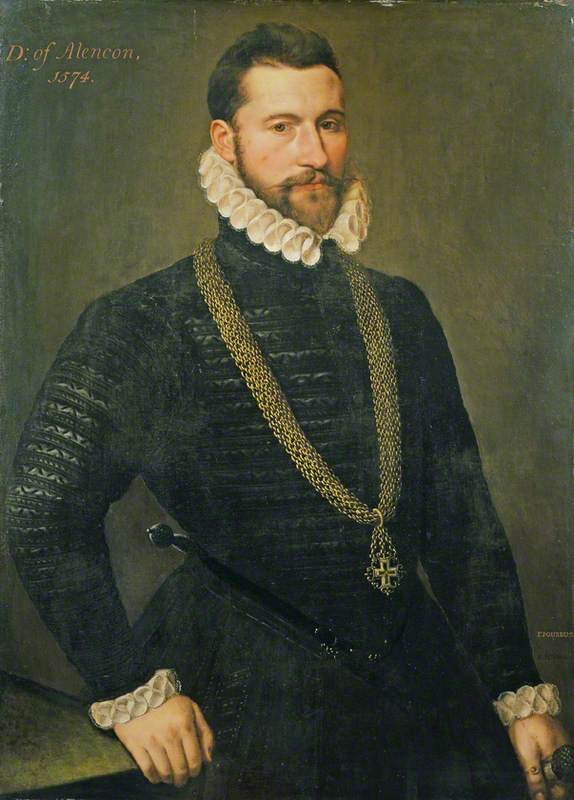
Admire Frans Pourbus the Elder’s 1574 'Portrait of a Man,' a masterful Elizabethan/Jacobean piece showcasing Sir Henry Neville's status. Dark tones, dramatic lighting & meticulous detail define this regal portrait.
A Window Into Elizabethan Dignity: Frans Pourbus’ Portrait of Sir Henry Neville
Frans Pourbus the Elder's "Portrait of a Man," completed in 1574, stands as a testament to the artistic fervor of the Flemish Renaissance and embodies the ideals of its time. Painted during the reign of Elizabeth I and James VI of Scotland—a period marked by political intrigue and burgeoning humanist thought—this artwork transcends mere representation; it’s an exploration of status, intellect, and the solemn grandeur characteristic of Elizabethan portraiture. The painting's meticulous detail speaks volumes about Pourbus’ mastery of technique and his unwavering commitment to capturing the essence of his subject.
- Technical Brilliance: Executed in oil on canvas, Pourbus employed a masterful blending of colors—primarily dark browns and greys—to create a subdued yet impactful visual experience. The subtle layering of glazes lends depth and luminosity to the figure’s skin tones, demonstrating an understanding of chiaroscuro – dramatic lighting that sculpts form and enhances emotional resonance.
- Composition & Perspective: Centered around Sir Henry Neville, a prominent diplomat and nobleman, the portrait utilizes a single-point perspective, directing the viewer's gaze directly to the subject’s face. This deliberate compositional choice reinforces his importance and establishes him as the focal point of attention.
- Detailed Rendering: The artist painstakingly rendered every aspect of Neville’s attire—a black doublet adorned with ruffled collars, a heavy gold chain bearing a pendant—reflecting the opulent fashions of the era. Furthermore, meticulous attention was paid to capturing the texture of fabrics and jewelry, showcasing Pourbus' dedication to realism.
The portrait’s symbolism extends beyond its depiction of Neville’s appearance. The dark background serves as a counterpoint to the figure’s luminosity, emphasizing his dignity and authority. The gold pendant symbolizes wealth and nobility—visual cues that communicate Neville’s social standing within Elizabethan society. Pourbus skillfully conveys an aura of solemn contemplation, inviting viewers to contemplate themes of power, intellect, and perhaps even melancholy – emotions prevalent during this transformative period in European history.
- Elizabethan Influence: Pourbus' style aligns perfectly with the prevailing artistic trends of Elizabeth I’s court, where portraiture flourished as a means of asserting royal prestige and commemorating influential figures.
- Northern Renaissance Legacy: This artwork exemplifies the Northern Renaissance preoccupation with humanist ideals—the belief in human reason and potential—a cornerstone of intellectual discourse during the sixteenth century.
“Portrait of a Man” remains an enduring masterpiece, captivating audiences centuries later with its masterful execution and profound exploration of human character. Its understated elegance and symbolic richness continue to inspire admiration among art historians and collectors alike, cementing Frans Pourbus the Elder’s place as one of the foremost portrait painters of his generation.
## Further Exploration: Frans Hals Museum & Comparable Works
To appreciate the nuances of Pourbus' technique and artistic vision fully, consider visiting the Frans Hals Museum in Haarlem—the birthplace of Frans Hals himself—where you can immerse yourself in Dutch Golden Age art alongside celebrated contemporaries. Examining Hals’ portraits offers invaluable insight into the stylistic evolution of portraiture during this era.
Recommended Viewing: Explore Hals' “Portrait of Johannes Metski,” showcasing similar attention to detail and psychological depth, demonstrating how Pourbus’ influence propagated throughout the artistic landscape.
## Artistic Context: The Elizabethan Renaissance & Symbolism in Portraiture
The Elizabethan period witnessed a resurgence of classical learning alongside burgeoning humanist ideals—a dynamic that profoundly impacted artistic expression. Artists like Pourbus sought inspiration from Italian Renaissance masters, adapting their techniques to convey complex emotions and intellectual concepts within formal portrait commissions. The deliberate use of symbolism—evident in Neville’s attire and jewelry—served as a crucial element in communicating social status and conveying moral virtue—values highly esteemed during this era.