 Preview
 Send
Send Share
Share
 Details

 Download
 Similars
 X-Ray
X-Ray Diaporama
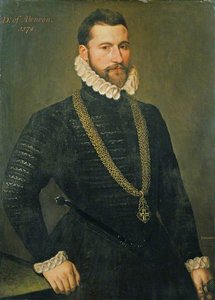
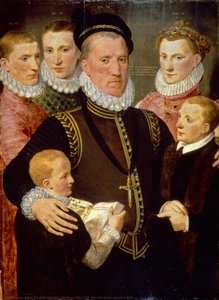
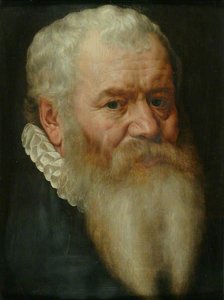
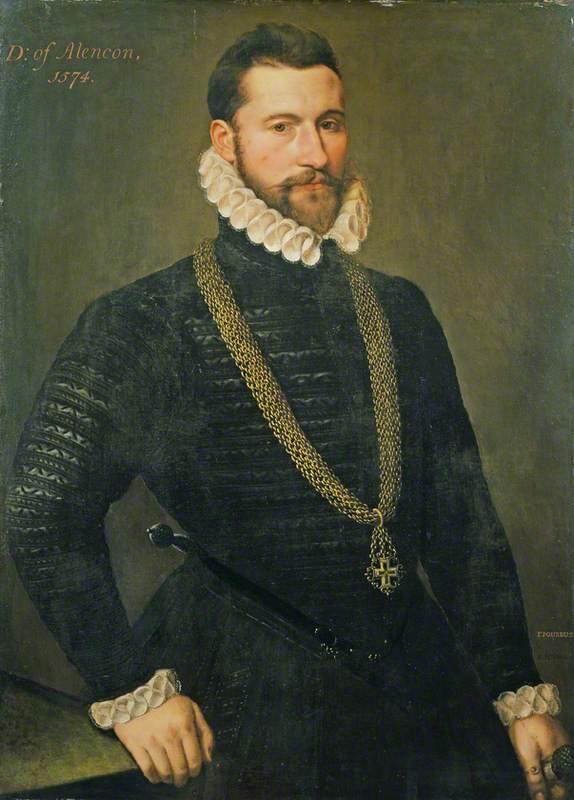
Portrait of a Man
 Oil On Canvas
- WallArt
- Elizabethan Portraiture
 1574
1574 99.0 x 71.0 cm
 The Wallace Collection
 Read More
Hand Made Oil Reproduction
Hand-painted oil on canvas in your size and frame, made to order by our artists. ( Buy Print Buy Image)




P118B $10

P118H $10

P118W $10

P438Z $10

P508JH $12

P508YH $12

P805H $10

P805Z $10

P919BZ $10

P919G $10

P919XJ $10

P959ZH $10

P968JZ $12

W106C $8

W218G $10

W218JH $8

W218Y $10

W307PJ $10

W316G $10

W316PJ $8

W316Y $10

W398PJ $8

W4111J $10

W500HY $15

W500JH $15

W692G $12

W849H $8

W940BG $15

W953PJ $8




Pick from our preset sizes that match the artwork's original proportions.

You may enter your own dimensions to fit a specific frame or space. If your selected size does not match the original image's proportions, we will either crop the artwork or extend the painting with additional hand-painted elements. A digital mockup will be sent for your approval before production begins.
Please note that the on-screen preview does not reflect the actual cropping or extension. Only the mockup will accurately show the final composition.
While custom sizes are available, we recommend selecting a dimension from the predefined list to preserve the original proportions.
After order, ArtsDot.com team will email client for instructions and provide a mockup preview
Worldwide Delivery () in 3/4 weeks instead of standard 5 weeks. (17 August). No compromise on quality.

Free Worldwide Express Shipping

High-Quality Linen Canvas

Full Shipping Insurance

Customs Tax Refund Guarantee

True Color Matching Guarantee

60-Day Return Policy (Defects Only)

100% Money-Back Guarantee

Bulk Discount Offer
 Glass option is only available in size under 110 CM

Portrait of a Man
Reproduction Medium
Reproduction Size
-


Total Price
$ 263
Artwork Description
A Window Into Elizabethan Dignity: Frans Pourbus’ Portrait of Sir Henry Neville
Frans Pourbus the Elder's "Portrait of a Man," completed in 1574, stands as a testament to the artistic fervor of the Flemish Renaissance and embodies the ideals of its time. Painted during the reign of Elizabeth I and James VI of Scotland—a period marked by political intrigue and burgeoning humanist thought—this artwork transcends mere representation; it’s an exploration of status, intellect, and the solemn grandeur characteristic of Elizabethan portraiture. The painting's meticulous detail speaks volumes about Pourbus’ mastery of technique and his unwavering commitment to capturing the essence of his subject.- Technical Brilliance: Executed in oil on canvas, Pourbus employed a masterful blending of colors—primarily dark browns and greys—to create a subdued yet impactful visual experience. The subtle layering of glazes lends depth and luminosity to the figure’s skin tones, demonstrating an understanding of chiaroscuro – dramatic lighting that sculpts form and enhances emotional resonance.
- Composition & Perspective: Centered around Sir Henry Neville, a prominent diplomat and nobleman, the portrait utilizes a single-point perspective, directing the viewer's gaze directly to the subject’s face. This deliberate compositional choice reinforces his importance and establishes him as the focal point of attention.
- Detailed Rendering: The artist painstakingly rendered every aspect of Neville’s attire—a black doublet adorned with ruffled collars, a heavy gold chain bearing a pendant—reflecting the opulent fashions of the era. Furthermore, meticulous attention was paid to capturing the texture of fabrics and jewelry, showcasing Pourbus' dedication to realism.
- Elizabethan Influence: Pourbus' style aligns perfectly with the prevailing artistic trends of Elizabeth I’s court, where portraiture flourished as a means of asserting royal prestige and commemorating influential figures.
- Northern Renaissance Legacy: This artwork exemplifies the Northern Renaissance preoccupation with humanist ideals—the belief in human reason and potential—a cornerstone of intellectual discourse during the sixteenth century.
Related Artworks
Artist Biography
A Legacy Forged in Bruges: The Life and Art of Frans Pourbus the Elder
Frans Pourbus the Elder, a name resonating within the annals of Flemish Renaissance art, emerged from the artistic heartland of Bruges in 1545. Born into a family deeply entrenched in the world of painting – his father, Pieter Pourbus, was a respected artist who had migrated from Gouda – Frans’s path seemed predetermined. His mother, Anna Blondeel, further solidified this creative lineage as the daughter of Lancelot Blondeel, a multifaceted talent encompassing painting, architecture, surveying, and cartography. This rich artistic heritage provided young Frans with an immersive environment where he received his initial training directly from his father, absorbing the traditional Flemish techniques that would form the foundation of his style. By approximately 1550, at just fifteen years of age, he had already ascended to a position of significant responsibility within his father’s workshop, demonstrating an early aptitude and dedication to the craft.Antwerpian Influences and Artistic Development
The trajectory of Pourbus' artistic development took a pivotal turn in 1564 when he ventured to Antwerp and entered the studio of Frans Floris. This marked a crucial period of exposure to the burgeoning “Romanist” movement, characterized by a fascination with the Italian High Renaissance masters – Michelangelo and Raphael foremost among them. Floris, a leading figure in this artistic current, instilled within Pourbus an appreciation for a more dynamic and painterly approach, moving beyond the meticulous detail often associated with earlier Flemish painting. Pourbus wasn’t merely a passive observer; he actively participated in completing unfinished canvases under Floris's guidance, honing his skills and absorbing the master’s stylistic nuances. A planned journey to Italy in 1566 was curiously abandoned after a visit to Lucas de Heere in Ghent, reportedly captivated by the painter-poet’s niece – a romantic detour that ultimately led to marriage with Suzanna Floris, niece of Frans Floris and daughter of Cornelis Floris de Vriendt, a prominent sculptor and architect. This union further cemented Pourbus's position within Antwerp’s artistic elite. The arrival of his son, also named Frans (Frans Pourbus the Younger) in 1569, would ensure the continuation of this distinguished family tradition.Guild Recognition and a Flourishing Career
By 1569, Frans Pourbus had firmly established himself as a master craftsman, gaining admittance to both the Bruges and Antwerp Guilds of Saint Luke – a testament to his skill and reputation. He actively took on apprentices, nurturing the next generation of artists, including Roctus Gabrelius da Bresson in 1572 and Peeter Cobbe in 1575. His career flourished with commissions for both religious works and portraits, catering to the rising mercantile class of Bruges and Antwerp. The influence of Anthonis Mor, a celebrated portraitist, is also believed to have subtly shaped Pourbus’s mature style, though direct evidence remains elusive. A significant undertaking came in 1572 with the commission for fourteen panels depicting the life of Saint Andrew for St Bavo's Cathedral in Ghent, alongside a triptych portraying Vigilius Aytta, also destined for the same cathedral. In 1574, he undertook an even more ambitious project: redecorating the choir of St Martin’s Abbey in Tournai with seventeen works divided into three series – a Passion of Christ cycle, a depiction of the Crucifixion, and illustrations from the life of Saint Martin.Religious Shifts and a Lasting Legacy
The latter part of Pourbus's life was marked by personal loss and religious change. Following his wife Suzanna’s death in 1578, he remarried Anna Mahieu, daughter of the painter Jan Mahieu. The birth of their son, Moses, suggests a growing embrace of Calvinism within the family – a shift that likely influenced Pourbus's artistic focus towards portraiture, as religious painting was often discouraged by Protestant communities. Tragically, Frans Pourbus’s life was cut short on September 19, 1581, while performing his duties with the civil guard in Antwerp. He succumbed to typhoid fever contracted near a sewer pipe – an ignominious end for a man of such artistic talent. Despite his untimely death, Frans Pourbus the Elder left behind a substantial body of work and, more importantly, a legacy carried forward by his son, Frans Pourbus the Younger, who would achieve international renown as a portraitist to European royalty. Pourbus’s ability to blend traditional Flemish techniques with Italianate influences ensured his place as a significant figure in the transition between Renaissance and Baroque art, leaving an indelible mark on the artistic landscape of the Low Countries.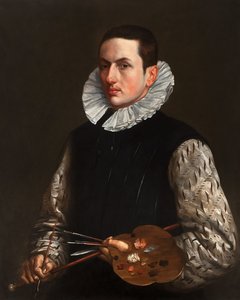
Frans Pourbus the Elder
1545 - 1581 , Belgium
Quick Facts
- Artistic Movement Or Style: Renaissance portraiture
- Artists Or Movements Influenced By This Artist: ['Frans Pourbus the Younger']
- Artists Who Influenced This Artist:
- Frans Floris
- Anthonis Mor
- Date Of Birth: 1545
- Date Of Death: 1581
- Full Name: Frans Pourbus the Elder
- Nationality: Flemish
- Notable Artworks:
- Saint Andrew Panels
- Viglius Aytta Triptych
- Portrait of an Old Man
- Portraits of Archduke Albrecht and Archduchess Isabella
- Place Of Birth: Bruges, Belgium
Related Articles
Sir Joshua Reynolds' Masterpieces: 25 Portraits of Power & Refinement | ArtsDot
Explore 25 captivating portraits by Sir Joshua Reynolds, a master of British art. Discover stories behind his iconic paintings, elegant style & historical influence. Find museum-quality reproductions and elevate your home decor on ArtsDot.com.
Henri Matisse's Masterpieces: Explore 25 Iconic Paintings & Art Decor Ideas
Journey through Henri Matisse's 25 most iconic paintings! Explore Fauvism, vibrant colors & the stories behind masterpieces like 'The Dance'. Find museum-quality art reproductions and curated decor ideas to elevate your space. Discover all masterpieces on ArtsDot.com.

Sir Alfred Munnings' Masterpieces: 25 Paintings That Define Equine Art | ArtsDot
Explore 25 iconic Sir Alfred Munnings paintings! Discover the beauty of British Impressionism, equine art & rural England. Find museum-quality reproductions and elevate your home decor with ArtsDot. Explore the full collection online.
Fauvism's Boldest Visions: 10 Masterpieces That Revolutionized Modern Art | ArtsDot
Explore 10 Fauvist masterpieces by Matisse, Derain & Vlaminck that ignited Modern Art! Discover bold colors, expressionist landscapes & the history of this revolutionary movement. Find museum-quality prints at ArtsDot.com.
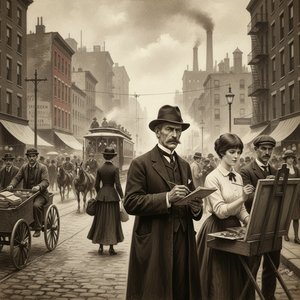
Robert Henri & the Spirit of American Realism: A Legacy of Urban Life and Artistic Independence
Explore the life & legacy of Robert Henri, a pivotal figure in American Realism. Discover his captivating portraits, influence on the Ashcan School, and enduring impact on art history. Learn more at ArtsDot.