The Rise of American Realism: Challenging Academic Traditions
 Wikipedia: Robert Henri
Robert Henri (; June 24, 1865 – July 12, 1929) was an American painter and teacher. As a young man, he studied in Paris, where he identified strongly with the Impressionists, and determined to lead an even more dramatic revolt against American acade...
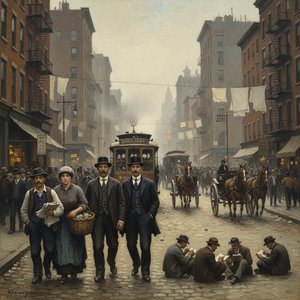
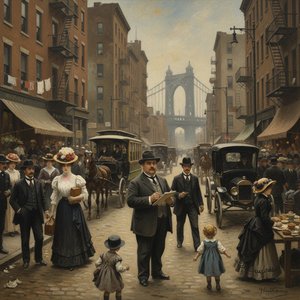
At the turn of the twentieth century, a quiet revolution was brewing within the American art world. For decades, the established norms dictated a preference for European styles – Impressionism, academic realism steeped in classical ideals – often imported and adapted rather than born from uniquely American experiences. A growing dissatisfaction with this reliance on foreign precedent began to simmer amongst a cohort of artists who felt compelled to depict the realities of their own burgeoning nation, its bustling cities, and the lives unfolding within them. This nascent movement, which would come to be known as American Realism, wasn’t merely about *what* was painted but *how* – a direct, unvarnished portrayal of life, devoid of romantic embellishment or idealized sentimentality. It was a deliberate rejection of the gilded aesthetic favored by the elite and a bold embrace of the everyday, often overlooked corners of society.
This shift wasn’t instantaneous; it was a gradual erosion of established tastes, fueled by social changes – rapid industrialization, mass immigration, and increasing urbanization. Artists began to question the relevance of depicting pastoral scenes or mythological narratives when faced with the raw energy and complex challenges of modern American life. The desire for authenticity, for a visual language that spoke directly to the experiences of ordinary people, became paramount. This yearning paved the way for figures like Robert Henri, who would become not only a leading painter but also a passionate advocate for this new artistic vision.
Robert Henri's Early Influences & Artistic Formation in Paris
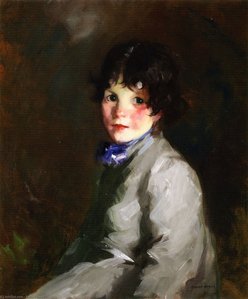
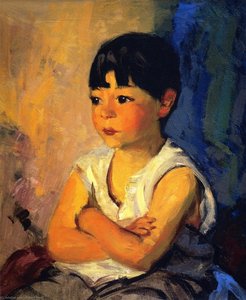 Nelson
Explore Robert Henri's 'Nelson,' a poignant 1914 American Realist portrait capturing a boy's contemplative expression with bold brushstrokes and intimate detail.
Born Robert Henry Cozad in 1865, Henri’s journey toward becoming a champion of American Realism began with a formative period spent studying in Paris. While there, he absorbed the lessons of Impressionism – its emphasis on light and color, its rejection of traditional studio practices – but found himself increasingly drawn to artists who prioritized emotional intensity and direct observation over purely optical effects. He admired painters like Gustave Courbet and Édouard Manet, whose commitment to depicting contemporary life with unflinching honesty resonated deeply with his own burgeoning artistic sensibilities.
However, Henri didn’t simply replicate what he saw in Paris; he sought to forge a distinctly American path. He believed that American art needed to break free from the constraints of European tradition and develop its own unique voice. This conviction led him to experiment with bolder brushwork, more vibrant color palettes, and a focus on capturing the energy and dynamism of urban life – qualities that would become hallmarks of his signature style. His time in Paris wasn’t about mastering technique; it was about cultivating a rebellious spirit and defining a personal artistic vision.
Capturing the Pulse of Urban Life: The Ashcan School and its Subjects
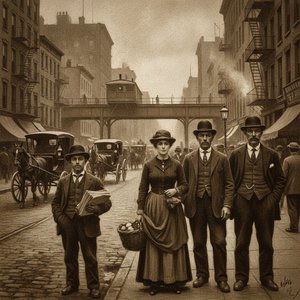
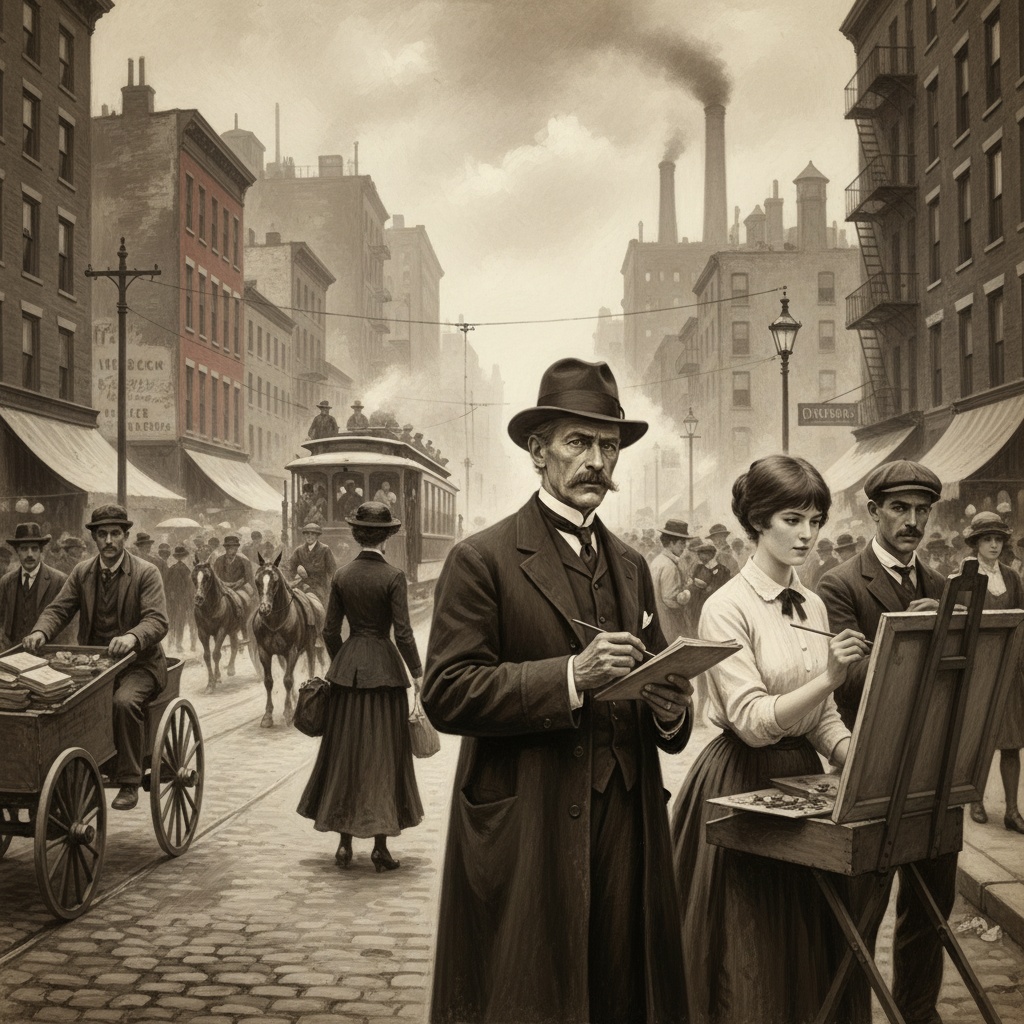
Upon returning to New York City around 1900, Henri found himself at the center of a group of like-minded artists who shared his passion for depicting the realities of urban life. This collective, later dubbed the “Ashcan School” – a somewhat derogatory name initially coined by critics – included John Sloan, George Luks, William Glackens, and Everett Shinn. They weren’t interested in painting the city's grand monuments or opulent mansions; instead, they focused on the streets, tenements, saloons, and theaters of working-class neighborhoods.
Their subjects were often overlooked by traditional artists: children playing in alleyways, immigrants struggling to make a new life, boxers sparring in dimly lit gyms. These weren’t idealized portrayals; they were raw, honest depictions of the hardships and joys of everyday existence. The name “Ashcan School” alluded to their willingness to delve into the gritty underbelly of urban life, to capture the sights and smells that others preferred to ignore. But beneath the surface of these seemingly mundane scenes lay a profound empathy for the human condition and a desire to give voice to those who were often marginalized or forgotten.
Henri’s Portraiture: A Democratic Vision of American Identity
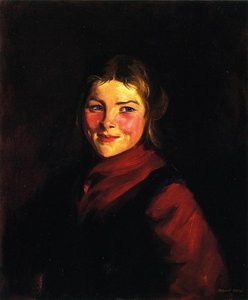
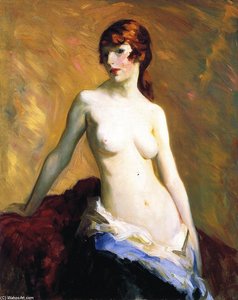
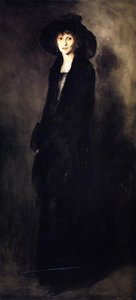
While Henri painted landscapes and street scenes, it was his portraiture that truly distinguished him. He approached portrait painting with a democratic spirit, choosing subjects from all walks of life – laborers, immigrants, children, and fellow artists. Unlike the formal portraits favored by the elite, Henri’s portraits were intimate and revealing, capturing not just physical likeness but also the inner character and dignity of his sitters.
“Catherine” (1913), for example, is a striking example of Henri’s ability to convey personality through bold brushstrokes and a direct gaze. Similarly, “La Madrelenita” (1910) captures the quiet strength and resilience of a young woman with remarkable sensitivity. And in “Nelson” (1914), he portrays a boy lost in thought, his contemplative expression hinting at a depth of emotion beyond his years. These portraits weren’t about celebrating wealth or status; they were about recognizing the inherent worth and dignity of every individual.
The Art Spirit: Henri as Teacher and Advocate for Individual Expression
Robert Henri wasn't just a painter; he was also a passionate teacher and advocate for artistic freedom. He believed that art should be “art for life’s sake,” not merely an exercise in technical skill or aesthetic refinement. He encouraged his students to find their own unique voices, to embrace their individuality, and to paint what they truly felt – even if it meant challenging conventional norms.
The Art Spirit, published posthumously in 1923, is a testament to Henri’s pedagogical philosophy. It's not a traditional art instruction manual; rather, it’s a collection of essays and aphorisms that emphasize the importance of observation, intuition, and emotional honesty. He urged his students to “work from nature,” not just in terms of physical subject matter but also in terms of their own inner experiences. Henri believed that true artistry came from a deep connection to life itself.
Legacy and Influence: Henri's Impact on Subsequent Generations of Artists
Robert Henri’s influence extended far beyond his immediate circle of students. He played a pivotal role in shaping the course of American art, paving the way for subsequent generations of Realist painters – including Edward Hopper, whose work shares Henri’s commitment to depicting the loneliness and alienation of modern life. His emphasis on individual expression and social commentary continues to resonate with artists today.
Henri's legacy isn’t simply about his paintings; it’s about his unwavering belief in the power of art to reflect and shape society. He challenged the established norms, championed the marginalized, and inspired countless artists to find their own unique voices. At ArtsDot.com, we celebrate Henri's enduring vision by offering high-quality reproductions of his masterpieces, allowing you to experience the raw energy and emotional depth of his work firsthand. Explore our collection today and discover the captivating world of Robert Henri – a true pioneer of American Realism.