The Urban Pulse: Defining the Ashcan School Movement
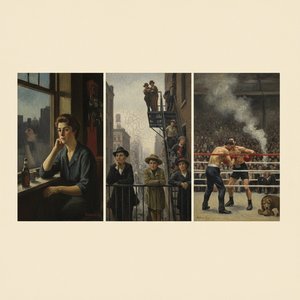
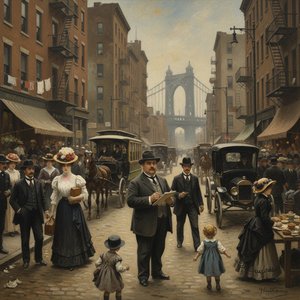
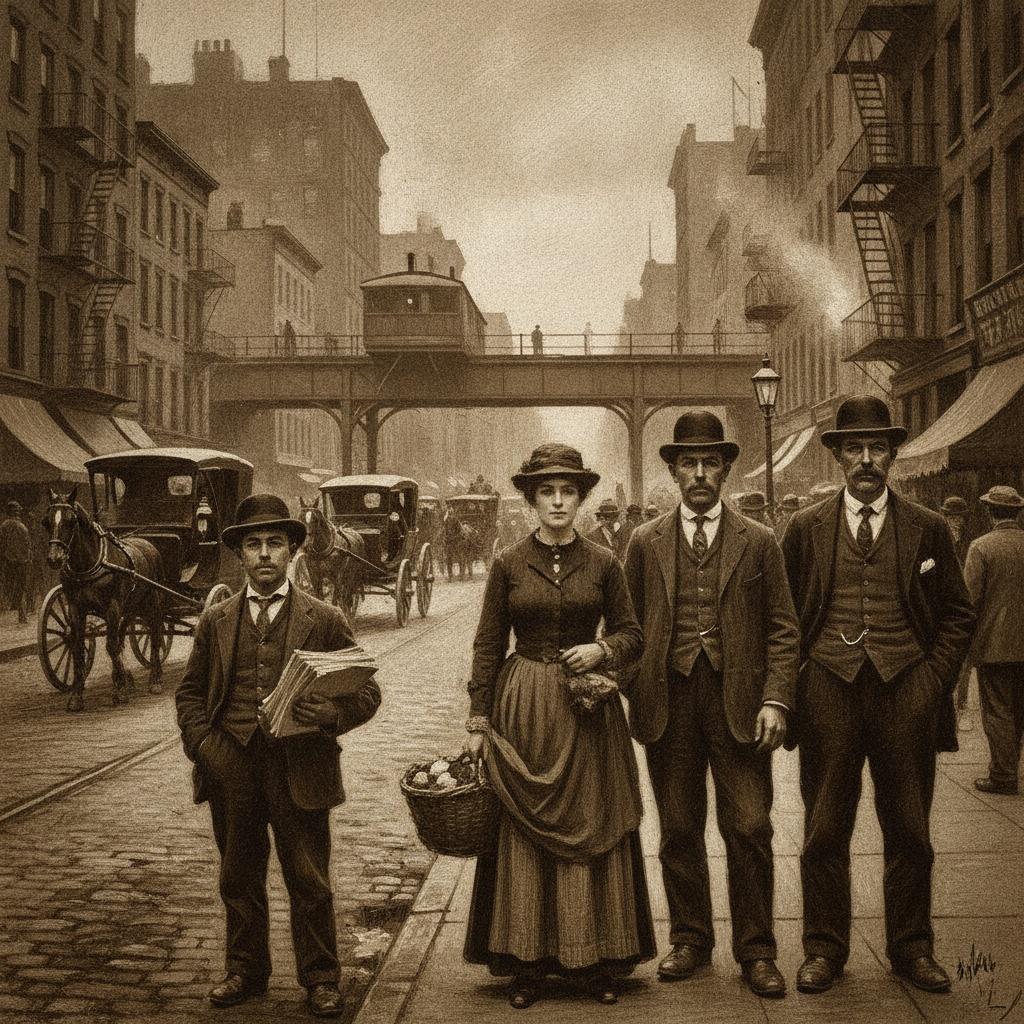
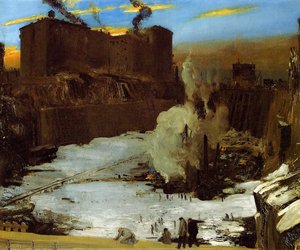
At the dawn of the twentieth century, a transformative energy surged through the streets of Manhattan, a rhythmic, chaotic heartbeat that demanded a new visual language. While the established art academies remained enamored with polished landscapes and idealized portraits, a rebellious group of painters—later known as the Ashcan School—turned their gaze toward the soot-stained reality of the burgeoning metropolis. They were not interested in the ethereal or the divine; instead, they sought the pulse of the pavement, finding profound beauty in the unvarnished truth of urban existence. This movement was less a formal school and more a shared sensibility, a collective decision to document the grit, the grime, and the glorious vitality of a city in flux.
To understand the Ashcan School is to understand the tension between progress and decay. As New York City expanded, its streets became theaters of human drama, where immigrant populations, laborers, and bohemians collided in a vibrant tapestry of life. These artists, many of whom were deeply influenced by the French Impressionists yet anchored by an American grit, utilized a palette that reflected the very environment they inhabited. Their work served as a visual chronicle of an era defined by rapid industrialization, capturing the fleeting moments of a society transitioning into modernity with an honesty that was both startling and deeply moving.
Gritty Realism: The Aesthetic of New York's Streets and Shadows
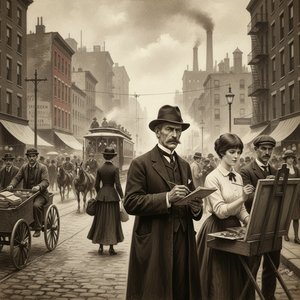
The aesthetic of the Ashcan School is characterized by a profound sense of immediacy, achieved through bold, often vigorous brushwork and a tonal range that embraces the shadows. There is a palpable weight to their canvases, an impasto texture that mirrors the physical density of the city itself. These painters did not shy away from the darker corners of urban life; they embraced the murky alleys, the crowded tenements, and the smoke-filled taverns. By focusing on the "ashcan" elements—the discarded, the overlooked, and the mundane—they elevated the everyday struggles of the working class to the status of high art.
Light in these works functions not as a divine glow, but as a dramatic protagonist. It filters through smog, glints off rain-slicked cobblestones, and illuminates the faces of weary commuters. This use of light creates a sense of atmospheric depth, where the boundaries between the figures and their environment often blur, suggesting that the people and the city are inextricably linked. The shadows are not merely absences of light but are rich with narrative potential, hiding secrets of the nocturnal streets and providing a somber counterpoint to the vibrant energy of the daytime crowds.
Masters of the Metropolis: Analyzing Bellows, Glackens, and Sloan
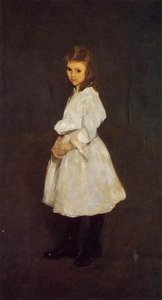
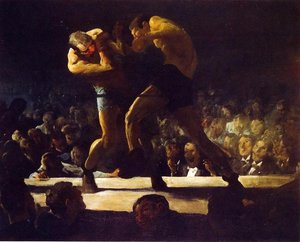
The movement found its most potent expressions in the hands of masters such as George Bellows, William Glackens, and John Sloan. Each brought a unique perspective to the urban narrative, yet all shared a commitment to the raw spirit of New York. George Wesley Bellows possessed an unparalleled ability to capture motion and muscularity; his works often feature dynamic compositions that evoke the sheer physical force of the city. In masterpieces like My Mother, one can observe how he weaves themes of familial resilience against a backdrop of urban decay, utilizing a powerful symmetry and a profound emotional depth that resonates with the viewer long after the gaze has departed.
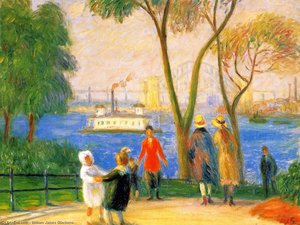
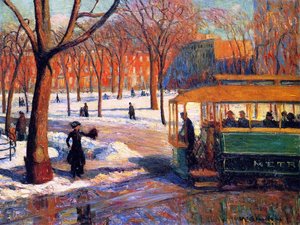
In contrast, William Glackens infused his scenes with a certain luminous vitality, often drawing from the influence of Renoir to bring a sense of coloristic joy to even the most crowded settings. His depictions of Washington Square, such as Italo-American Celebration or the spirited Girl Roller-Skating, showcase a vibrant realism that celebrates the bohemian energy of New York's social hubs. Meanwhile, artists like Sloan provided the sociological backbone of the movement, documenting the quiet, intimate moments of tenement life with a journalistic precision. Together, these artists formed a triumvirate of vision, ensuring that the multifaceted identity of New York was preserved through their diverse yet unified artistic lens.
Beyond the Canvas: The Social and Cultural Impact of American Realism
The legacy of the Ashcan School extends far beyond the physical boundaries of their canvases. By validating the subject matter of the streets, they fundamentally altered the trajectory of American art, paving the way for future generations of realists and social commentators. Their work acted as a mirror to the sociological shifts of the time, documenting the immigrant experience and the rise of the working class with a dignity that challenged the elitism of the era's art institutions. They forced the viewer to confront the realities of urban poverty and industrial struggle, making the art gallery a space for social reflection.
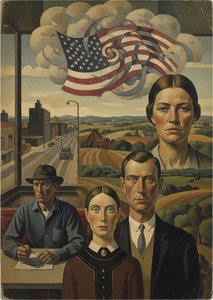
Culturally, this movement contributed to the birth of a distinctly American aesthetic—one that was less concerned with European tradition and more invested in the authentic, often difficult, reality of the New World. The Ashcan School's influence can be seen in the later development of American Scene Painting and even in the gritty realism of modern documentary photography. They taught us that there is profound significance in the ephemeral, and that the true soul of a civilization is often found not in its monuments, but in the lived experiences of its people.
Preserving the Legacy: Bringing Ashcan Spirit into Modern Interiors
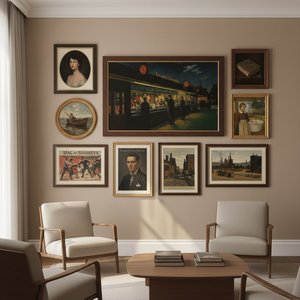
In the contemporary era, the evocative power of the Ashcan School continues to find resonance within modern interior design. The movement's ability to balance heavy, dramatic tones with moments of brilliant light makes it an exceptional choice for collectors seeking to add depth and historical gravity to their spaces. Integrating a reproduction of such a masterpiece allows a room to transcend mere decoration, becoming a curated environment that invites contemplation and storytelling.
Whether through large-scale oil reproductions that command a focal point in a minimalist loft or smaller, intimate pieces that add character to a study, the Ashcan aesthetic provides a timeless connection to the past. For those looking to honor this legacy, ArtsDot.com offers an unparalleled gateway to these historical treasures. Our master artists specialize in creating hand-painted oil reproductions that capture the very essence of the original—from the visible, textured brushstrokes to the complex tonal ranges. By bringing these works into the modern home, we ensure that the raw, unyielding spirit of New York City continues to inspire and endure for generations to come.