Early Life & Training: The Foundations of a Maritime Vision
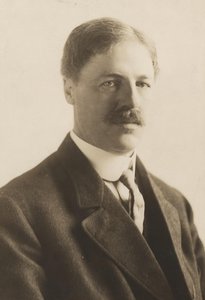 Robert W. Salmon
Discover Robert W. Salmon (1775-1845), the 'Father of American Luminism'. Explore his breathtaking maritime paintings, serene seascapes & masterful light effects.
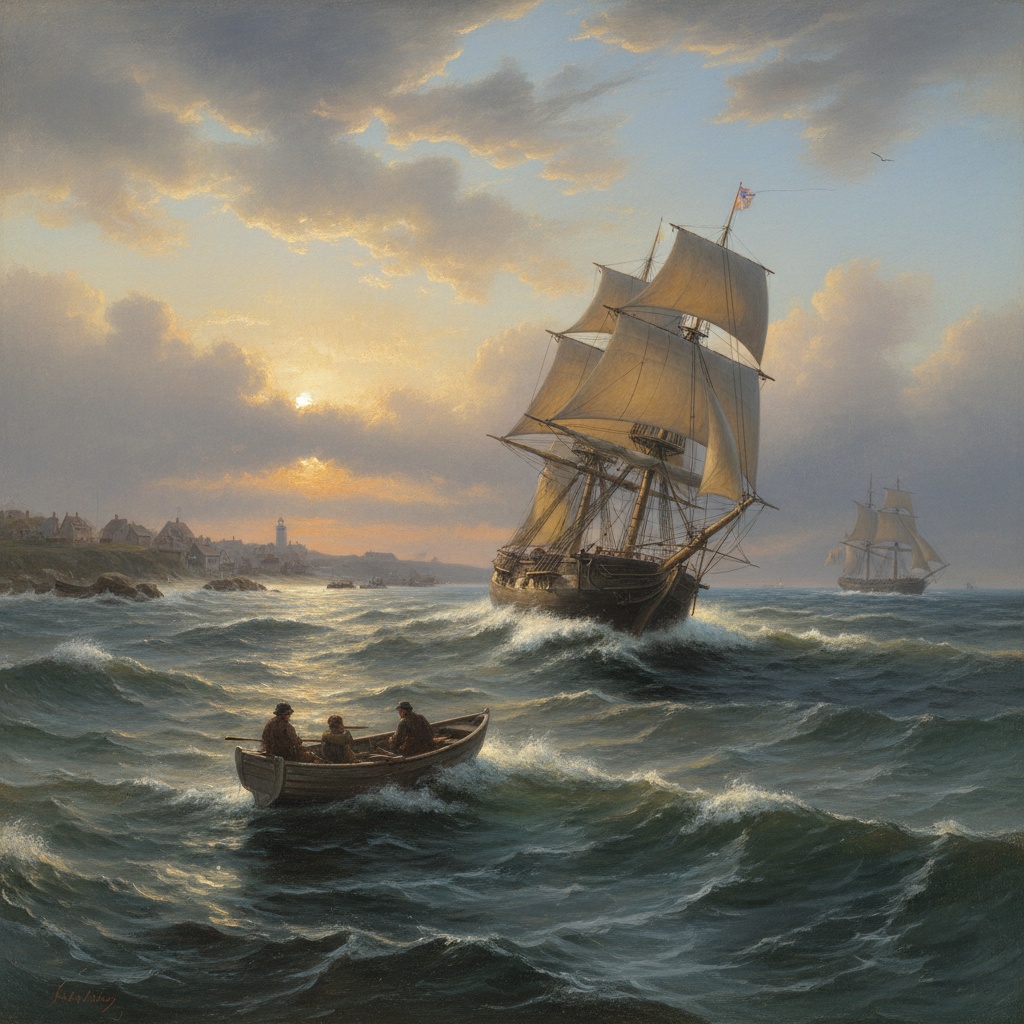
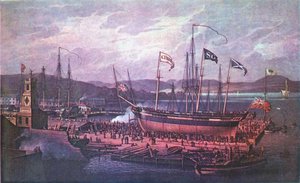
Robert W. Salmon, often hailed as the “Father of American Luminism,” began his artistic journey not amidst the serene harbors he would later immortalize, but in the bustling port town of Whitehaven, Cumberland, England, in 1775. While details surrounding his early training remain somewhat elusive, it’s clear that a deep fascination with the sea permeated his formative years. Born Robert Salomon, he initially adopted the more Anglicized “Salmon” as his professional name—a subtle shift perhaps mirroring his evolving artistic identity. His earliest known works, dating back to 1800, reveal an immediate aptitude for capturing the intricacies of ships and maritime life, demonstrating a keen observational skill honed by the constant activity surrounding him. These initial paintings weren’t merely depictions; they were studies in light and shadow, foreshadowing the Luminist aesthetic that would define his later career. He absorbed influences from Dutch marine painters of the 17th century—artists like Simon de Vlieger and Jan van Goyen—and the Italian vedutisti, masters of architectural landscapes, learning to render both precise detail and atmospheric perspective. This foundation in European traditions provided a crucial springboard for his unique American vision.
From England to America: A Transatlantic Artistic Journey
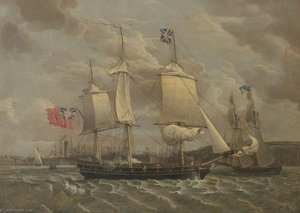
Salmon’s career flourished initially in England, moving between the port cities of Liverpool and Greenock, Scotland. He established himself as a skilled ship portraitist, catering to the demands of merchants and sea captains eager to preserve images of their vessels—symbols of prosperity and adventure. However, by the late 1820s, Salmon harbored ambitions beyond the European art scene. Sensing opportunity in the burgeoning American market, he embarked on a transatlantic voyage, arriving in Boston on New Year’s Day, 1829. This decision proved pivotal. While his earlier work demonstrated technical proficiency, it was in America—specifically within the vibrant atmosphere of Boston Harbor—that Salmon truly discovered his artistic voice. He established a modest studio overlooking the harbor and began to paint with a newfound intensity, captivated by the unique light and character of the New England coastline. The move wasn’t simply geographical; it represented a shift in focus from meticulous documentation to an exploration of mood, atmosphere, and the sublime beauty of nature.
The Luminist Style Defined: Capturing Light and Tranquility in Salmon’s Work
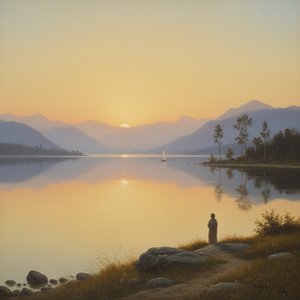
Luminism is a style of American landscape painting from the 1850s to 1870s, characterized by effects of light in a landscape, through the use of aerial perspective and the concealing of visible brushstrokes. Luminist landscapes emphasize tranquility,...
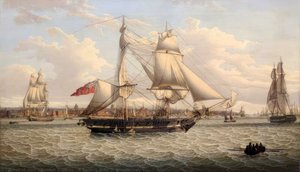
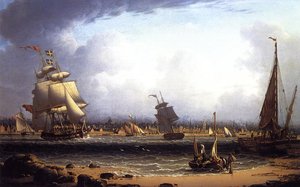
Though the term “Luminism” wouldn't be coined until much later, Robert W. Salmon was undeniably at the forefront of this distinctly American artistic movement. Luminism emphasized effects of light in landscapes—a serene stillness, often depicting calm waters reflecting a soft, hazy sky. His paintings weren’t about dramatic storms or turbulent seas; they were about capturing fleeting moments of tranquility and clarity. He achieved this through meticulous attention to aerial perspective, subtly layering colors to create depth and atmosphere, and concealing visible brushstrokes to minimize the artifice of painting itself. Shipping in President Roads, Off Boston Light (1829) exemplifies this approach—a peaceful harbor scene bathed in a gentle glow, where ships appear almost suspended in time. Liverpool from Wallasey Foreshore (1825), though painted before his arrival in America, hints at the Luminist sensibility that would fully blossom later in his career. The key was not simply *representing* light but evoking its emotional impact—a sense of peace, contemplation, and connection to nature.
Boston Harbor as Muse: Documenting a Changing Seascape
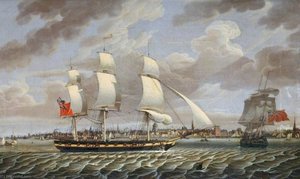
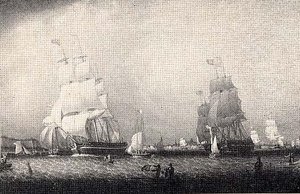 Boston Harbor from Castle Island ( Ship Charlotte ), (painting)
Experience Robert Salmon's 'Boston Harbor,' a detailed 1839 monochrome painting capturing maritime life & historical Boston. A stunning example of American Luminism.
For over a decade, Boston Harbor served as Salmon’s primary muse. He produced an astonishing number of paintings – estimates range between 300-400 – documenting the harbor's bustling activity and evolving character. Boston Harbor from Castle Island (Ship Charlotte) (1839), with its detailed monochrome rendering, offers a fascinating glimpse into maritime life during this period. He wasn’t merely painting ships; he was capturing a specific moment in time—the vessels, the architecture, the very atmosphere of a rapidly growing port city. His paintings became invaluable records of 19th-century Boston, providing historians with detailed insights into shipbuilding techniques, trade routes, and daily life on the waterfront. He worked quickly, often painting directly from observation, capturing the subtle shifts in light and weather conditions that defined each scene. This dedication to realism, combined with his growing mastery of Luminist techniques, set him apart from other marine painters of the time.
Salmon's Legacy & Influence: The 'Father of American Luminism'
Robert W. Salmon’s impact on American art is profound, earning him the title “Father of American Luminism.” While he didn’t explicitly articulate a formal artistic philosophy, his work served as a crucial bridge between European traditions and the uniquely American sensibility that would define the movement. His emphasis on light, atmosphere, and tranquility resonated deeply with younger artists like Fitz Henry Lane and William Bradford, who built upon his foundations to create some of the most iconic Luminist paintings in history. Salmon’s influence extended beyond technique; he fostered a sense of quiet contemplation and reverence for nature that became central to American landscape painting. Though often described as eccentric and solitary, his dedication to his craft and his unwavering commitment to capturing the beauty of the natural world left an indelible mark on the art world. His paintings continue to inspire awe and admiration, offering viewers a glimpse into a bygone era—a time when ships were symbols of adventure, and harbors were gateways to new horizons.
Collecting Robert W. Salmon Today: A Guide for Enthusiasts
Acquiring a work by Robert W. Salmon is an investment in both artistic heritage and American history. While his prolific output means that paintings are available on the market, finding pieces in excellent condition can be challenging. Ship portraits remain particularly sought after, offering detailed depictions of vessels and maritime life. However, his harbor scenes—particularly those capturing Boston Harbor—are equally prized for their atmospheric qualities and historical significance. Prices vary considerably depending on size, subject matter, and provenance, ranging from several thousand to tens of thousands of dollars. ArtsDot offers high-quality reproductions of Salmon’s most iconic works, allowing enthusiasts to experience his artistry firsthand. When considering a purchase, it's essential to research the painting’s history, condition, and authenticity. Consulting with an art appraiser or specialist can provide valuable insights and ensure you are acquiring a genuine piece of American artistic heritage. His work is not merely decorative; it’s a window into a pivotal moment in American art history—a testament to the power of light, atmosphere, and the enduring beauty of the sea.