A Chronicle of the American West: Frederic Remington’s *The Old Stage Coach of the Plains*
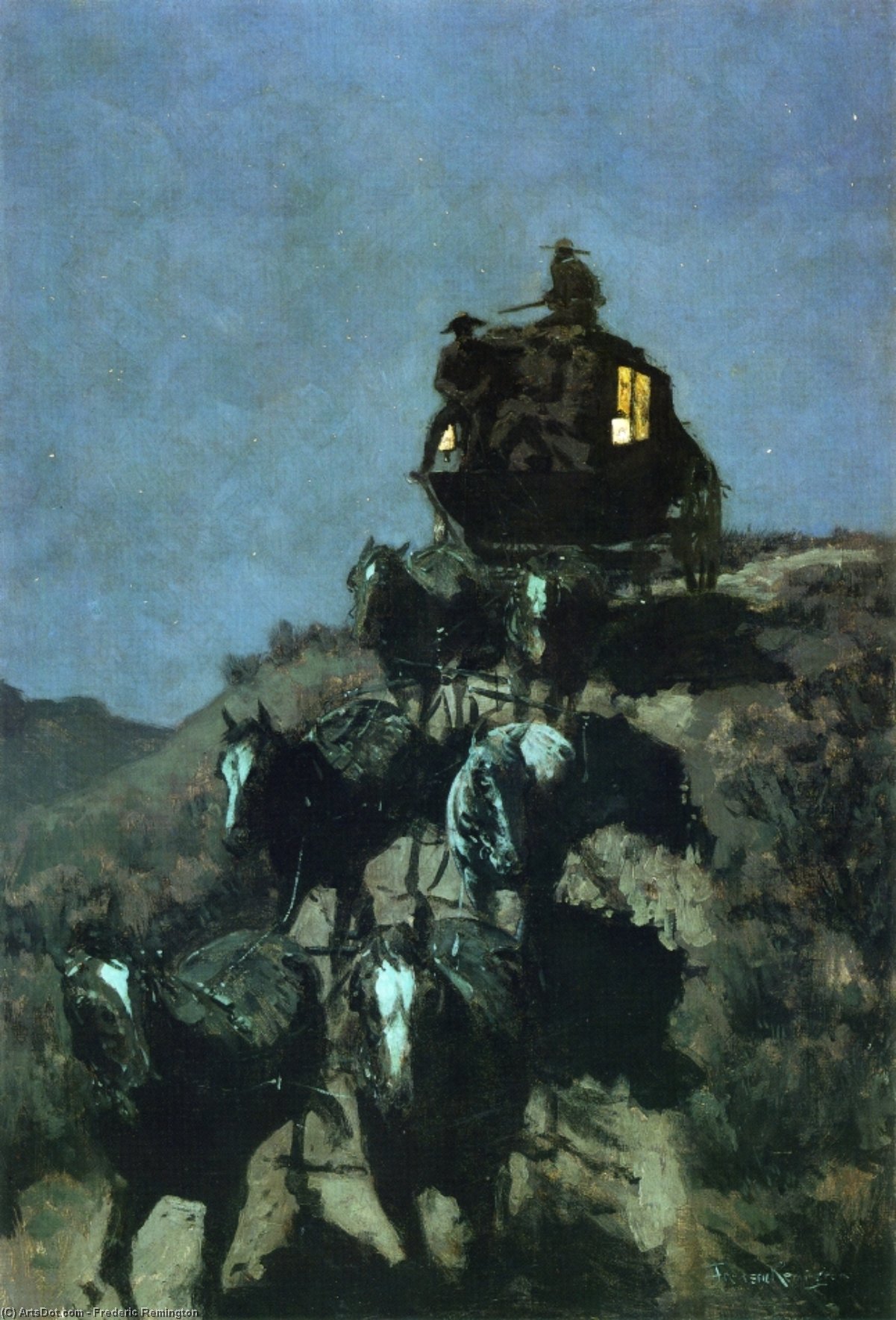
Frederic Remington's *The Old Stage Coach of the Plains*, painted in 1901, is more than just a depiction of a scene; it’s a powerful evocation of an era – the waning days of the American frontier. This oil-on-canvas masterpiece captures the rugged spirit and inherent drama of the West, solidifying Remington's place as one of its most iconic chroniclers. The painting immediately draws the eye to the struggling stagecoach, pulled relentlessly uphill by a team of horses, a visual metaphor for the relentless push westward that defined the nation’s expansion. The scene unfolds under a dramatic, dark sky, hinting at both the dangers and the vastness of the landscape – a common motif in Remington's work reflecting his fascination with the untamed wilderness.
Artistic Technique and Composition
- Nighttime Drama: Remington’s masterful use of light and shadow is central to the painting’s impact. The warm glow emanating from the stagecoach and the figures within contrasts sharply with the cool, enveloping darkness, creating a palpable sense of tension and isolation.
- Bold Brushwork: Remington's signature style is evident in his energetic brushstrokes, which convey movement and immediacy. The horses’ muscles ripple beneath their coats, and the wheels of the stagecoach churn through the dirt, all rendered with confident, almost impasto application of paint.
- Compositional Strength: The diagonal thrust of the stagecoach up the hill immediately engages the viewer's eye, while the figures in the foreground provide a crucial human element, grounding the scene and inviting us to contemplate their journey.
Symbolism and Historical Context
Painted at the cusp of a significant shift in American history, *The Old Stage Coach of the Plains* reflects the decline of the traditional frontier experience. The stagecoach itself represents not just transportation but also the burgeoning commercial activity that was reshaping the West. The figures within – likely travelers seeking fortune or simply adventure – embody the spirit of those drawn to the promise of a new life in the vast, untamed territories. Remington’s work is deeply rooted in the late 19th-century fascination with the “vanishing West,” a period when romanticized images of cowboys and pioneers were increasingly dominant in American culture. The painting speaks to a time of rapid change, expansion, and ultimately, the displacement of indigenous populations.
Remington’s Legacy and Artistic Influence
Frederic Remington's work profoundly influenced subsequent generations of artists and continues to resonate with audiences today. His ability to capture not just the visual aspects of the West but also its emotional essence – a blend of danger, adventure, and rugged individualism – established him as a pivotal figure in American art history. Reproductions like this one allow us to experience firsthand the power of his vision, offering a window into a bygone era and celebrating the enduring allure of the American frontier. This particular piece is a testament to Remington’s skill and remains a cornerstone of Western art.