A Nocturne of Frontier Spirit
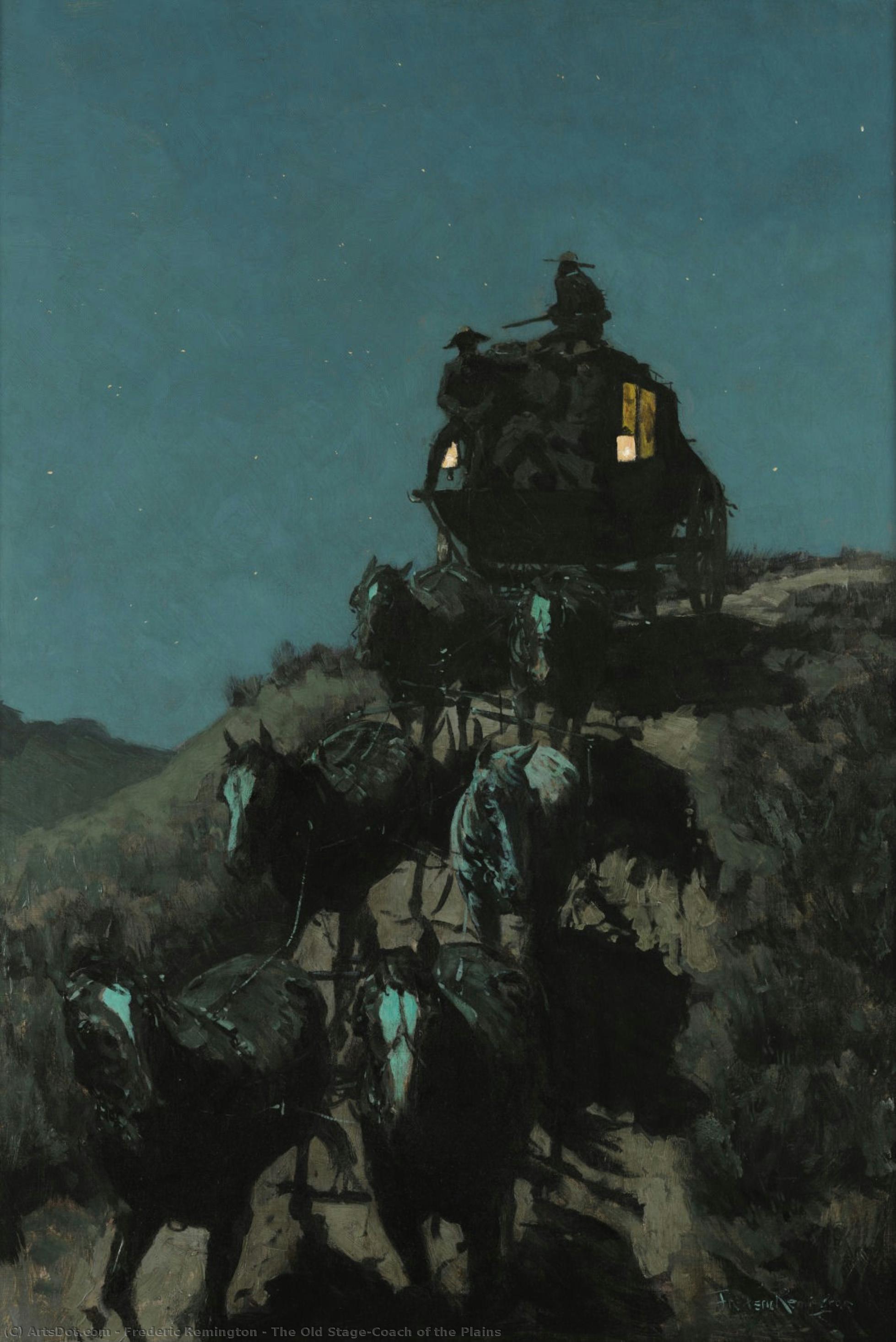
In the quiet, silvered shadows of the American West, Frederic Remington’s 1901 masterpiece, The Old Stage-Coach of the Plains, breathes life into a vanishing era. This is not merely a painting of a journey; it is an immersive nocturnal experience that captures the very heartbeat of the frontier. As the eye meets the canvas, one is immediately transported to a desolate, moonlit landscape where the struggle for progress is etched into every brushstroke. The stagecoach, perched precariously atop a rising incline, serves as a powerful visual metaphor for the relentless human ambition that defined the late nineteenth century—a solitary vessel of civilization pushing against the vast, untamed darkness of the plains.
Remington, a master chronicler of the American spirit, utilizes a sophisticated, almost monochromatic palette to evoke the profound stillness of night. Dominated by deep blacks, stark whites, and subtle gradations of slate grey and midnight blue, the color scheme reinforces a sense of solemnity and introspection. The lighting is masterfully subdued; a faint, warm glow emanates from within the stagecoach windows, offering a singular point of human warmth amidst the overwhelming expanse of the nocturnal wilderness. This delicate interplay of light and shadow creates a dramatic tension, highlighting the isolation of the travelers while underscoring the immense, watchful presence of the star-speckled sky above.
Technique and the Painterly Texture
The allure of this work lies heavily in its expressive, painterly quality. Eschewing rigid, sharp outlines, Remington employed a loose and fluid technique with oil on canvas that lends the scene an organic, breathing texture. The horses pulling the heavy coach are rendered with a sense of kinetic energy, their forms blending into the rugged terrain through soft, atmospheric edges. This lack of sharp delineation allows the landscape to feel as though it is part of a singular, moving atmosphere, where the wind and dust of the plains seem almost tangible to the viewer.
For the discerning collector or interior designer, this artwork offers a profound sense of depth and movement. The vertical composition emphasizes the upward trajectory of the coach, drawing the gaze toward the heavens and creating an aspirational mood. The rough, uneven texture of the brushwork provides a tactile richness that makes a high-quality reproduction feel deeply authentic, bringing the ruggedness of the Old West into a contemporary setting. It is a piece that does not just decorate a wall; it commands the room with its historical weight and atmospheric mystery.
A Legacy for the Modern Collector
Beyond its technical brilliance, The Old Stage-Coach of the Plains resonates on an emotional level, touching upon themes of melancholy, adventure, and the inevitable passage of time. It captures the twilight of the frontier—a moment of transition where the wildness of the West was beginning to yield to the encroaching modern age. This sense of nostalgia makes the painting a timeless addition to any curated collection, offering a window into a period of mythic importance in American history.
Whether placed in a grand library, a sophisticated study, or as a focal point in a contemporary living space, this reproduction serves as an evocative conversation piece. It invites contemplation of the hardships endured by those who traversed these plains and celebrates the enduring resilience of the human spirit. To possess such a work is to hold a fragment of the American legend, preserved through Remington’s masterful ability to turn historical observation into eternal art.