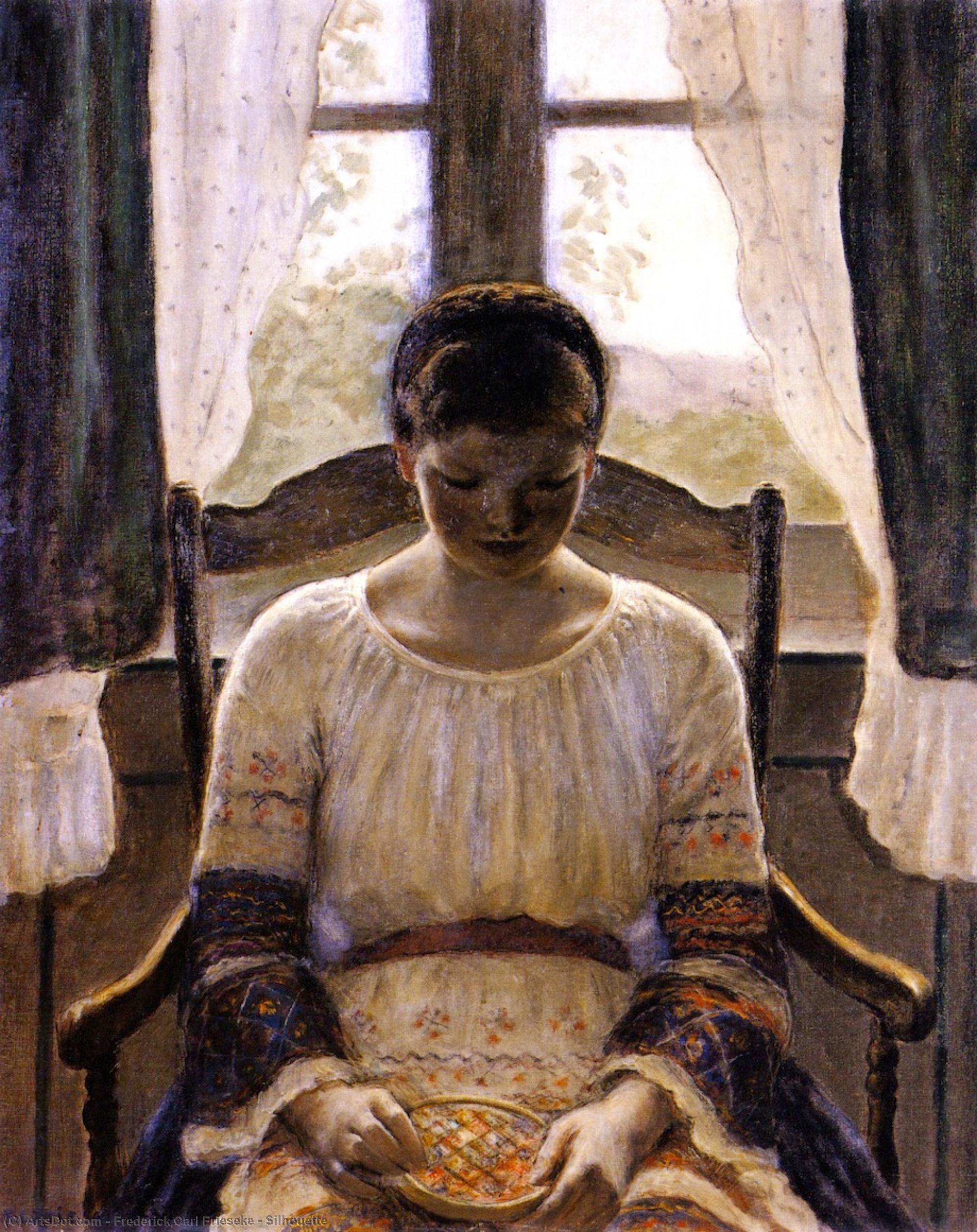
Silhouette by Frederick Carl Frieseke: A Study in Quiet Contemplation
Frederick Carl Frieseke’s “Silhouette” is more than just a portrait; it's an invitation. Painted in 1933, this oil on canvas captures a moment of profound stillness – a woman lost in thought, gazing out from a window, her presence radiating a serene and almost melancholic beauty. The painting immediately draws the viewer into its quiet world, a testament to Frieseke’s mastery of Impressionist technique and his ability to evoke emotion through subtle details.
- Subject Matter: The central figure is a woman seated in a chair, her profile turned towards the viewer. This deliberate pose – head tilted, eyes fixed on an unseen vista – immediately establishes a sense of introspection and vulnerability.
- Composition: Frieseke’s composition is deceptively simple. The woman's silhouette dominates the canvas, contrasted against a softly blurred background that emphasizes her isolation and contemplation. Two chairs provide context, hinting at a private moment within a domestic setting.
- Color Palette: The painting utilizes a muted color palette – soft blues, greens, and browns – creating an atmosphere of tranquility and warmth. These gentle hues contribute significantly to the overall sense of peace and serenity.
The Impressionist Vision
Frieseke was a key figure in American Impressionism, deeply influenced by the French masters like Monet and Renoir. His work is characterized by loose brushstrokes, an emphasis on capturing fleeting moments of light and atmosphere, and a focus on depicting everyday scenes with remarkable sensitivity. “Silhouette” exemplifies these qualities perfectly. The artist’s technique – delicate, almost translucent layers of paint – creates a luminous effect, as if the scene is bathed in soft, diffused sunlight. This approach wasn't merely about replicating what was seen; it was about conveying an *impression* of light and emotion.
Historical Context & Artistic Influences
Created in 1933, “Silhouette” reflects a period of significant artistic change. Frieseke’s relocation to Paris in 1898 proved pivotal, immersing him in the heart of the Impressionist movement. The painting's quiet contemplation also resonates with the broader cultural trends of the early 20th century – a growing interest in introspection and the beauty of the natural world. His earlier training at the Art Institute of Chicago provided a solid foundation, while his time in Paris allowed him to refine his style and develop a unique artistic voice.
Symbolism & Emotional Impact
The title itself, “Silhouette,” immediately suggests mystery and shadow – hinting at the unseen world that occupies the woman’s thoughts. The act of gazing out the window is a universal symbol of longing, reflection, and perhaps even a touch of melancholy. Frieseke masterfully captures this emotional resonance, inviting viewers to project their own feelings and interpretations onto the scene. “Silhouette” isn't just a beautiful painting; it’s an evocative meditation on solitude, beauty, and the human condition.