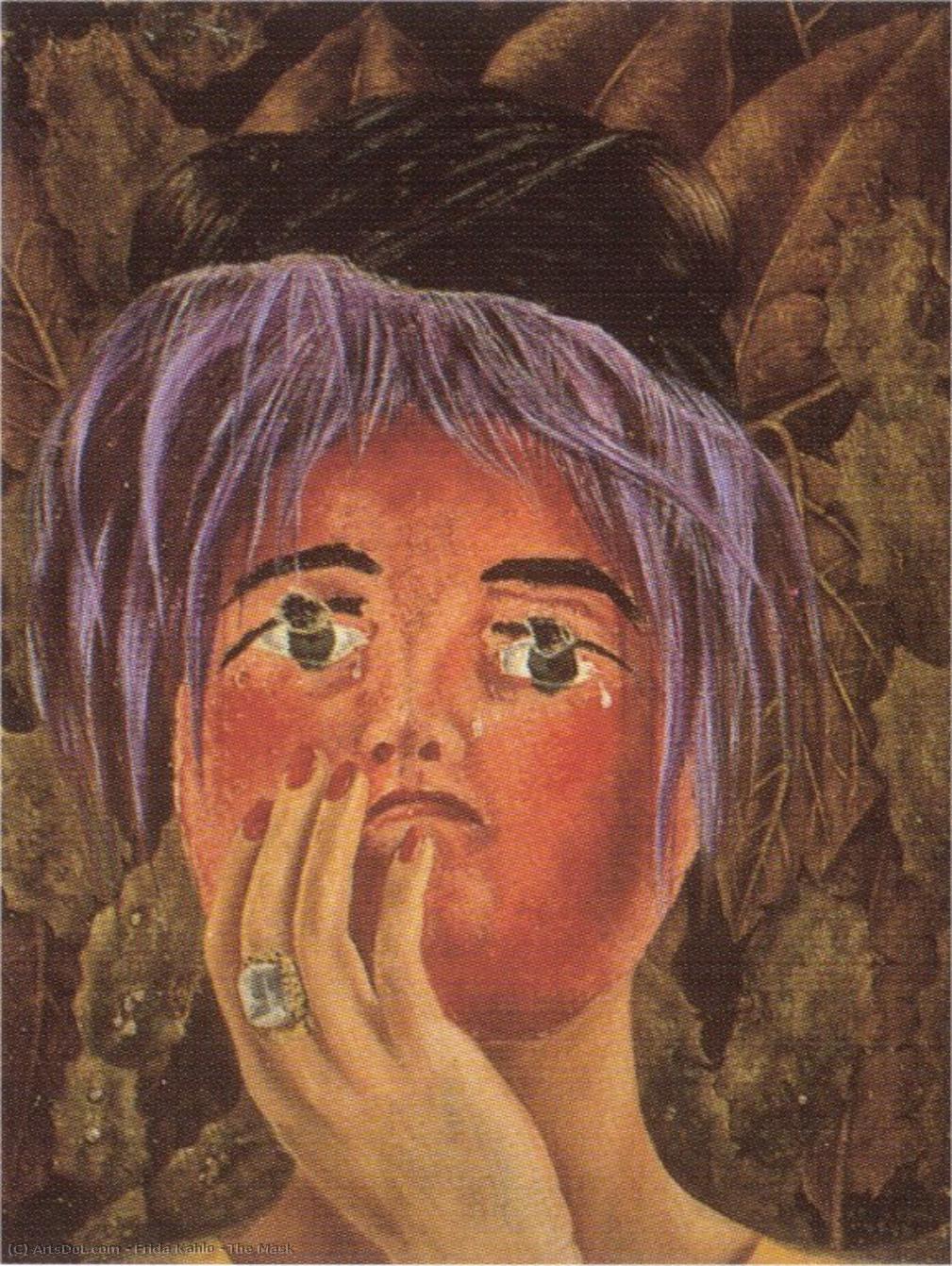
A Portrait of Quiet Anguish: Unpacking Frida Kahlo’s “The Mask”
Frida Kahlo's "The Mask," painted in 1945, isn’t merely a portrait; it’s a raw and profoundly intimate excavation of the self. Measuring a modest 40 x 31 cm on masonite, this work immediately draws the viewer into a world of subdued emotion and carefully constructed symbolism. The subject, a woman with striking purple hair – a deliberate choice that disrupts conventional beauty standards – gazes downward, her expression a delicate blend of sadness and guardedness. It’s a face etched not just with lines of age but with the weight of experience, hinting at a life lived through both immense pain and unwavering resilience.
Primitivism and Personal Symbolism
Kahlo's stylistic choices in "The Mask" firmly place it within the realm of primitivism, though one uniquely shaped by her own intensely personal vision. This isn’t a rejection of realism, but rather an embrace of directness and emotional honesty. The simplified forms, the bold use of color – particularly the vibrant purple against a muted background – bypass intellectual analysis and speak directly to the viewer's senses. Notice how Kahlo employs a technique reminiscent of Mexican folk art, utilizing flat planes of color and a lack of meticulous detail. This deliberate simplification serves to amplify the emotional impact of the image, forcing us to confront the vulnerability at its core.
- Masonite Support: The choice of masonite, a relatively inexpensive material readily available in post-revolutionary Mexico, speaks volumes about Kahlo’s pragmatic approach to her art. It allowed her to focus entirely on conveying her inner world without being constrained by the expense or difficulty of traditional canvases.
- Color Palette: The dominant purple is often interpreted as representing mourning, but also royalty and spirituality – a complex layering reflecting Kahlo's own layered identity.
The Ring and the Veiled Identity
A prominent ring adorns the woman’s finger, a detail that immediately draws attention and invites speculation. While its specific meaning remains open to interpretation, it’s widely believed to symbolize protection – perhaps a shield against the pain she endured or a reminder of her past. The downward gaze is crucial; it suggests a deliberate concealment, a mask worn not just for outward appearances but as a defense mechanism. Kahlo herself frequently used masks in her art and life, representing the duality of identity—the public persona versus the private self.
Historical Context: Pain, Resilience, and Post-Revolutionary Mexico
"The Mask" was created during a period of immense personal upheaval for Kahlo. Following a devastating bus accident in 1925 that left her with lifelong physical limitations and emotional scars, she began to channel her suffering into her art. This painting reflects the broader cultural context of post-revolutionary Mexico, where traditional values were being reinterpreted alongside emerging modern sensibilities. Kahlo’s work, deeply rooted in Mexican folklore and indigenous symbolism, became a powerful voice for marginalized communities and a poignant exploration of female experience. It's important to remember that Kahlo painted much of her life while battling chronic pain and undergoing numerous medical procedures – this painting is not just an aesthetic exercise but a testament to her enduring spirit.
A high-quality reproduction of “The Mask” offers a captivating glimpse into the mind of one of art’s most compelling figures. ArtsDot.com provides meticulously crafted reproductions, ensuring that the emotional depth and symbolic richness of Kahlo's masterpiece are faithfully preserved for your enjoyment and collection.