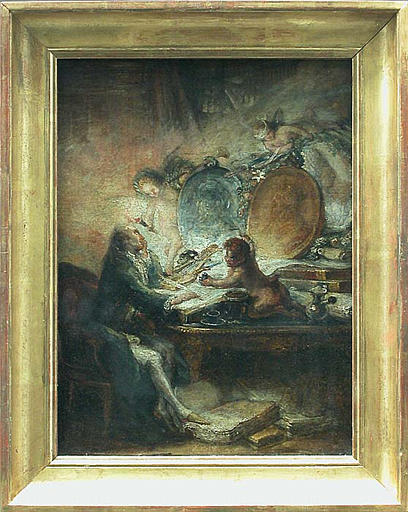
A Vision of Artistic Genesis: Exploring Saint-Aubin's Masterpiece
To stand before 'Le rêve ou Voltaire composant la pucelle' is to step directly into the vibrant, charged atmosphere of an 18th-century Parisian atelier. This work by Gabriel Jacques de Saint-Aubin is not merely a depiction of art; it is an immersion into the very act of creation itself. The scene unfolds with theatrical grandeur, capturing a moment where intellect, imagination, and artistic skill converge. One senses the hushed intensity of genius at work, surrounded by the rich patina of history and the promise of untold stories.
Rococo Drama and Chiaroscuro Light
Stylistically, the painting resonates deeply with the spirit of Rococo—a period characterized by elegance, emotional depth, and a playful theatricality. Yet, Saint-Aubin elevates this style through masterful handling of light. The pervasive use of chiaroscuro is breathtaking; deep, velvety shadows cling to corners and draperies, while brilliant shafts of light pierce the gloom, illuminating the central figures with almost divine focus. This dramatic lighting scheme does more than just illuminate; it heightens the mystery, suggesting that the creative process itself is an act bathed in revelation.
Symbolism Woven into Canvas
The subject matter invites deep contemplation. At its heart lies a complex interplay of figures—the contemplative scholar, perhaps Voltaire himself, guiding the composition, alongside youthful assistants and observers. The very notion of 'Voltaire composing the pucelle' suggests a dialogue between Enlightenment philosophy and visual art. It speaks to the enduring human quest to capture ephemeral thoughts onto permanent media. Notice the symbolic element of the painting within the painting; it is a profound meditation on representation—how does an idea become visible? How does thought take form?
Technique and Material Richness
Examining the technique reveals Saint-Aubin's meticulous hand. The artist employed rich layering, or glazing, over what was likely oil paint on canvas, allowing for a depth of color that seems almost palpable. From the heavy folds of drapery rendered in muted earth tones—ochres, deep browns, and aged reds—to the delicate highlights of pale blue suggesting ethereal dreams, every texture has been considered. The brushwork is both expressive and controlled, giving the scene a tangible sense of weight and luxurious antiquity.
Bringing the Atelier Home
For the collector or designer seeking an object that transcends mere decoration, this reproduction offers an unparalleled narrative anchor for any space. It does not simply hang on a wall; it breathes life into a room, suggesting intellectual fervor and artistic patronage. Owning a piece echoing Saint-Aubin’s vision is to invite a conversation about beauty, genius, and the enduring magic found at the intersection of mind and hand.