 Preview
 Send
Send Share
Share
 Details

 Download
 Similars
 X-Ray
X-Ray Diaporama
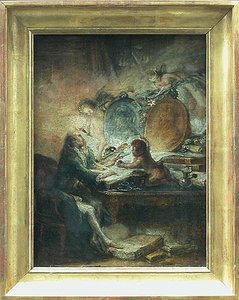
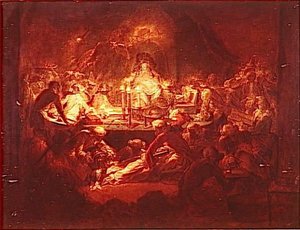
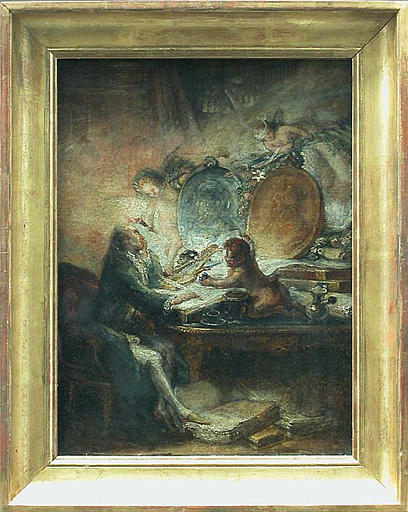
Le rêve ou Voltaire composant la pucelle


 Read More
Hand Made Oil Reproduction
Hand-painted oil on canvas in your size and frame, made to order by our artists. ( Buy Print Buy Image)




P118B $10

P118H $10

P118W $10

P438Z $10

P508JH $12

P508YH $12

P805H $10

P805Z $10

P919BZ $10

P919G $10

P919XJ $10

P959ZH $10

P968JZ $12

W106C $8

W218G $10

W218JH $8

W218Y $10

W307PJ $10

W316G $10

W316PJ $8

W316Y $10

W398PJ $8

W4111J $10

W500HY $15

W500JH $15

W692G $12

W849H $8

W940BG $15

W953PJ $8




Pick from our preset sizes that match the artwork's original proportions.

You may enter your own dimensions to fit a specific frame or space. If your selected size does not match the original image's proportions, we will either crop the artwork or extend the painting with additional hand-painted elements. A digital mockup will be sent for your approval before production begins.
Please note that the on-screen preview does not reflect the actual cropping or extension. Only the mockup will accurately show the final composition.
While custom sizes are available, we recommend selecting a dimension from the predefined list to preserve the original proportions.
After order, ArtsDot.com team will email client for instructions and provide a mockup preview
Worldwide Delivery () in 3/4 weeks instead of standard 5 weeks. (17 August). No compromise on quality.

Free Worldwide Express Shipping

High-Quality Linen Canvas

Full Shipping Insurance

Customs Tax Refund Guarantee

True Color Matching Guarantee

60-Day Return Policy (Defects Only)

100% Money-Back Guarantee

Bulk Discount Offer
 Glass option is only available in size under 110 CM

Le rêve ou Voltaire composant la pucelle
Reproduction Medium
Reproduction Size
-


Total Price
$ 313
Artwork Description
A Vision of Artistic Genesis: Exploring Saint-Aubin's Masterpiece
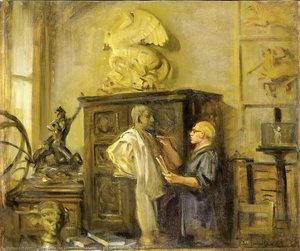
To stand before 'Le rêve ou Voltaire composant la pucelle' is to step directly into the vibrant, charged atmosphere of an 18th-century Parisian atelier. This work by Gabriel Jacques de Saint-Aubin is not merely a depiction of art; it is an immersion into the very act of creation itself. The scene unfolds with theatrical grandeur, capturing a moment where intellect, imagination, and artistic skill converge. One senses the hushed intensity of genius at work, surrounded by the rich patina of history and the promise of untold stories.
Rococo Drama and Chiaroscuro Light
Stylistically, the painting resonates deeply with the spirit of Rococo—a period characterized by elegance, emotional depth, and a playful theatricality. Yet, Saint-Aubin elevates this style through masterful handling of light. The pervasive use of chiaroscuro is breathtaking; deep, velvety shadows cling to corners and draperies, while brilliant shafts of light pierce the gloom, illuminating the central figures with almost divine focus. This dramatic lighting scheme does more than just illuminate; it heightens the mystery, suggesting that the creative process itself is an act bathed in revelation.
Symbolism Woven into Canvas
The subject matter invites deep contemplation. At its heart lies a complex interplay of figures—the contemplative scholar, perhaps Voltaire himself, guiding the composition, alongside youthful assistants and observers. The very notion of 'Voltaire composing the pucelle' suggests a dialogue between Enlightenment philosophy and visual art. It speaks to the enduring human quest to capture ephemeral thoughts onto permanent media. Notice the symbolic element of the painting within the painting; it is a profound meditation on representation—how does an idea become visible? How does thought take form?
Technique and Material Richness
Examining the technique reveals Saint-Aubin's meticulous hand. The artist employed rich layering, or glazing, over what was likely oil paint on canvas, allowing for a depth of color that seems almost palpable. From the heavy folds of drapery rendered in muted earth tones—ochres, deep browns, and aged reds—to the delicate highlights of pale blue suggesting ethereal dreams, every texture has been considered. The brushwork is both expressive and controlled, giving the scene a tangible sense of weight and luxurious antiquity.
Bringing the Atelier Home
For the collector or designer seeking an object that transcends mere decoration, this reproduction offers an unparalleled narrative anchor for any space. It does not simply hang on a wall; it breathes life into a room, suggesting intellectual fervor and artistic patronage. Owning a piece echoing Saint-Aubin’s vision is to invite a conversation about beauty, genius, and the enduring magic found at the intersection of mind and hand.
Related Artworks
Artist Biography
Gabriel de Saint-Aubin: A Parisian Observer and Master Engraver
Gabriel de Saint-Aubin (1724–1780) stands as a pivotal figure in the artistic landscape of late Baroque and Rococo France, renowned not merely for his prolific output but also for his singular approach to documenting the vibrant cultural life of Paris during its golden age. Unlike many artists preoccupied with grand narratives or idealized portraits, Saint-Aubin possessed an unwavering fascination for capturing everyday scenes—the bustling marketplaces, theatrical performances, and social gatherings that defined Parisian society—transforming these observations into exquisitely detailed engravings that continue to captivate audiences today.- Early Life and Artistic Training:
- The Prix de Rome Trials and Departure from Académie des Beaux-Arts:
- A Distinctive Style: Observation of Parisian Society:
- Major Engravings and Artistic Achievements:
- Legacy and Influence on Subsequent Artists:
gabriel jacques de saint aubin
1724 - 1780
Quick Facts
- Artistic Movement Or Style: Rococo
- Artists Or Movements Influenced By This Artist: ['Charles Germain de Saint Aubin']
- Artists Who Influenced This Artist:
- Étienne Jeaurat
- Hyacinthe Collin de Vermont
- Date Of Birth: April 14, 1724
- Date Of Death: February 14, 1780
- Full Name: Gabriel de Saint-Aubin
- Nationality: French
- Notable Artworks:
- Le rêve ou Voltaire composant la pucelle
- Laban Cherchant Ses Idoles
- Place Of Birth: Paris, France
Related Articles

The Rococo Aesthetic: Opulence, Rebellion & the Pursuit of Pleasure in 18th-Century Art
Explore the opulent world of Rococo art! Discover its origins, key artists like Watteau & Boucher, and lasting influence on design. Expert insights for collectors & enthusiasts.

Rococo's Radiant Legacy: 10 Masterpieces for Your Home |
Indulge in the elegance of Rococo! Explore 10 masterpieces by Fragonard, Boucher & Watteau. Discover the stories behind these iconic paintings and bring timeless art to your home with museum-quality reproductions from .
The Allure of Elegance in Art: A Historical & Aesthetic Exploration of Refinement & Grace
Explore the exquisite world of Rococo art! Discover its history, masters (Watteau, Boucher & more), and defining elegance. Expert insights for collectors seeking museum-quality reproductions & custom portraits.
Engraving's Golden Age: 10 Masterpieces That Redefined Art | ArtsDot
Journey through art history with our Top 10 Legendary Engravings! Explore masterpieces by Dürer, Rembrandt & Goya. Discover the stories behind these iconic prints and find museum-quality reproductions for your home at ArtsDot.com.
Engraving: A Historical Survey of Technique, Artistic Expression & Enduring Legacy
Explore the rich history of engraving with ArtsDot. Discover techniques, iconic artists like Dürer & Callot, collecting tips, and expert guidance for preserving your art investment. Learn about intaglio printing & more!