A Royal Encounter Across Borders
In the quiet, hallowed halls of the National Gallery in London, there exists a window into a vanished world of diplomacy and grandeur. Gentile Bellini’s Portrait of Sultan Mehmet II is far more than a mere likeness of a monarch; it is a profound historical document that captures the precise moment when the Renaissance met the Ottoman Empire. Painted in 1480, this masterpiece emerged from a period of intense geopolitical transformation following the fall of Constantinople. Through Bellini’s brush, we do not simply see a ruler; we witness the strategic, artistic, and cultural bridge built between Venice and the East. For the discerning collector or lover of history, this portrait offers an unparalleled sense of presence, inviting the viewer to contemplate the delicate dance of power and prestige that defined the fifteenth century.
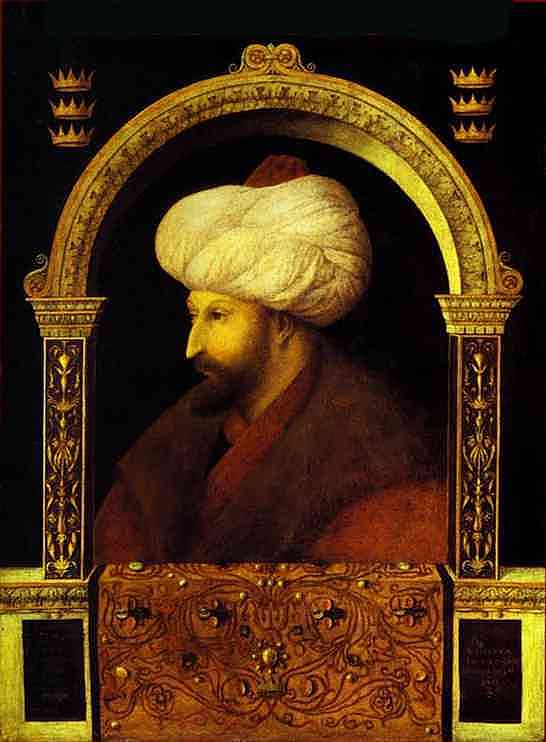
The subject himself, Mehmed the Conqueror, is rendered with a gravity that commands immediate respect. Dressed in the opulent regalia of his station, the Sultan is depicted from the chest up, his figure framed by a magnificent golden arch that lends an architectural permanence to his image. His attire—a rich crimson caftan layered over fine furs—serves as a tactile testament to the wealth and reach of the Ottoman Empire. The intricate embroidery and the heavy textures of the fabric are captured with such precision that one can almost feel the weight of the silk and the softness of the trim. This meticulous attention to detail was not merely an artistic choice but a diplomatic necessity, designed to project an image of unshakeable authority and sophisticated piety to a European audience.
The Mastery of Venetian Light and Shadow
Bellini’s technical execution represents the pinnacle of the Venetian Renaissance style. Utilizing the relatively revolutionary medium of oil paint, the artist achieved a luminous depth that was previously unimaginable in tempera. He employs chiaroscuro—the dramatic interplay between light and shadow—to sculpt the Sultan's features, giving his face a three-dimensional vitality that seems to breathe within the frame. The light catches the subtle contours of his brow and the determined set of his gaze, while the deep, dark background pushes the figure forward, ensuring that the viewer’s focus remains locked upon the sovereign. This technique creates a sense of intimacy, as if one is standing in the private presence of a legend.
Beyond the technical brilliance, the painting is steeped in profound symbolism. The white turban, adorned with a red fez, serves as a clear signifier of his imperial status, while the subtle nuances in his expression suggest a man of both intellect and iron will. Every element, from the glint of light on the embroidery to the somber tones of the composition, works in harmony to evoke an atmosphere of solemnity and importance. For those looking to adorn a space with art that inspires conversation and reflection, this portrait provides a centerpiece of immense intellectual and aesthetic weight. It is a piece that does not merely decorate a room; it anchors it with the echoes of history and the timeless beauty of the Italian Renaissance.