 Preview
 Send
Send Share
Share
 Details

 Download
 Similars
 X-Ray
X-Ray Diaporama
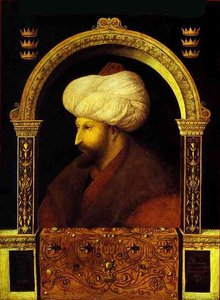
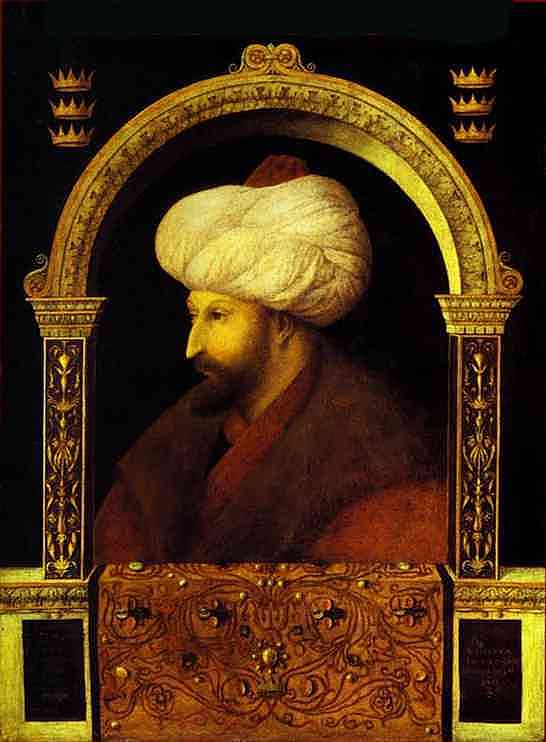
Sultan Mehmet II
 Acrylic On Canvas
- WallArt
- Renaissance Realism
 1480
1480 70.0 x 52.0 cm
 National Gallery
 Read More
Hand Made Oil Reproduction
Hand-painted oil on canvas in your size and frame, made to order by our artists. ( Buy Print Buy Image)




P118B $10

P118H $10

P118W $10

P438Z $10

P508JH $12

P508YH $12

P805H $10

P805Z $10

P919BZ $10

P919G $10

P919XJ $10

P959ZH $10

P968JZ $12

W106C $8

W218G $10

W218JH $8

W218Y $10

W307PJ $10

W316G $10

W316PJ $8

W316Y $10

W398PJ $8

W4111J $10

W500HY $15

W500JH $15

W692G $12

W849H $8

W940BG $15

W953PJ $8




Pick from our preset sizes that match the artwork's original proportions.

You may enter your own dimensions to fit a specific frame or space. If your selected size does not match the original image's proportions, we will either crop the artwork or extend the painting with additional hand-painted elements. A digital mockup will be sent for your approval before production begins.
Please note that the on-screen preview does not reflect the actual cropping or extension. Only the mockup will accurately show the final composition.
While custom sizes are available, we recommend selecting a dimension from the predefined list to preserve the original proportions.
After order, ArtsDot.com team will email client for instructions and provide a mockup preview
Worldwide Delivery () in 3/4 weeks instead of standard 5 weeks. (17 August). No compromise on quality.

Free Worldwide Express Shipping

High-Quality Linen Canvas

Full Shipping Insurance

Customs Tax Refund Guarantee

True Color Matching Guarantee

60-Day Return Policy (Defects Only)

100% Money-Back Guarantee

Bulk Discount Offer
 Glass option is only available in size under 110 CM

Sultan Mehmet II
Reproduction Medium
Reproduction Size
-


Total Price
$ 263
Artwork Description
Gentile Bellini’s Portrait of Sultan Mehmed II: A Window Into Venetian Renaissance Diplomacy
The portrait of Sultan Mehmed II by Gentile Bellini, housed at the National Gallery in London and considered a cornerstone of Venetian art history, transcends mere depiction; it embodies the complex interplay between artistic innovation and political maneuvering during the tumultuous fifteenth century. Painted in 1480 amidst the aftermath of Constantinople’s fall – a pivotal moment reshaping European geopolitics – this artwork serves as an unparalleled testament to Bellini's mastery and Venice’s strategic ambition.
- Subject Matter: The painting portrays Sultan Mehmed II, ruler of the Ottoman Empire, dressed in opulent attire reflecting his regal status. His crimson caftan layered over a fur veil underscores his authority and piety, while intricate embroidery adorning the frame symbolizes wealth and prestige – elements deliberately chosen to impress diplomatic audiences.
- Style & Technique: Bellini’s approach aligns seamlessly with Venetian Renaissance ideals, prioritizing naturalism alongside idealized beauty. Employing oil paint—a relatively new medium at the time—Bellini achieved remarkable depth and luminosity, capturing subtle nuances of facial expression and drapery folds. The artist skillfully utilized chiaroscuro – dramatic contrasts between light and shadow – to sculpt Mehmed’s figure and imbue the portrait with a palpable sense of presence.
- Historical Context: Constantinople's conquest by Mehmet I in 1453 dramatically altered the balance of power in Europe, prompting Venice to forge an alliance with the Ottomans to safeguard its commercial interests. Bellini’s commission reflects this pragmatic consideration, demonstrating the Venetian desire to cultivate favorable relations through artistic patronage and cultural exchange.
- Symbolism: Beyond representing Mehmed II himself, the portrait carries symbolic significance. The fur veil signifies piety and spiritual devotion—a deliberate gesture intended to convey respect for Islamic traditions. Furthermore, the opulent fabrics and jewels symbolize Venice’s economic prowess and diplomatic influence – reinforcing its position as a dominant force in the Mediterranean world.
- Emotional Impact: Bellini's portrait succeeds in conveying Mehmed II’s solemn demeanor—a characteristic often associated with portraits of historical figures—creating an image that commands attention and evokes contemplation. The artist’s meticulous detail captures not only Mehmed’s physical appearance but also his inner character, inviting viewers to engage in a dialogue about power, faith, and artistic legacy.
The painting's enduring appeal lies in its ability to encapsulate the spirit of an era—a period marked by both artistic brilliance and political urgency. Gentile Bellini’s masterpiece continues to fascinate scholars and collectors alike, prompting ongoing discussions about its aesthetic qualities and historical significance.
Related Artworks
Artist Biography
A Venetian Renaissance Master
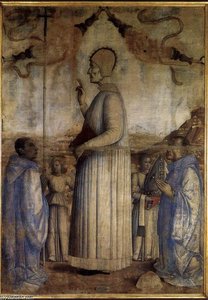
Gentile Bellini, born in Venice in 1429, emerged from a family deeply entrenched in the artistic heart of the city. His father, Jacopo Bellini, was a pioneering figure who embraced the relatively new medium of oil paint, and his younger brother, Giovanni, would later achieve renown as one of Venice’s most celebrated masters. Gentile's initial training unfolded within his father’s workshop, where he mastered the techniques that would define his career. One of Venice’s oldest surviving oil paintings, The Blessed Lorenzo Giustinian (1445), stands as a testament to this early skill and is now housed in the Accademia Museum. From these beginnings, Gentile quickly distinguished himself, earning recognition for his remarkable talent in portraiture and securing his position as the official painter of the Doges – the rulers of Venice. This prestigious role would profoundly shape his artistic trajectory, placing him at the center of Venetian power and society.Influences and Artistic Development
Gentile Bellini’s style was a fascinating synthesis of diverse influences. The rich traditions of the Byzantine Empire cast a long shadow over Venetian art, imbuing it with a distinctive aesthetic that resonated in Gentile's work through stylized figures and opulent color palettes. However, his artistic horizons expanded dramatically following an extraordinary journey to Constantinople in 1479. Invited by Sultan Mehmed II himself, Bellini spent time at the Ottoman court, an experience that proved pivotal in shaping his later creations. This encounter with a different culture, architecture, and way of life infused his paintings with a unique perspective. His portrait of Mehmed II, now residing in the National Gallery, London, is a striking example of this influence – a compelling depiction of power and personality informed by firsthand observation. Gentile’s compositions often feature grand scale scenes populated with numerous figures, reflecting the demands of commissions from Venice's powerful Scuole Grandi, major confraternities that played a vital role in civic life.Masterpieces and Artistic Legacy
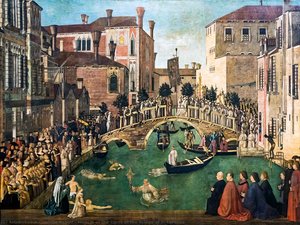
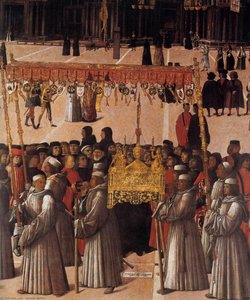
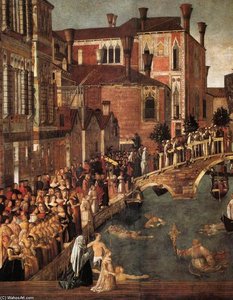
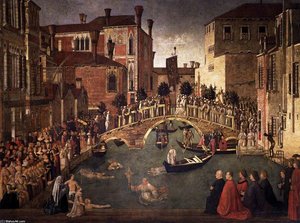
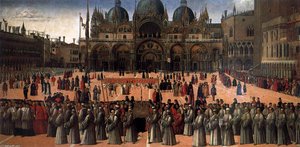
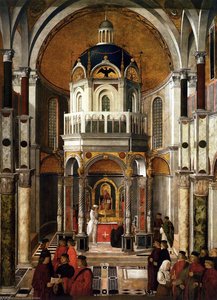
Among Gentile Bellini’s most celebrated works are two monumental paintings: The Procession of the True Cross in Piazza San Marco (1496) and The Miracle of the True Cross at the S. Lorenzo Bridge (c. 1500). The former is a breathtaking panorama of Venetian life, capturing the energy and spectacle of a religious procession with meticulous detail. It showcases his ability to portray large crowds and intricate architectural settings with remarkable precision. The Miracle of the True Cross at the S. Lorenzo Bridge is particularly noteworthy for its inclusion of self-portraits – both Gentile’s own likeness and that of his brother, Giovanni Bellini. This subtle artistic collaboration offers a fascinating glimpse into their relationship and creative dialogue. Beyond individual paintings, Gentile Bellini holds an important place in art history as one of the founders of Orientalist art—a movement characterized by depictions of Eastern cultures and settings.Historical Significance
Gentile Bellini’s legacy rests on several key achievements. His pioneering use of oil paint solidified its position as the dominant medium in Venetian painting, allowing for greater detail, luminosity, and realism. Furthermore, his exposure to Ottoman culture and subsequent incorporation of Eastern motifs into his work established him as a significant figure in the development of Orientalist art—a trend that would captivate European artists for centuries. While often overshadowed by the fame of his brother Giovanni, Gentile Bellini’s contributions are now widely recognized as essential to understanding the evolution of Western painting. He skillfully blended Venetian artistic traditions with influences from both the Byzantine Empire and Ottoman culture, creating a unique and compelling style that resonated throughout Europe. His work stands as a testament not only to his exceptional skill and talent but also to the power of cultural exchange in shaping artistic innovation.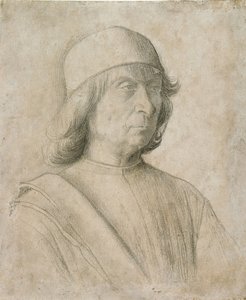
Gentile Bellini
1429 - 1507 , Italy
Quick Facts
- Artistic Movement Or Style: Renaissance
- Artists Or Movements Influenced By This Artist: ['Orientalist art']
- Artists Who Influenced This Artist:
- Jacopo Bellini
- Gentile da Fabriano
- Date Of Birth: 1429
- Date Of Death: 1507
- Full Name: Gentile Bellini
- Nationality: Italian
- Notable Artworks:
- Procession in Piazza San Marco
- Miracle of the True Cross
- Portrait of Mehmed II
- Place Of Birth: Venice, Italy
Related Articles

Jacopo Tintoretto's Masterpieces: 25 Paintings That Define Venetian Drama | ArtsDot
Explore 25 breathtaking masterpieces by Jacopo Tintoretto, the Venetian master of drama and light. Discover the stories behind iconic Renaissance paintings & find museum-quality art reproductions to elevate your home decor on ArtsDot.com.
Vittore Carpaccio: Venetian Renaissance Narrative & the Poetics of Detail
Explore the captivating world of Vittore Carpaccio, a master storyteller of the Venetian Renaissance. Discover his intricate details, narrative cycles like 'The Legend of St. Ursula,' and unique artistic style.
The Golden Light of Innovation: Exploring the Venetian Renaissance Art Movement (1430–1580)
Explore the Golden Age of Venetian art (1430–1580). Discover Giorgione, Titian & Tintoretto's techniques, the 'colorito' revolution, and lasting influence. Expert insights for collectors & enthusiasts.
Pietro Longhi's Venetian Scenes: A Study of Rococo Society & Domestic Life
Explore the captivating world of Pietro Longhi's Venetian scenes! Discover insightful analysis of his Rococo masterpieces & social commentary on 18th-century life. Learn about this 'Venetian Hogarth' and his lasting artistic legacy.
Titian: Innovation, Technique & the Venetian Renaissance Portrait Tradition
Explore the revolutionary techniques & enduring legacy of Titian, the master of Venetian Renaissance portraiture. Discover insights for collectors & appreciate his impact on art history.