

 Preview
 Send
Send Share
Share
 Details

 Download
 Similars
 X-Ray
X-Ray Diaporama
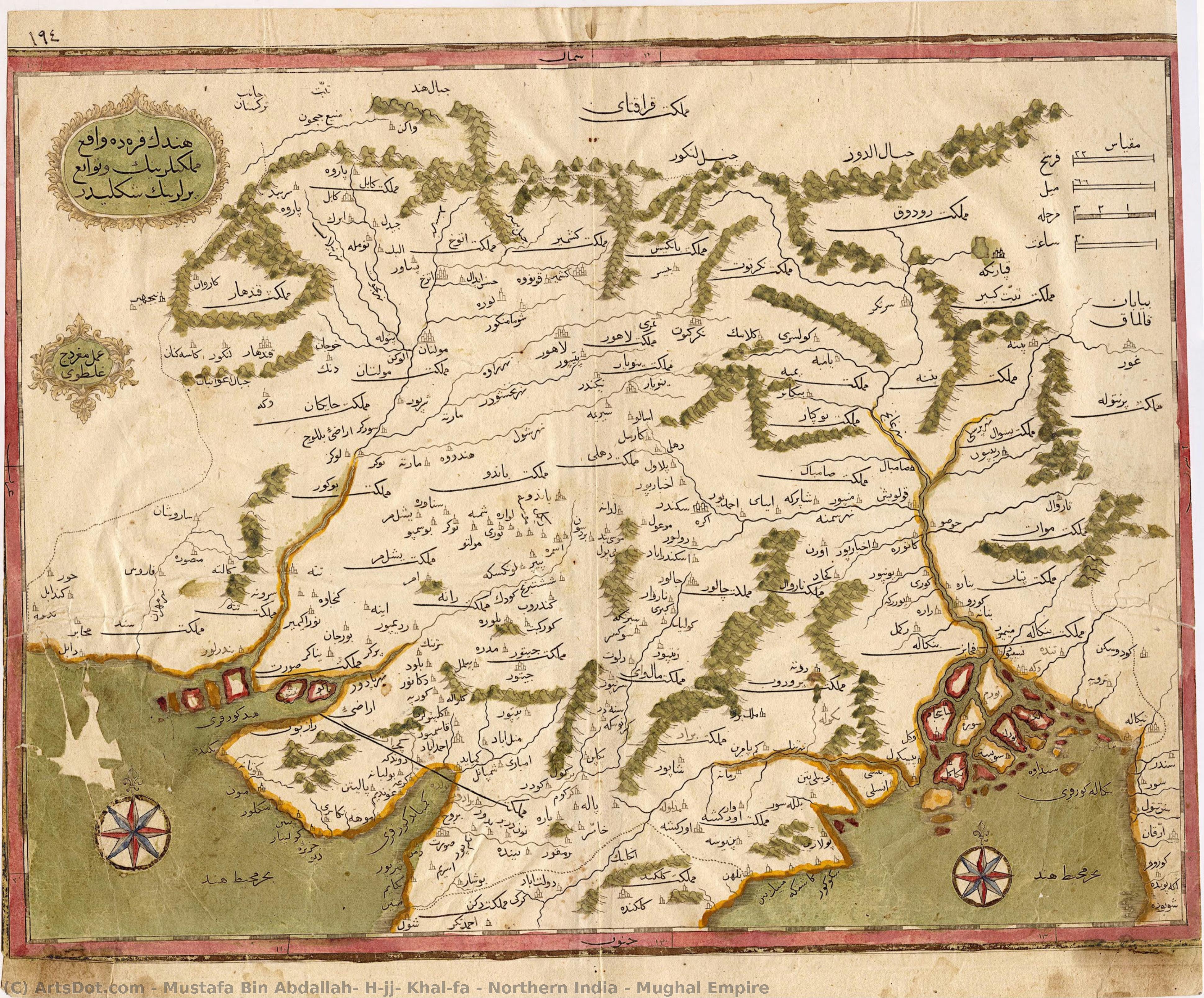
Northern India – Mughal Empire
 Painting
- Ottoman Period Art
 Early Modern
 26.0 x 35.0 cm
 Kalakriti Archives
 Read More
Hand Made Oil Reproduction
Hand-painted oil on canvas in your size and frame, made to order by our artists. ( Buy Print Buy Image)




P118B $10

P118H $10

P118W $10

P438Z $10

P508JH $12

P508YH $12

P805H $10

P805Z $10

P919BZ $10

P919G $10

P919XJ $10

P959ZH $10

P968JZ $12

W106C $8

W218G $10

W218JH $8

W218Y $10

W307PJ $10

W316G $10

W316PJ $8

W316Y $10

W398PJ $8

W4111J $10

W500HY $15

W500JH $15

W692G $12

W849H $8

W940BG $15

W953PJ $8




Pick from our preset sizes that match the artwork's original proportions.

You may enter your own dimensions to fit a specific frame or space. If your selected size does not match the original image's proportions, we will either crop the artwork or extend the painting with additional hand-painted elements. A digital mockup will be sent for your approval before production begins.
Please note that the on-screen preview does not reflect the actual cropping or extension. Only the mockup will accurately show the final composition.
While custom sizes are available, we recommend selecting a dimension from the predefined list to preserve the original proportions.
After order, ArtsDot.com team will email client for instructions and provide a mockup preview
Worldwide Delivery () in 3/4 weeks instead of standard 5 weeks. (17 August). No compromise on quality.

Free Worldwide Express Shipping

High-Quality Linen Canvas

Full Shipping Insurance

Customs Tax Refund Guarantee

True Color Matching Guarantee

60-Day Return Policy (Defects Only)

100% Money-Back Guarantee

Bulk Discount Offer
 Glass option is only available in size under 110 CM

Northern India – Mughal Empire
Reproduction Medium
Reproduction Size
-


Total Price
$ 263
Artwork Description
Related Artworks
Artist Biography
The Renaissance of the Ottoman Mind
In the vibrant, bustling heart of seventeenth-century Constantinople, a figure emerged whose intellect would bridge the gap between the scientific and the sublime. Mustafa bin Abdallah, known to history by the evocative names Kâtib Çelebi and Hajji Khalifa, was far more than a mere administrator or diplomat; he was a true polymath of the Ottoman era.Born in 1609, his life unfolded during a period of profound cultural synthesis, where the boundaries between geography, theology, and art were beautifully blurred. His existence was a testament to the burgeoning Ottoman Period Art Movement, an era that sought to refine a visual language distinct from European influence by drawing deeply from Islamic geometric principles and the opulent traditions of Persian and Mughal aesthetics.
Cartography as High Art
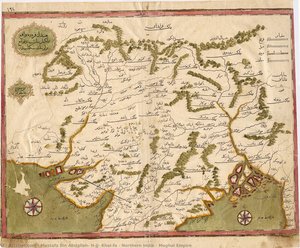
To gaze upon the works of Kâtib Çelebi is to witness the world through a lens of exquisite precision and decorative grace. His most enduring legacy lies in his groundbreaking cartographic achievements, particularly within his atlas, the Cihannüma. This was not merely a collection of navigational tools but a masterpiece of visual storytelling.His maps, such as the celebrated depiction of Northern India, served as a bridge between the Ottoman and Mughal empires. These works utilized the elegant flow of Nesih Arabic typography and a palette that captured the richness of the Indian subcontinent. Through his meticulous documentation of rivers, cities, and even the legendary Mughal Trunk Road, he transformed the raw data of geography into an aesthetic experience, where every line and cartouche whispered of imperial grandeur and scientific discovery.
An Encyclopedic Legacy
The true breadth of his genius is perhaps best captured in his monumental literary endeavors, which sought to catalogue the very essence of human knowledge. His magnum opus, Kaşf az-Zunūn, stands as a towering achievement of scholarship, an ambitious attempt to encompass the vast reaches of mathematics, astronomy, medicine, and philosophy.This drive for universal understanding was mirrored in his artistic sensibilities; he saw no distinction between the logic of a geometric pattern and the complexity of a theological treatise. His life’s work remains a cornerstone of Islamic intellectual history, reminding us that true mastery lies in the ability to see the interconnectedness of all things—from the precise arc of a map's border to the infinite depth of a scholar's thought.
mustafa bin abdallah, hājjī khalīfa
1609 - 1657 , Turkey
Quick Facts
- Artistic Movement Or Style: Ottoman Art Movement
- Artists Or Movements Influenced By This Artist: ['Islamic Geometric Designs']
- Artists Who Influenced This Artist: ['Franz Babinger']
- Date Of Birth: Istanbul, Turkey (1609)
- Date Of Death: Istanbul, Turkey (1657)
- Full Name: Mustafa bin Abdullah (Hajji Khalifa)
- Nationality: Ottoman
- Notable Artworks: ['Maps of India']
- Place Of Birth: Constantinople
Related Articles
Illuminating Eternity: A Comprehensive Exploration of Byzantine Art's Legacy
Explore the rich history & stunning artistry of the Byzantine Empire! Discover iconic mosaics, profound symbolism, and lasting influence on Western art. A comprehensive guide for history lovers.
Frank Brangwyn: A Life Immersed in Colour, Craft & the Spirit of Modern British Art
Explore the vibrant life & prolific work of Frank Brangwyn, a master of British art. Discover his stunning paintings, designs, and monumental Empire Panels – a celebration of colour, craft, and artistic innovation.
Panoramic Visions of Empire: The Daniells’ Artistic Collaboration & Legacy
Explore the captivating 'Oriental Scenery' by Thomas & William Daniell. Discover their pioneering aquatint prints of India, imperial context, artistic collaboration, and lasting legacy. A deep dive for history lovers.
Framing the Past: Art as a Window into Human History – A Cultural Chronicle of Empires, Revolutions, and Social Transformations
Explore art history's profound stories! Discover how masterpieces reflect empires, revolutions & culture. Expert analysis, collecting guides & bespoke reproductions at ArtsDot.

Massimo Vignelli: A Legacy of Modernist Clarity in Graphic Design & Visual Communication
Explore the enduring impact of Massimo Vignelli's modernist design philosophy. Discover his iconic works, key principles, and lasting legacy in graphic design & corporate identity. Learn from a true master.

