Early Life & Artistic Foundations: From Bruges to Becoming Brangwyn
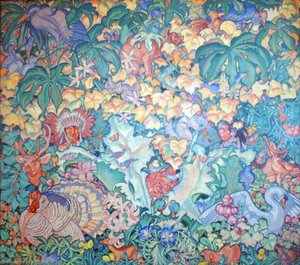 British Empire Panel (2) Canada
Explore Sir Frank Brangwyn’s ‘British Empire Panel (2) Canada,’ a vibrant, fantastical jungle scene in an impressionistic style. A unique oil painting rich in symbolism & detail.
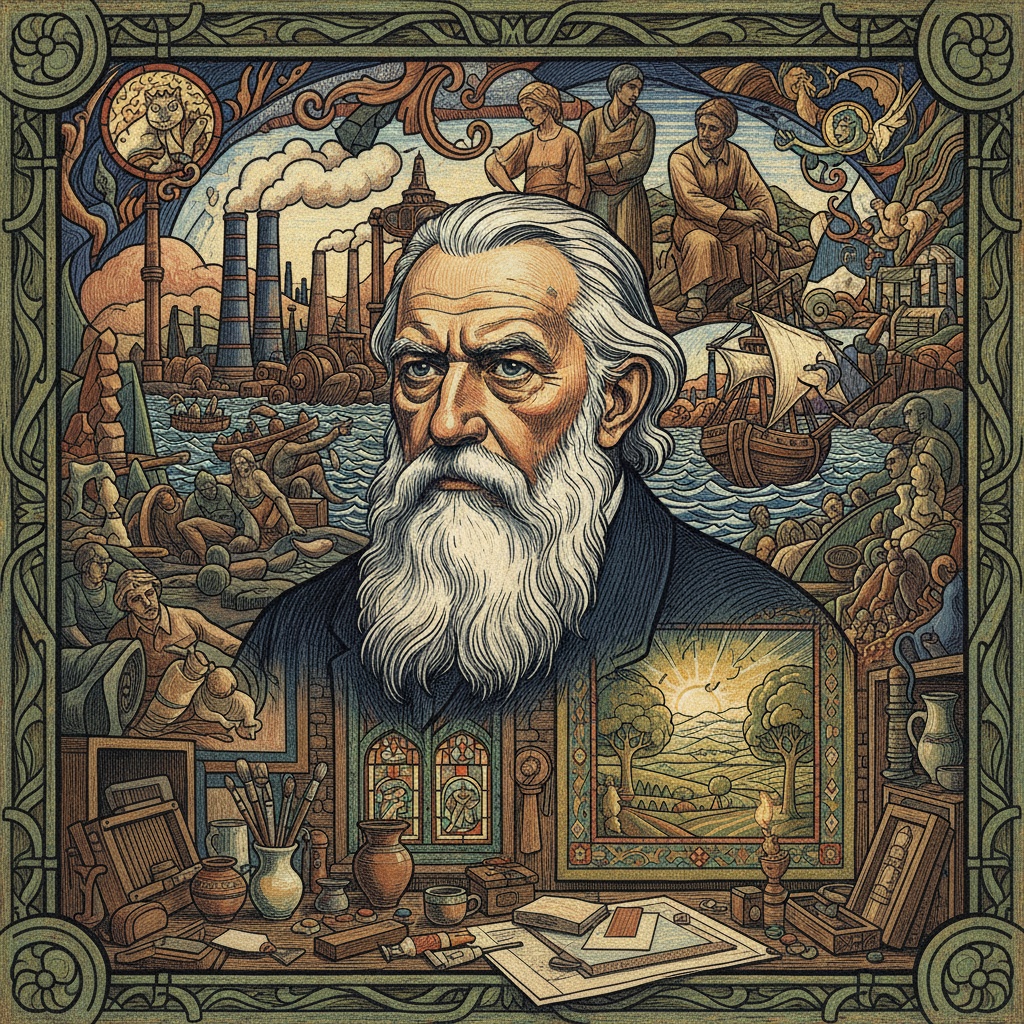
Sir Frank William Brangwyn, a name perhaps less instantly recognizable than some of his contemporaries, nevertheless represents a fascinating and remarkably prolific figure in the landscape of late 19th and early 20th-century British art. Born Guillaume François Brangwyn in Bruges, Belgium, in 1867, his artistic journey began not within the hallowed halls of an academy – he was largely self-taught – but amidst the bustling workshops of his father, William Curtis Brangwyn, a designer who had won acclaim for church designs. This early immersion in craft and design instilled in Frank a deep respect for materiality and a practical approach to artmaking that would define his entire career. The family’s return to England in 1874 saw young Frank attending Westminster City School, though his true education unfolded through sketching expeditions to the South Kensington Museum and apprenticeships with figures like Arthur Heygate Mackmurdo and, briefly, within William Morris’s workshops. These formative experiences laid the groundwork for a career that would transcend stylistic boundaries, embracing painting, etching, design, and even architectural projects.
Brangwyn's early success – an acceptance at the Royal Academy Summer Exhibition at just seventeen – solidified his ambition. However, it was his voyages aboard freighters to Istanbul in the 1890s that truly ignited his artistic vision. These travels exposed him to a world of vibrant colour, exotic landscapes, and bustling city life, themes that would permeate his work for decades to come. He wasn’t merely documenting scenes; he was absorbing an atmosphere, a sensibility that moved beyond mere representation towards a more expressive and emotionally resonant style.
A Prolific Output: Painting, Design & The Embrace of Diverse Media
To call Frank Brangwyn prolific is an understatement. Estimates suggest over 12,000 works across his lifetime – paintings numbering in the thousands, designs for stained glass, furniture, ceramics, even buildings and interiors. This extraordinary output wasn’t born from a lack of refinement but rather from an insatiable creative energy and a belief that art should be accessible and integrated into everyday life. He rejected the notion of specializing in a single medium, instead viewing each discipline as another avenue for artistic expression. His murals alone covered over 22,000 square feet of canvas, testament to his ambition and skill.
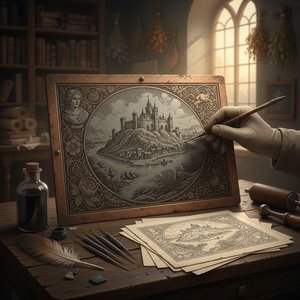
Brangwyn’s versatility extended beyond painting and design into printmaking, particularly etching. He became a master of the medium, producing over 500 etchings that showcased his dynamic compositions and meticulous attention to detail. This embrace of diverse media wasn't simply about expanding his market; it reflected a holistic approach to artmaking where form followed function and aesthetic considerations were paramount. He didn’t confine himself to traditional subjects, instead exploring scenes from across the globe – Spain, Egypt, Morocco – capturing the essence of each location with a unique blend of observation and imagination.
The British Empire Panels: A Monumental Celebration in Colour and Detail
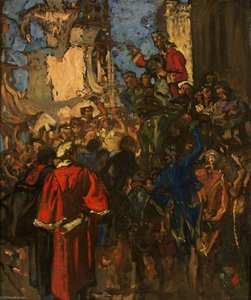
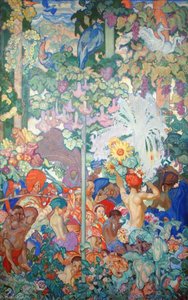 British Empire Panel (10) India
Magnificent hand-painted reproduction of Brangwyn’s ‘British Empire Panel (10) India’. A vibrant depiction of colonial India, 609x396cm. Commission yours today!
Perhaps Brangwyn's most ambitious undertaking was the series of twelve monumental panels depicting scenes from across the British Empire. Commissioned for the liner RMS Empress of Britain, these vast canvases – each measuring approximately 609x396cm – were intended as a celebration of Britain’s global reach and cultural diversity. However, the project proved controversial, ultimately being rejected due to concerns about their scale and perceived political implications. Despite this setback, the panels stand as a remarkable achievement, showcasing Brangwyn's mastery of colour, composition, and narrative detail.
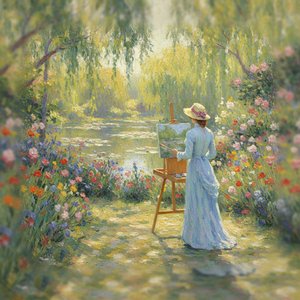
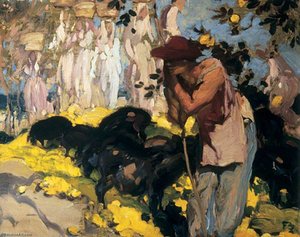
Each panel is a vibrant tapestry of life, teeming with figures, flora, and fauna representative of its respective location. “British Empire Panel (2) Canada”, for example, presents a fantastical jungle scene rendered in an impressionistic style, rich with symbolism and detail. Similarly, “British Empire Panel (10) India” offers a magnificent depiction of colonial India, capturing the energy and complexity of the subcontinent. “British Empire Panel (7) West Indies”, with its enchanted garden brimming with fairies and flora, reveals Art Nouveau influences and a captivating sense of wonder. These panels weren’t simply historical records; they were imaginative interpretations, infused with Brangwyn's own artistic sensibility.
Brangwyn’s Technique & Style: Impressionism, Art Nouveau & a Unique Vision
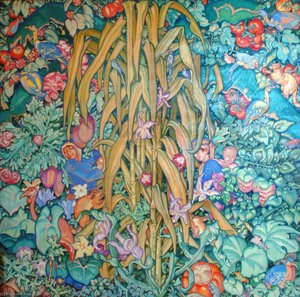 British Empire Panel (7) West Indies
Sir Frank Brangwyn’s ‘British Empire Panel (7) West Indies’ (1930) is a stunning oil painting of an enchanted garden teeming with fairies & flora. Art Nouveau influence, rich detail, & vibrant colors – a captivating piece.
Defining Brangwyn’s style is a complex undertaking. He absorbed influences from various movements – the vibrant colours of Impressionism, the flowing lines of Art Nouveau, and the detailed realism of earlier masters – but ultimately forged his own unique path. His paintings are characterized by their bold brushwork, rich textures, and dynamic compositions. He wasn’t afraid to experiment with colour, often employing a palette that was both luminous and expressive.
The etching revival, which gained momentum during Brangwyn's career, significantly impacted his printmaking technique. He embraced the possibilities of drypoint and variable inking, creating etchings with a remarkable depth and tonal range. His murals, while brightly coloured and crowded with detail, evolved over time towards flatter compositions and less flamboyant forms. Brangwyn’s approach was always pragmatic; he prioritized clarity and impact over strict adherence to any particular stylistic dogma.
Legacy & Rediscovery: Brangwyn's Place in Modern British Art History
Despite his immense popularity during his lifetime – he was, for a time, one of the most famous artists in Britain – Frank Brangwyn’s reputation waned in the decades following his death in 1956. His work, often dismissed as overly decorative or lacking intellectual depth, fell out of favour with critics and collectors. However, recent years have witnessed a renewed appreciation for Brangwyn's artistry.
Scholars are now recognizing the significance of his prolific output, his innovative use of media, and his unique vision. His embrace of diverse cultures and his commitment to making art accessible resonate with contemporary audiences. The British Empire Panels, in particular, have garnered renewed attention as complex historical documents that reflect both the grandeur and the complexities of colonialism. Today, Frank Brangwyn is being rightfully acknowledged as a pivotal figure in Modern British Art History – a master craftsman whose work continues to inspire and captivate.