The Dawn of a New Vision: Challenging Academic Traditions
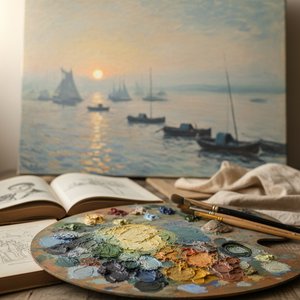 Impressionism: A Revolution of Light & Color That Changed Art History
Explore the revolutionary world of Impressionism! Discover its history, key artists like Monet & Renoir, defining techniques, and lasting impact on modern art. A comprehensive guide for art lovers.
The mid-19th century Parisian art world was, to put it mildly, entrenched. The Académie des Beaux-Arts held sway, dictating not only *what* was painted – historical narratives, religious allegories, portraits of the elite – but also *how*. Precision, detail, and a polished finish were paramount; paintings were expected to be seamless illusions, meticulously crafted in studio settings. A rebellion was brewing, however, fueled by artists who felt stifled by these rigid conventions. They weren’t interested in recreating the past or idealizing reality; they sought to capture the fleeting sensations of the present moment, the ephemeral qualities of light and atmosphere that traditional techniques simply couldn't convey. This nascent movement, initially derided as radical, would come to be known as Impressionism.
The seeds of this revolution were sown in a rejection of established norms. Artists like Gustave Courbet had already begun challenging academic standards with his Realist depictions of everyday life, but it was the collective spirit of a group – Claude Monet, Pierre-Auguste Renoir, Alfred Sisley, and Frédéric Bazille among them – who truly dared to break free. Meeting as students under Charles Gleyre, they shared a dissatisfaction with the studio system and a growing desire to paint directly from observation, outdoors, in the ever-changing light of nature. This wasn’t merely a change in location; it was a fundamental shift in artistic philosophy.
Capturing the Ephemeral: Techniques of Light, Color & 'En Plein Air'
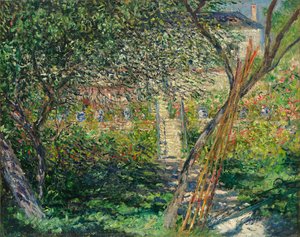
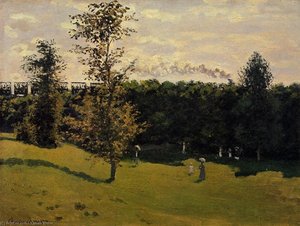
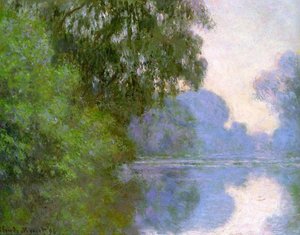 Arm of the Seine near Giverny 1
Admire Claude Monet's 'Arm of the Seine near Giverny,' a masterpiece of Impressionism capturing serene riverside light and color with soft brushstrokes and vibrant hues.
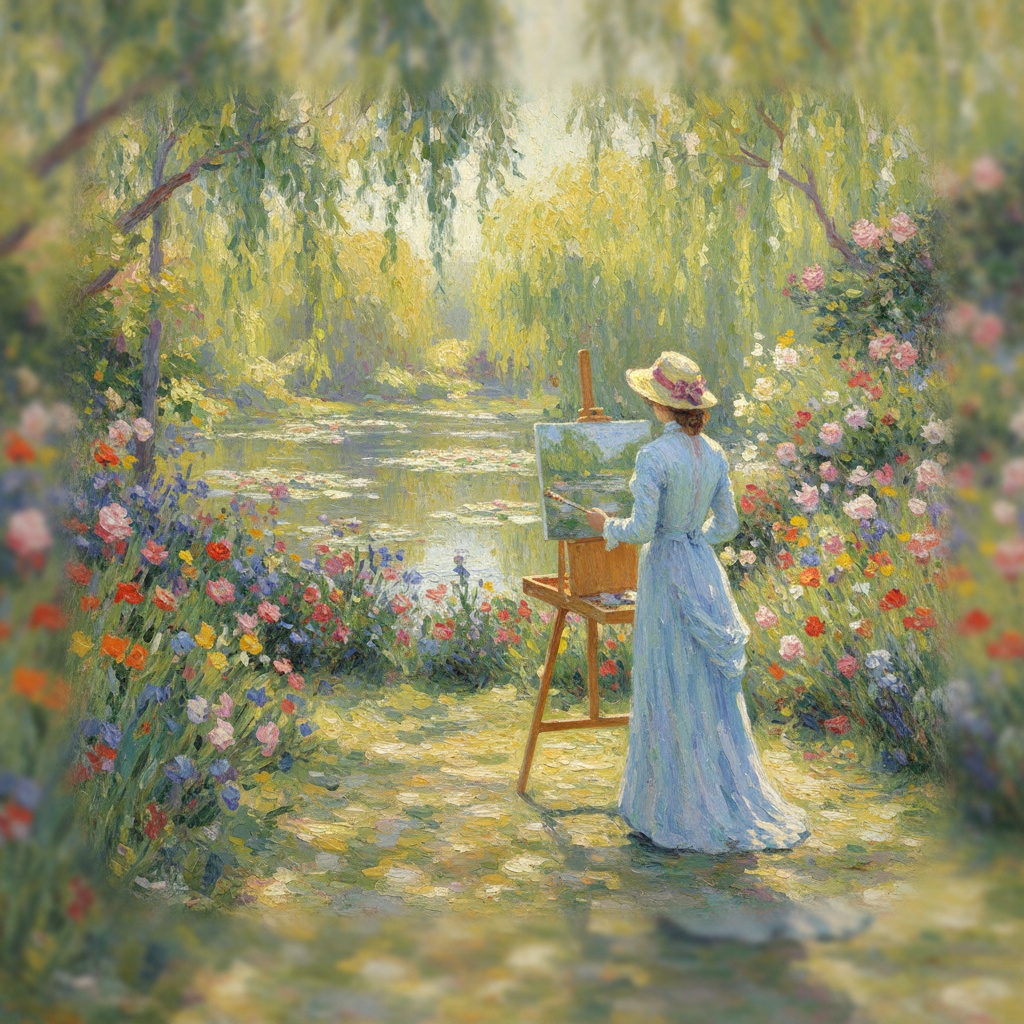
The defining characteristic of Impressionism lies in its pursuit of capturing the *impression* of a scene – not a detailed rendering, but rather the sensation it evokes. This required a radical departure from traditional painting techniques. Instead of carefully blending colors on a palette to create smooth transitions, Impressionists employed short, broken brushstrokes of pure color, applied directly to the canvas. The intention wasn’t to mix these colors *on* the canvas, but to allow the viewer's eye to do so, creating a vibrant, shimmering effect that mimicked the way light interacts with surfaces.
Central to this approach was en plein air painting – working outdoors, directly in front of the subject. This allowed artists to observe and record the subtle shifts in color and atmosphere throughout the day. Monet’s series paintings, such as his haystacks or water lilies, are prime examples of this dedication. He didn't paint a single “definitive” version of each scene; instead, he created multiple studies at different times of day, under varying weather conditions, to capture the ever-changing effects of light. As one art critic noted in 1876, only ‘in the open air can the flesh tints of a model keep their true qualities’. This commitment to immediacy and spontaneity was revolutionary.
The influence of scientific discoveries regarding color theory also played a role. Impressionists understood that color is not inherent but rather a perception created by the way light reflects off surfaces. They experimented with complementary colors, juxtaposing them to create visual vibrancy, and paid meticulous attention to shadows – recognizing they weren’t simply absences of light, but complex mixtures of reflected hues.
Monet & Beyond: Key Impressionist Masters and Their Distinct Styles
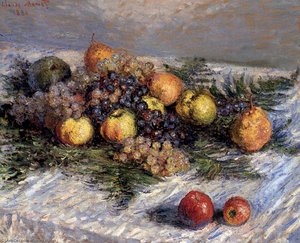 Still Life with Pears and Grapes
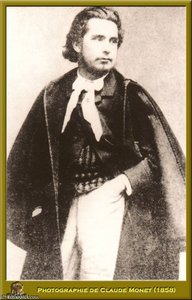
Claude Monet
While Claude Monet is arguably the most iconic figure of the movement—his painting Impression, soleil levant famously giving the style its name – the Impressionist circle was rich with diverse talents. Pierre-Auguste Renoir focused on capturing the joy and vibrancy of social life, his paintings filled with luminous figures bathed in dappled sunlight. Alfred Sisley dedicated himself to landscapes, meticulously documenting the serene beauty of the French countryside.
Even within this shared aesthetic, each artist developed a unique voice. Camille Pissarro, often considered the “father” of Impressionism, explored rural and urban scenes with a focus on social realism. Édouard Manet, though not strictly an Impressionist himself, paved the way for the movement with his bold compositions and rejection of academic conventions. Later artists like Paul Cézanne, while moving beyond pure Impressionism towards Post-Impressionism, built upon its foundations, exploring form and structure in innovative ways – exemplified by his Les Grandes Baigneuses, a masterpiece that influenced Cubism.
Monet’s Still Life with Pears and Grapes demonstrates the core principles of Impressionism even within a traditional genre. The focus isn't on hyper-realistic detail, but rather on the interplay of light and shadow across the fruit, creating a sense of volume and texture through vibrant brushstrokes.
Impressionism's Influence: From Post-Impressionism to Modern Art Movements
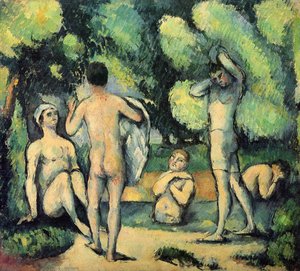 Bathers
"Les Grandes Baigneuses" by Paul Cézanne exemplifies Post-Impressionism's innovative approach to landscape and figure painting, influencing modern art movements like Cubism.
The initial reception of Impressionism was largely negative. Critics dismissed their work as unfinished, lacking in detail, and even “vulgar.” However, the artists persevered, organizing independent exhibitions that gradually gained public attention. By the late 19th century, Impressionism had begun to gain acceptance, paving the way for subsequent art movements.
Post-Impressionism emerged as a reaction *to* Impressionism, with artists like Cézanne and Vincent van Gogh pushing the boundaries of color, form, and expression even further. While building upon the Impressionist emphasis on subjective experience, they sought to imbue their work with greater emotional depth and symbolic meaning. Cézanne’s exploration of geometric forms laid the groundwork for Cubism, while Van Gogh's expressive brushwork influenced Expressionism.
The legacy of Impressionism extends far beyond these direct descendants. Its emphasis on light, color, and individual perception continues to inspire artists today. The movement fundamentally changed the way we see and experience art, shifting the focus from objective representation to subjective interpretation. It liberated artists from the constraints of academic tradition, allowing them to explore new forms of expression and capture the beauty of the fleeting moment.
Collecting Impressionism: A Guide for Discerning Enthusiasts
 Beyond Light & Color: Impressionism vs. Post-Impressionism for the Discerning Collector
Explore the nuances of Impressionism & Post-Impressionism with . Expert insights for collectors on style, investment, and acquiring museum-quality reproductions.
For collectors seeking to acquire works in this celebrated style, understanding the nuances of Impressionism is crucial. Authenticity can be a concern, given the movement’s popularity and the prevalence of reproductions. Focusing on established artists – Monet, Renoir, Degas, Pissarro, Sisley – is a good starting point.
Consider the provenance of the artwork – its history of ownership – and seek expert appraisal to verify its authenticity. The condition of the painting is also important, as well as the quality of the materials used. Look for visible brushstrokes, vibrant colors, and a sense of immediacy that captures the essence of the Impressionist aesthetic.
Investing in Impressionism isn’t merely acquiring a beautiful object; it's owning a piece of art history. The enduring appeal of these works lies in their ability to transport us to another time and place, allowing us to experience the world through the eyes of masters who dared to challenge convention and capture the fleeting beauty of life. At ArtsDot.com, we offer high-quality reproductions of Impressionist masterpieces, meticulously crafted by skilled artists, bringing the magic of this revolutionary movement into your home.