George Augustus Baker Jr. (1821-1880) was a prominent American portrait and genre painter known for his captivating depictions of women, children, and idyllic scenes like 'Love at First Sight.' Explore his rich color palettes and lifelike rendering t
Explore The Metropolitan Museum of Art: 5,000 years of art from around the world! Discover masterpieces, ancient artifacts & immersive exhibitions – a global art destination awaits.
A Glimpse into Victorian Elegance: Mrs. William Loring Andrews
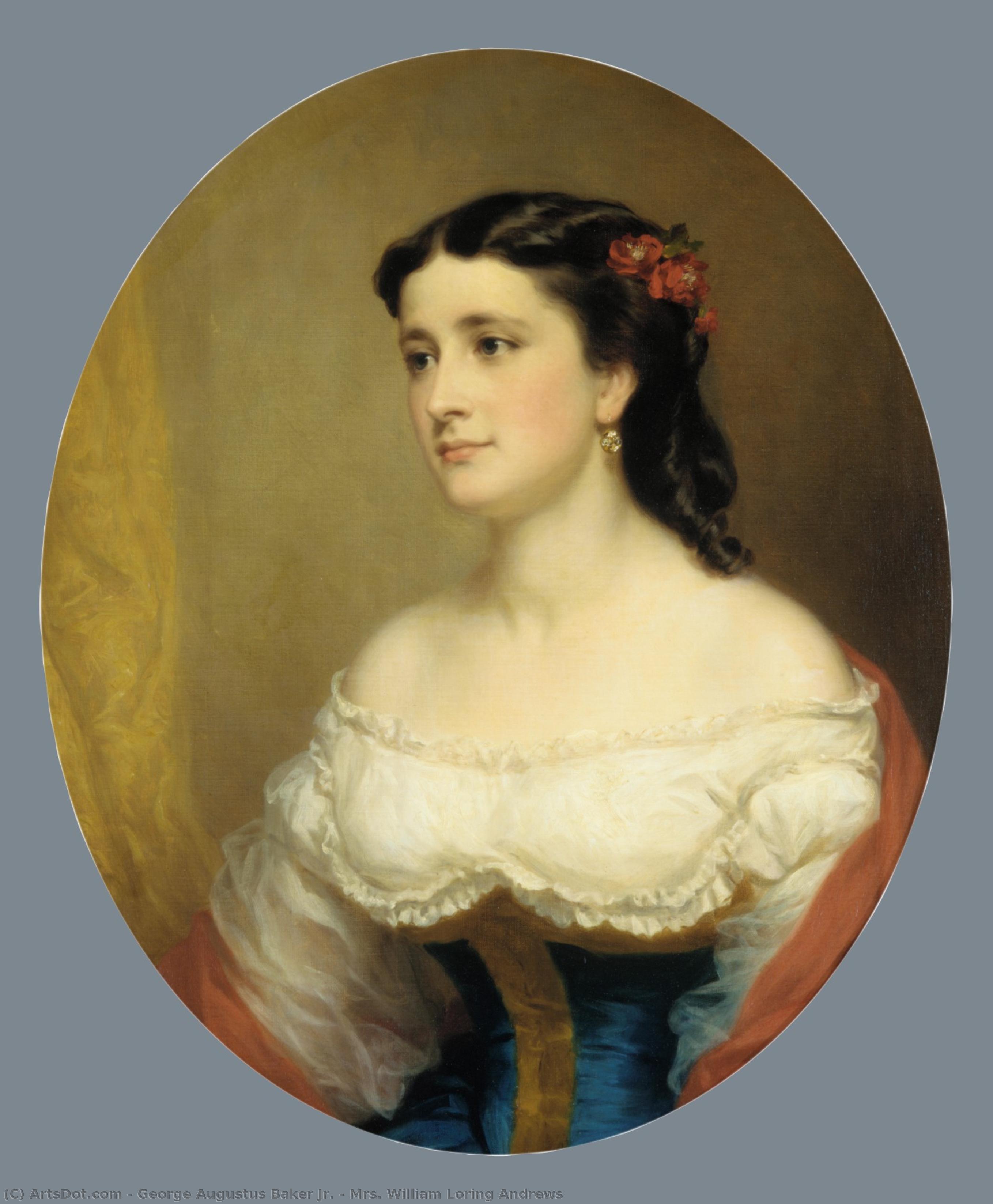
To stand before George Augustus Baker Jr.’s portrait of Mrs. William Loring Andrews is to step directly into the refined, luminous world of the mid-nineteenth century. This piece transcends a mere likeness; it is a carefully constructed tableau of societal aspiration and enduring feminine grace. The sitter gazes out with an almost serene composure, her presence commanding yet gentle. Baker Jr., a master portraitist of his time, has captured not just a woman, but an embodiment of the era's ideals—a confluence of wealth, propriety, and quiet dignity.
Mastery in Miniature: Technique and Detail
The technical brilliance evident in this work is breathtaking. While the overall impression suggests the intimacy of a miniature painting, its execution speaks to the meticulous skill of an oil painter working on canvas. Observe the handling of light; it is soft, diffused, seeming to emanate from an unseen source to illuminate her features and the delicate folds of her gown. The artist has achieved remarkable textural contrast—the ethereal smoothness suggested on her skin plays against the crisp detail of the white lace ruffles adorning her blue bodice. Every element, from the cascading drapery in the background to the subtle sheen on her hairpiece, is rendered with a precision that speaks to hours of dedicated craftsmanship. The composition itself, contained within an oval format and further emphasized by the unusual, cabinetmaker-crafted oak frame, draws the viewer into a private moment of exquisite beauty.
The Context of Status and Society
Painted in 1861, this portrait serves as a fascinating historical document. Jane Crane Andrews, the subject, was a woman deeply embedded within the cultural fabric of New York society; her husband’s involvement with institutions like The Metropolitan Museum of Art speaks volumes about their standing. In an age where portraiture was often a declaration of one's place in the world, this painting functions as such a testament. The richness of her attire and the formality of the presentation suggest not only personal affluence but also adherence to the highest standards of contemporary feminine virtue. It is a visual narrative of established lineage and social grace.
Symbolism and Enduring Allure
The symbolism woven into this portrait is subtle yet profound. The blue and white palette, often associated with purity and fidelity, frames her composed demeanor. Her direct gaze invites the viewer into a dialogue across time, making the piece deeply personal despite its formal origins. For the modern collector or designer, owning such a reproduction offers more than just decoration; it offers an heirloom quality—a tangible connection to the romanticism and structured elegance of the Victorian era. It is a work that whispers tales of drawing rooms, grand balls, and the quiet power held by women of means.