 Preview
 Send
Send Share
Share
 Details

 Download
 Similars
 X-Ray
X-Ray Diaporama
Mrs. William Loring Andrews
 Oil On Canvas
- WallArt
- Neoclassical Portraiture
 1861
1861- 19th Century
 76.0 x 64.0 cm
 Metropolitan Museum of Art
 Read More
Hand Made Oil Reproduction
Hand-painted oil on canvas in your size and frame, made to order by our artists. ( Buy Print Buy Image)




P118B $10

P118H $10

P118W $10

P438Z $10

P508JH $12

P508YH $12

P805H $10

P805Z $10

P919BZ $10

P919G $10

P919XJ $10

P959ZH $10

P968JZ $12

W106C $8

W218G $10

W218JH $8

W218Y $10

W307PJ $10

W316G $10

W316PJ $8

W316Y $10

W398PJ $8

W4111J $10

W500HY $15

W500JH $15

W692G $12

W849H $8

W940BG $15

W953PJ $8




Pick from our preset sizes that match the artwork's original proportions.

You may enter your own dimensions to fit a specific frame or space. If your selected size does not match the original image's proportions, we will either crop the artwork or extend the painting with additional hand-painted elements. A digital mockup will be sent for your approval before production begins.
Please note that the on-screen preview does not reflect the actual cropping or extension. Only the mockup will accurately show the final composition.
While custom sizes are available, we recommend selecting a dimension from the predefined list to preserve the original proportions.
After order, ArtsDot.com team will email client for instructions and provide a mockup preview
Worldwide Delivery () in 3/4 weeks instead of standard 5 weeks. (17 August). No compromise on quality.

Free Worldwide Express Shipping

High-Quality Linen Canvas

Full Shipping Insurance

Customs Tax Refund Guarantee

True Color Matching Guarantee

60-Day Return Policy (Defects Only)

100% Money-Back Guarantee

Bulk Discount Offer
 Glass option is only available in size under 110 CM

Mrs. William Loring Andrews
Reproduction Medium
Reproduction Size
-


Total Price
$ 263
Artwork Description
A Glimpse into Victorian Elegance: Mrs. William Loring Andrews
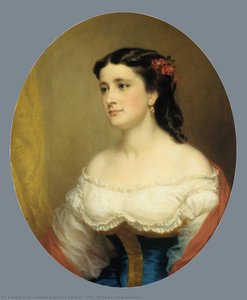
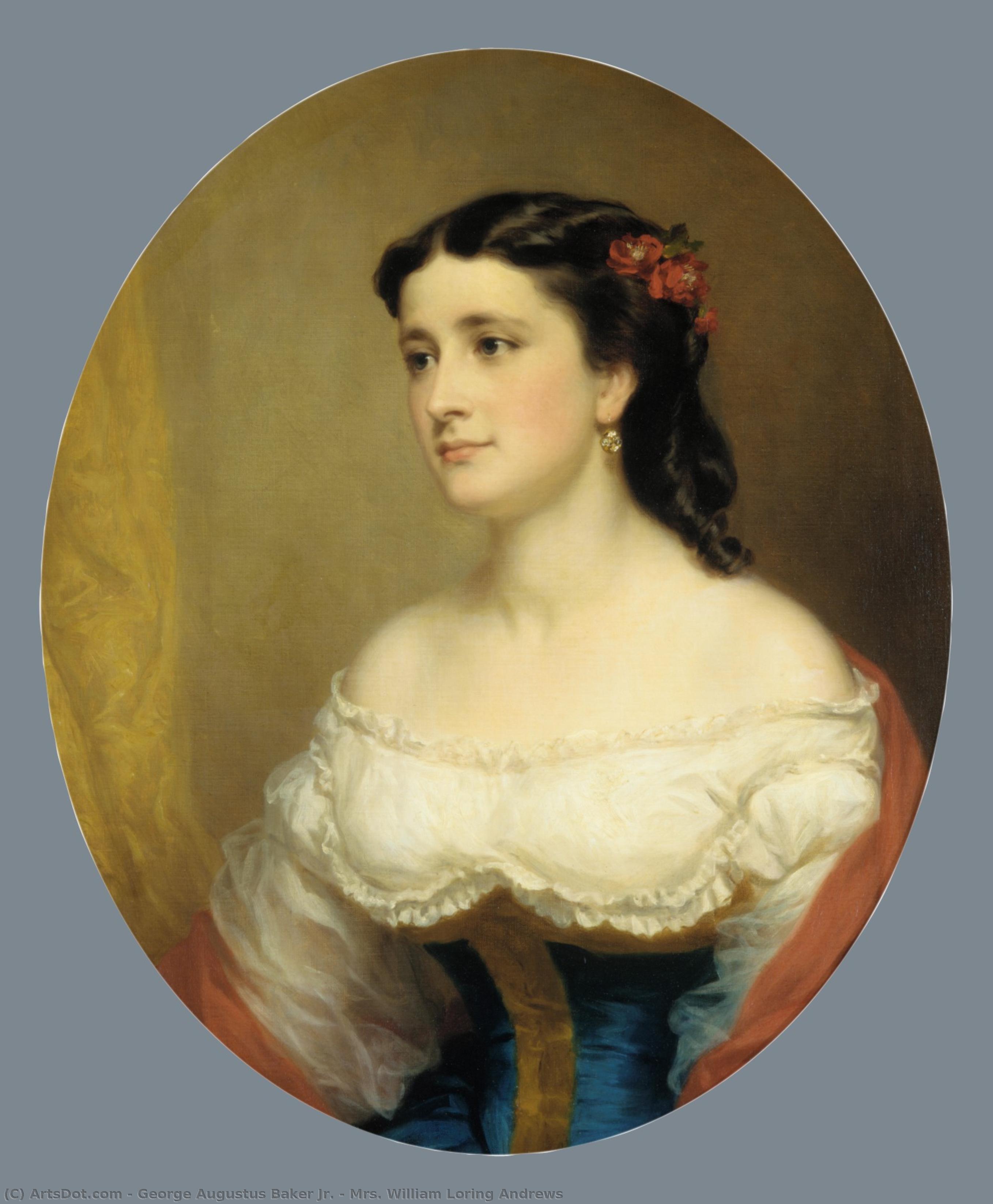
To stand before George Augustus Baker Jr.’s portrait of Mrs. William Loring Andrews is to step directly into the refined, luminous world of the mid-nineteenth century. This piece transcends a mere likeness; it is a carefully constructed tableau of societal aspiration and enduring feminine grace. The sitter gazes out with an almost serene composure, her presence commanding yet gentle. Baker Jr., a master portraitist of his time, has captured not just a woman, but an embodiment of the era's ideals—a confluence of wealth, propriety, and quiet dignity.
Mastery in Miniature: Technique and Detail
The technical brilliance evident in this work is breathtaking. While the overall impression suggests the intimacy of a miniature painting, its execution speaks to the meticulous skill of an oil painter working on canvas. Observe the handling of light; it is soft, diffused, seeming to emanate from an unseen source to illuminate her features and the delicate folds of her gown. The artist has achieved remarkable textural contrast—the ethereal smoothness suggested on her skin plays against the crisp detail of the white lace ruffles adorning her blue bodice. Every element, from the cascading drapery in the background to the subtle sheen on her hairpiece, is rendered with a precision that speaks to hours of dedicated craftsmanship. The composition itself, contained within an oval format and further emphasized by the unusual, cabinetmaker-crafted oak frame, draws the viewer into a private moment of exquisite beauty.
The Context of Status and Society
Painted in 1861, this portrait serves as a fascinating historical document. Jane Crane Andrews, the subject, was a woman deeply embedded within the cultural fabric of New York society; her husband’s involvement with institutions like The Metropolitan Museum of Art speaks volumes about their standing. In an age where portraiture was often a declaration of one's place in the world, this painting functions as such a testament. The richness of her attire and the formality of the presentation suggest not only personal affluence but also adherence to the highest standards of contemporary feminine virtue. It is a visual narrative of established lineage and social grace.
Symbolism and Enduring Allure
The symbolism woven into this portrait is subtle yet profound. The blue and white palette, often associated with purity and fidelity, frames her composed demeanor. Her direct gaze invites the viewer into a dialogue across time, making the piece deeply personal despite its formal origins. For the modern collector or designer, owning such a reproduction offers more than just decoration; it offers an heirloom quality—a tangible connection to the romanticism and structured elegance of the Victorian era. It is a work that whispers tales of drawing rooms, grand balls, and the quiet power held by women of means.
Related Artworks
Artist Biography
A Legacy Carved in Ivory
In the bustling heart of nineteenth-century New York, a young artist was already tracing the delicate contours of destiny. George Augustus Baker Jr., born in 1821, did not merely stumble into the world of fine art; he was born into its very marrow. As the son of a respected miniaturist, his childhood was steeped in the meticulous discipline of the brush and the subtle glow of ivory. By the tender age of sixteen, Baker had already demonstrated a precocious mastery, completing over one hundred and fifty miniatures that captured the fleeting essence of his subjects with remarkable grace. This early period of his life, defined by the intimate scale of miniature painting, laid the foundation for a career that would eventually transcend the small and move toward the grand, evocative realms of portraiture and genre painting.European Refinement and the Expansion of Vision
The horizon of Baker’s ambition expanded significantly in 1844 when he embarked on a transformative two-year journey through Europe. This period of study allowed him to absorb the classical influences and sophisticated techniques of the Old World, breathing new life into his American sensibilities. Upon his return to New York, the artist transitioned from the delicate ivory portraits of his youth toward more expansive canvases. He established a studio that would soon become a cornerstone of the local art scene, earning him election to the prestigious National Academy of Design in 1851. As his reputation grew, so did his reach; even as he spent much of his life in New York, the final fourteen years of his journey were spent in the serene surroundings of Darien, Connecticut, where he continued to pursue his craft with unwavering dedication.The Poetics of Portraiture and Genre
Beyond the mere likeness of a face, Baker’s true genius lay in his ability to infuse his subjects with a sense of idyllic wonder. He became a master of capturing the innocence of childhood and the ethereal beauty of womanhood, often imbuing his scenes with a romantic, almost dreamlike quality. His most celebrated ideal works serve as windows into this sentimental mastery; in Love at First Sight, he captures the sudden spark of human connection, while Wild Flowers celebrates the untamed beauty of the natural world. In pieces such as Children of the Wood, Faith, and The May Queen, Baker utilized a rich palette and a lifelike rendering of flesh tones to create a visual language that spoke to the heart of the American Victorian era. Through his ability to blend Neoclassical elegance with a tender, genre-driven narrative, he left behind a legacy of light, color, and profound emotional resonance that continues to captivate the art world.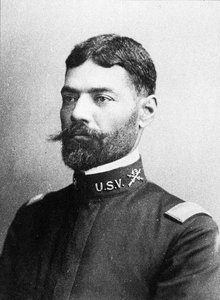
george augustus baker, jr.
1821 - 1880 , United States of America
Quick Facts
- Artistic Movement Or Style: Portraiture, Genre painting
- Artists Who Influenced This Artist: ['George Augustus Baker Sr.']
- Date Of Birth: 1821
- Date Of Death: 1880
- Full Name: George Augustus Baker Jr.
- Nationality: American
- Notable Artworks:
- Love at First Sight
- Wild Flowers
- Children of the Wood
- Faith
- The May Queen
- Place Of Birth: New York, USA
Related Articles

Georges Braque's Masterpieces: 25 Paintings That Defined Cubism & Modern Art | ArtsDot
Explore 25 iconic Georges Braque paintings that revolutionized Cubism & modern art. Discover the stories behind his masterpieces, from Fauvism to Analytical Cubism. Find museum-quality reproductions & elevate your home decor with ArtsDot.com.

Georges Seurat's Masterpieces: 25 Paintings That Defined Pointillism | ArtsDot
Explore 25 iconic Georges Seurat paintings & discover the brilliance of Pointillism. From 'La Grande Jatte' to his harbor scenes, delve into art history with ArtsDot.com. Find museum-quality reproductions for your home decor. Explore the full collection online!
The Enduring Legacy of Formal Portraiture: Power, Identity & Artistic Exploration
Explore the rich history of formal portraiture & its enduring power to capture identity and shape perception. Discover investment-worthy artworks, expert appraisals, and custom reproduction services at ArtsDot.
George Hayter: Portraiture, Power & Victorian Society's Canvas
Explore the life & work of George Hayter, Queen Victoria’s Principal Painter. Discover his iconic Victorian portraits, historical masterpieces, and lasting impact on British art history. Learn more at ArtsDot.
The Revival of Antiquity: Exploring Ideals of Beauty & Power in Neoclassical Portraiture
Explore the captivating world of Neoclassical portraiture! Discover the power & ideals behind masterpieces by David, Girodet & more. Expert analysis, custom reproductions & art appraisal at ArtsDot.