A Moment Captured in Theatrical Splendor
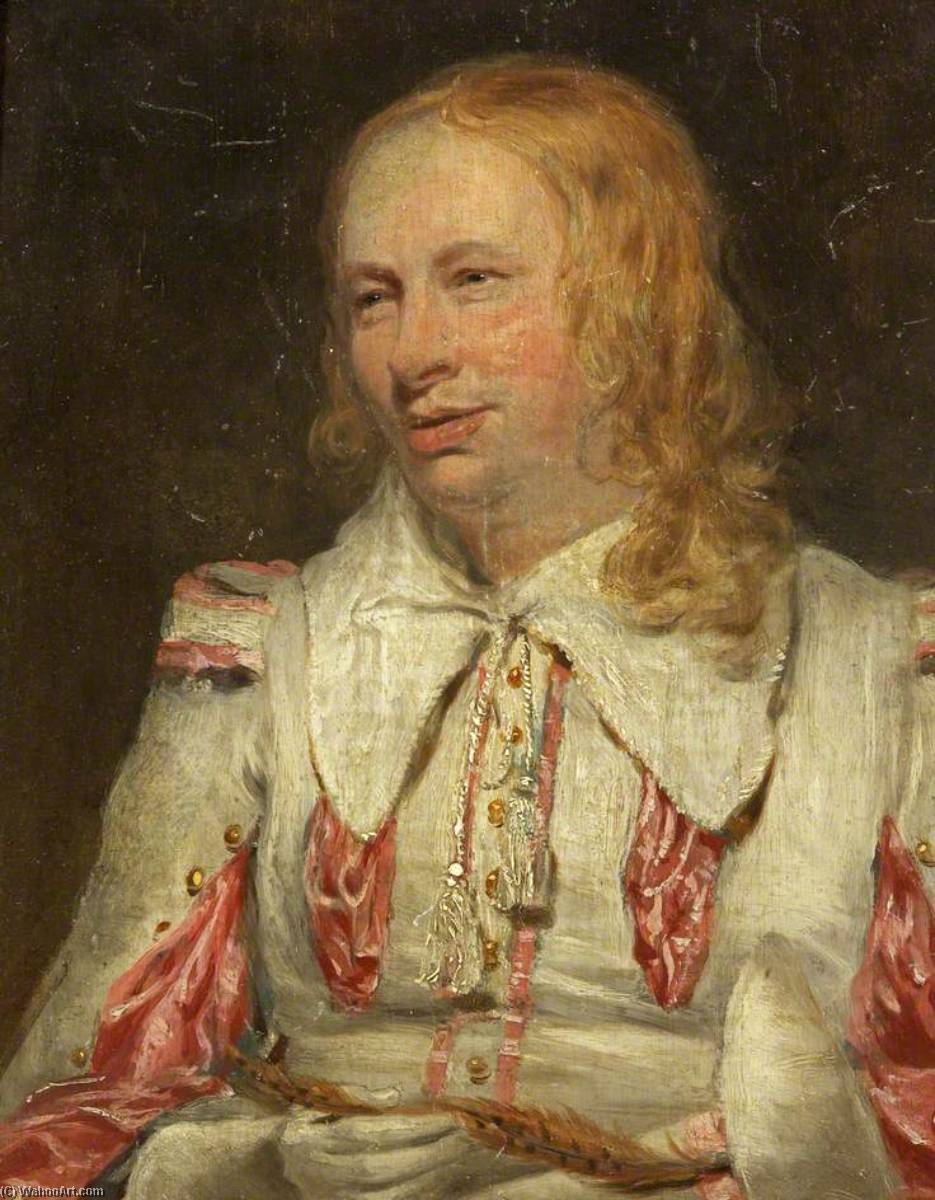
In this captivating portrait from 1822, the artist George Clint invites us into the vibrant, often chaotic world of the nineteenth-century London stage. The painting features William Oxberry, a figure of notable presence, portrayed in the role of Master Stephen from Ben Jonson's classic comedy, Every Man in His Humour. At first glance, the viewer is drawn irresistibly to the central subject, whose blonde hair and bright, inquisitive gaze command the composition. Clad in a crisp white shirt accented with delicate pink trimming, the figure possesses an expressive vitality that seems to bridge the gap between the painted canvas and the living spectator. The subtle tension in his facial expression—a hint of mischief or perhaps a moment of intense focus—capturing the very essence of theatrical characterization.
Beyond the central protagonist, Clint masterfully employs a balanced composition that provides depth and narrative context. The presence of two smaller figures, partially veiled in the background, suggests the bustling atmosphere of a backstage scene or a crowded theater lobby. These secondary characters serve not merely as ornamentation but as essential elements that ground the main subject within a larger social and dramatic ecosystem. This layering of figures creates a sense of movement and life, ensuring that the eye wanders through the frame, discovering new details of this historical vignette with every glance.
Mastery of Light and Regency Elegance
Technically, the work is a testament to George Clint’s prowess as an Associate Member of the Royal Academy. The artist utilizes a delicate interplay of light and shadow to sculpt the features of Oxberry, giving the portrait a three-dimensional quality that feels remarkably tactile. The soft luminosity hitting the white fabric of the shirt contrasts beautifully with the more muted, atmospheric tones of the background, a technique that directs the viewer's emotional response toward the warmth and humanity of the subject. Clint’s brushwork, while precise enough to capture the fine textures of lace and skin, retains a fluid, painterly quality that breathes life into the scene.
For the discerning collector or interior designer, this piece offers more than just historical interest; it provides a sophisticated focal point for any curated space. The palette, dominated by soft whites, gentle pinks, and earthy background tones, possesses a timeless elegance that complements both classical and contemporary decor. Whether placed in a formal study, a grand hallway, or a modern living area, a high-quality reproduction of this work brings with it an air of cultured nostalgia and intellectual depth. It is an invitation to contemplate the enduring power of performance and the artistry required to immortalize a fleeting moment of dramatic brilliance.