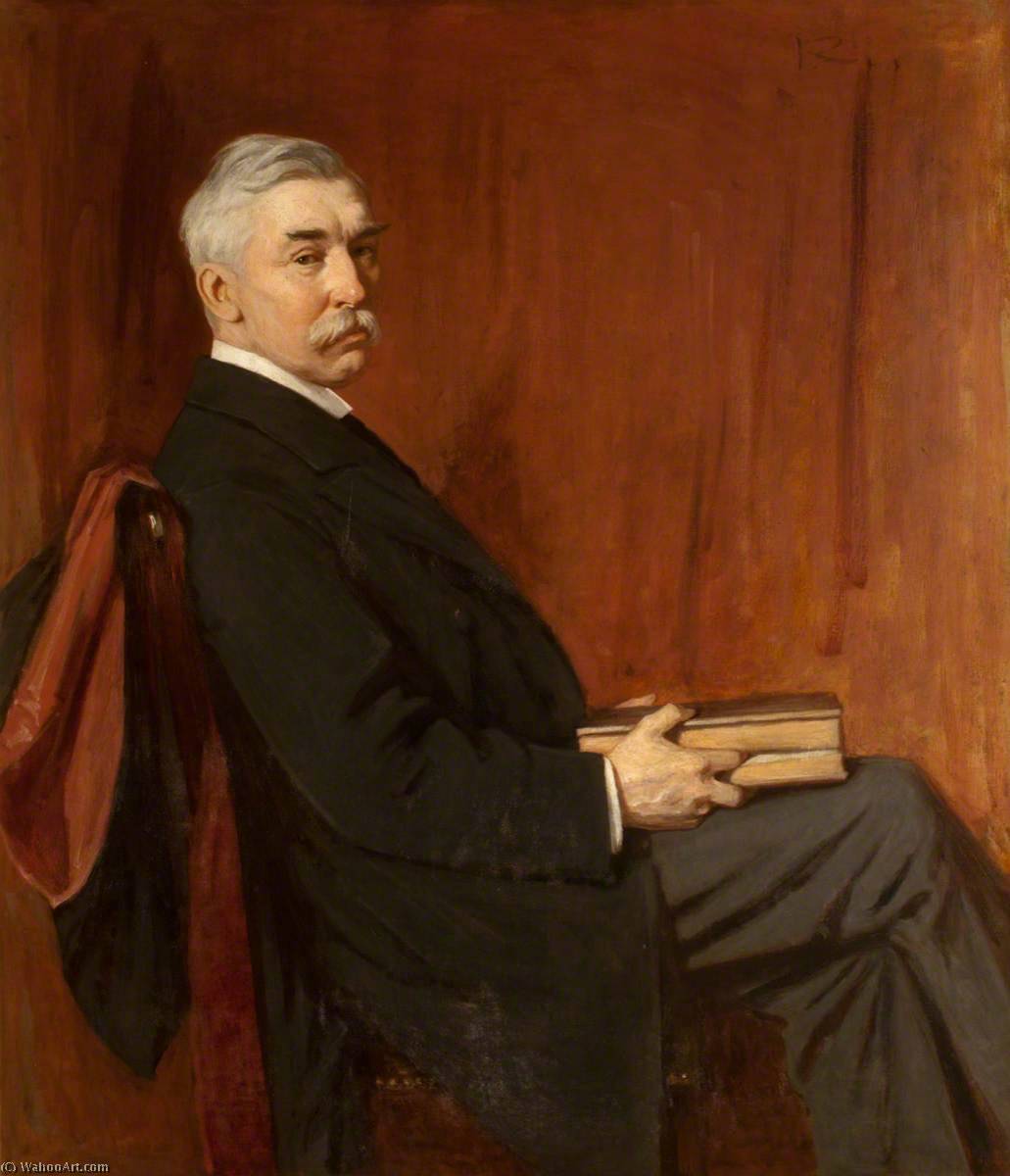
A Portrait Steeped in Dignity: Exploring George Agnew Reid’s Sir John Sibbald
The painting “Sir John Sibbald” by George Agnew Reid, completed circa 1893, stands as a testament to the artist's mastery of realism and his ability to imbue portraiture with profound emotional resonance. Executed in oil on canvas, this artwork resides within the Royal College of Physicians of Edinburgh’s collection—a fact that speaks volumes about its significance within Canadian artistic heritage. Reid, born in 1860 in Wingham, Ontario, possessed an uncommon upbringing for an artist of his stature; he honed his craft amidst the pastoral beauty of rural Canada West before embarking on formal studies at Toronto's Central Ontario School of Art and subsequently pursuing advanced training at Philadelphia’s Pennsylvania Academy of the Fine Arts. This dual influence—the grounding of practical observation combined with academic rigor—shaped Reid’s artistic sensibilities, resulting in a distinctive style characterized by meticulous detail and an unwavering commitment to capturing the essence of his subjects.
- Subject Matter: The portrait depicts Sir John Sibbald, a prominent physician and Fellow of the Royal College of Physicians of Edinburgh. Sibbald's professional accomplishments underscore Reid’s intention to portray not merely physical appearance but also intellectual stature and moral character—a hallmark of Victorian artistic ideals.
- Style & Technique: Reid’s approach aligns squarely with the tenets of realism, championed by luminaries like Thomas Eakins. He meticulously rendered Sibbald's anatomy with painstaking accuracy, utilizing subtle shading and tonal variations to convey depth and texture. The artist skillfully employed glazing techniques—applying thin layers of translucent paint over underlying colors—to achieve luminosity and atmospheric perspective, creating a captivating illusion of three-dimensionality.
The painting’s setting – a simple red curtain or wall with a subtle gradient – serves as more than just a backdrop; it symbolizes privacy and contemplation. Reid deliberately minimized extraneous ornamentation to focus the viewer's gaze squarely upon Sibbald’s face, emphasizing his solemn expression and conveying an aura of quiet dignity. The artist’s masterful use of light—particularly highlighting Sibbald’s eyes—further enhances the portrait’s emotional impact, inviting viewers to engage in a contemplative dialogue with the subject’s inner life. Reid's decision to depict Sibbald seated against this understated backdrop speaks to Victorian sensibilities regarding decorum and intellectual pursuits.
- Historical Context: Created during the Victorian era (1837-1901), “Sir John Sibbald” reflects the prevailing artistic preoccupation with portraying individuals of distinction—scholars, statesmen, and physicians—as emblems of virtue and intellect. The portrait exemplifies the Victorian ideal of gentlemanly scholarship, aligning with broader cultural trends emphasizing moral responsibility and intellectual enlightenment.
- Symbolism: Reid’s inclusion of Sibbald holding a book is laden with symbolic significance. Books represent knowledge, wisdom, and erudition—values highly esteemed during the Victorian period and consistently upheld by Reid's artistic vision. It underscores Sibbald’s role as a healer and intellectual leader.
Ultimately, “Sir John Sibbald” transcends mere visual representation; it embodies an enduring legacy of artistic excellence and humanist contemplation. George Agnew Reid’s meticulous technique—combined with his astute understanding of psychological portraiture—produces a masterpiece that continues to captivate audiences today. Its quiet dignity and subtle emotional depth solidify its place as a cornerstone of Canadian art history, inviting viewers to appreciate not only the artist's skill but also the profound values he sought to convey through this unforgettable image.