The Grace of Gathering: An Encounter with Georges Lacombe's Vision
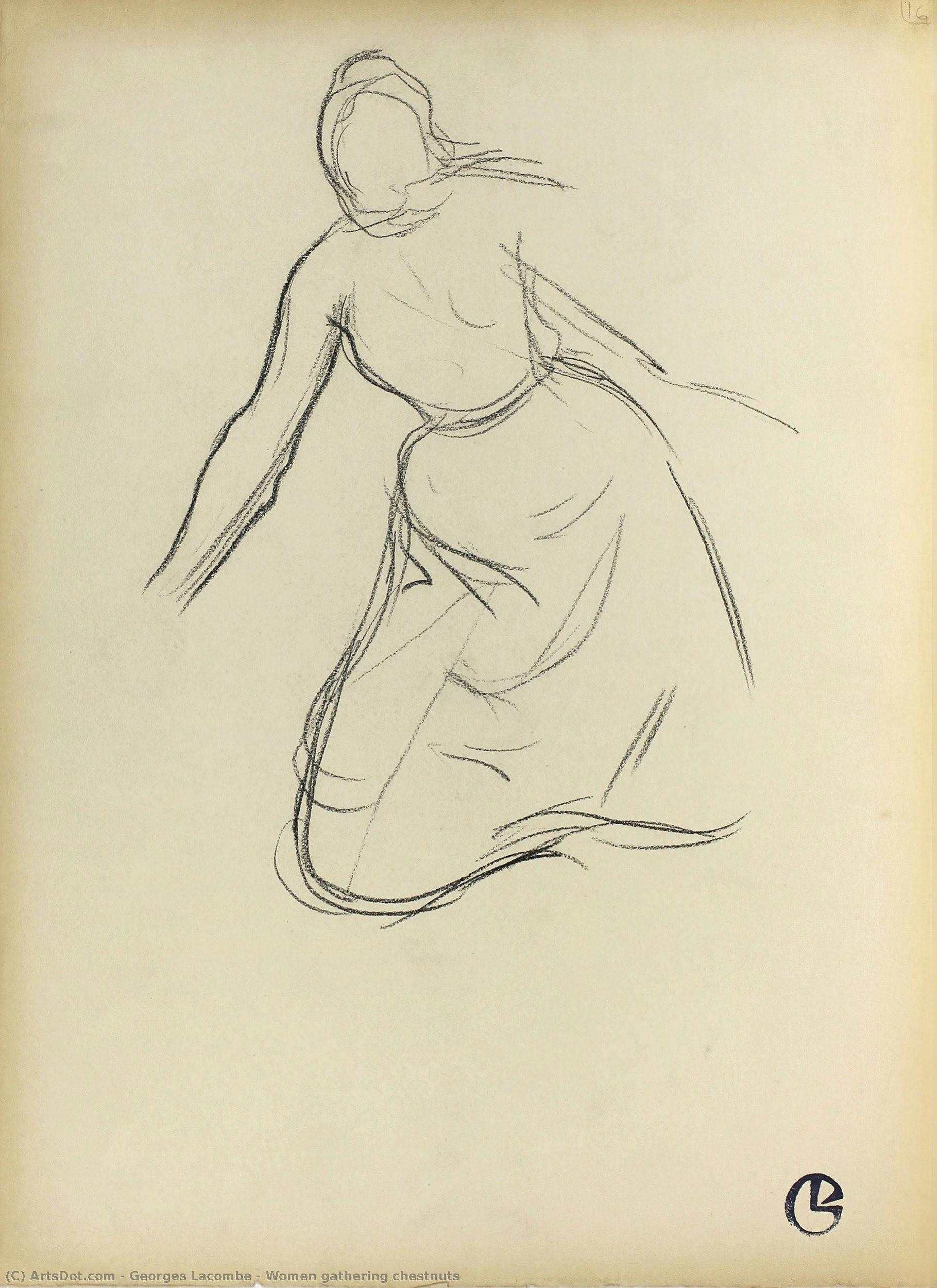
To gaze upon this depiction, "Women gathering chestnuts," is to step into a moment suspended in the amber glow of late nineteenth-century French life. It is an image that speaks not only of leisure but of inherent feminine grace. The subject matter itself—women engaged in the simple, rhythmic act of gathering nuts—is elevated by Lacombe’s masterful touch from mere genre scene to something imbued with poetic resonance. One senses the gentle rustle of fabric and the quiet industry of the harvest under the soft light of a bygone era. The artist captures an elegance in the posture of the central figure, whose outstretched arms suggest either a dance in progress or a graceful acknowledgment of the viewer, drawing us intimately into her world.
A Study in Impressionistic Line and Form
Technically, this work showcases Georges Lacombe’s refined command over line and movement. While rooted in the traditions that followed the great Impressionists, Lacombe imbues his figures with a palpable sense of life and flow. The detailing on the flowing dress is exquisite; one can almost feel the weight and texture of the material as it cascades around her ankles. His ability to render human form—the curve of the back, the sweep of an arm—is what elevates this piece beyond simple portraiture. It speaks to a painter who understood that true depiction lies not just in rendering surfaces, but in capturing the ephemeral quality of being alive.
Echoes of Breton Influence and Artistic Circles
Understanding Lacombe’s context enriches our appreciation immeasurably. Born into an artistic lineage, his formative years were deeply intertwined with the vibrant intellectual currents of late 19th-century France. His sojourn in Brittany, a period that profoundly shaped his vision, suggests that this piece carries the subtle, evocative spirit often associated with Breton art—a blend of mythic undertones and natural beauty. The background elements, perhaps containing script or incidental details, anchor the scene within a specific cultural moment, inviting us to contemplate the artistic milieu from which it sprang.
Symbolism and Enduring Allure
The chestnut itself carries weight in art history; it symbolizes bounty, sustenance, and the cyclical nature of life. Paired with the depiction of women—figures historically central to themes of nurturing and community—the painting becomes a quiet meditation on feminine strength found within domestic ritual. For the collector or designer, this piece offers more than mere decoration; it offers an atmosphere. It is a touchstone of romantic nostalgia, perfect for lending an air of cultivated history and gentle artistry to any interior space.