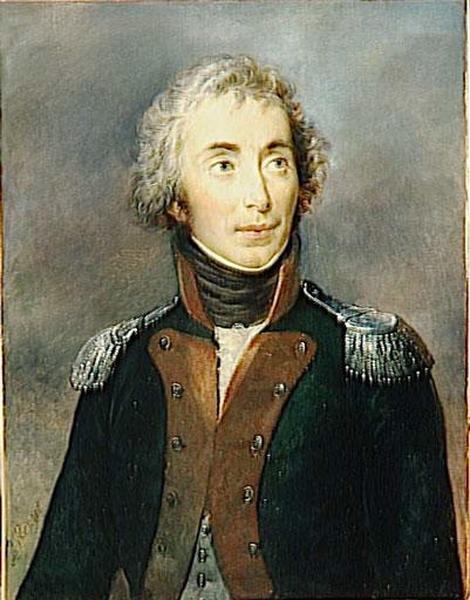
Emmanuel de Grouchy, Colonel du 2e Dragon en 1792: A Portrait of Military Dignity
- Artist: Georges Rouget
- Date: Unknown
- Medium: Oil on Canvas (Assumed)
This striking portrait depicts Emmanuel de Grouchy, Colonel du 2e Dragon in 1792. Painted by Georges Rouget, a neoclassical French painter known for his historical scenes and association with Jacques-Louis David, the artwork offers a glimpse into late 18th/early 19th century France during a period of significant political upheaval.
Style and Technique: Neoclassical Realism
The painting exemplifies the neoclassical style prevalent during Rouget's time. Characterized by its emphasis on order, symmetry, and clarity, neoclassicism drew inspiration from classical antiquity. Rouget’s technique demonstrates a mastery of realism; he meticulously renders details such as the texture of the uniform fabric, the gleam of military insignia, and the subtle nuances of de Grouchy's facial features. The use of oil paints allows for smooth blending and layering, creating a sense of depth and volume. Brushstrokes are largely invisible, contributing to the polished and refined aesthetic typical of neoclassical portraiture.
Historical Context: A Tumultuous Era
The year 1792 was a pivotal moment in French history, marked by the outbreak of the French Revolution. De Grouchy's position as Colonel du 2e Dragon (2nd Dragoon Regiment) places him within the context of a nation undergoing radical transformation. The painting serves not only as a portrait but also as a visual record of military leadership during this turbulent period. Rouget’s connection to Jacques-Louis David, who himself documented key events and figures of the Revolution and Napoleonic era, further underscores the historical significance of this work.
Symbolism and Emotional Impact
The uniform itself is laden with symbolism, representing military rank, service, and loyalty. The meticulous detail in its depiction highlights de Grouchy's status and authority. His expression, calm and composed, conveys a sense of dignity and perhaps stoicism – qualities valued in military leaders. The muted background directs the viewer’s attention solely to the subject, emphasizing his importance. The overall impression is one of strength, resolve, and quiet confidence, reflecting the spirit of an officer serving during a time of great change.
About the Artist: Georges Rouget
- Birth Year: 1783
- Death Year: 1869
 Georges Rouget was a neoclassical French painter who studied at the École des Beaux-Arts and became a favored student of Jacques-Louis David. He worked as David's main assistant, contributing to significant canvases like "Bonaparte at the Grand-Saint-Bernard" and the coronation of Napoleon. While he didn’t always win top prizes, Rouget dedicated his career to producing historical paintings for various regimes, leaving behind a legacy of works depicting key moments in French history.