Menu
FREE ART CONSULTATION

Georges Rouget

1783 - 1869

Quick Facts

  • Creative periods: mature period
  • Also known as: Marie-Georges Louis Rouget
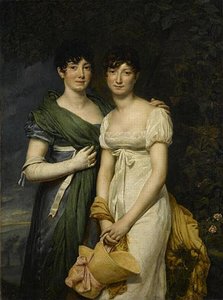
  • Top-ranked work: MESDEMOISELLES MOLLIEN
  • Art period: 19th Century
  • Typical colors: espresso
  • Vibe: elegant
  • Died: 1869
  • Room fit: living room
  • Copyright status: Public domain
  • More…
  • Movements: neoclassicism
  • Lifespan: 86 years
  • Color intensity:
    • balanced
    • monochromatic
  • Museums on APS:
    • The Louvre
    • Ministère de la Défense Nationale
  • Works on APS: 33
  • Top 3 works:
    • MESDEMOISELLES MOLLIEN
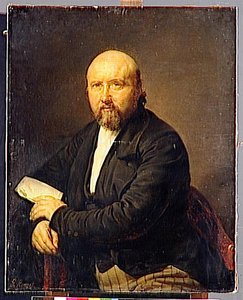
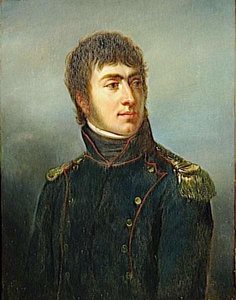
    • JEAN PIERRE THENOT (1803 1857)
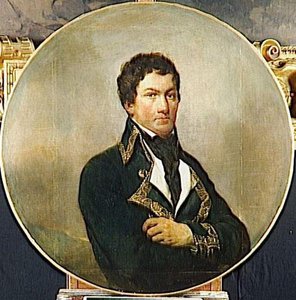
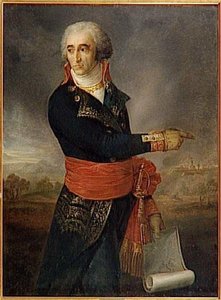
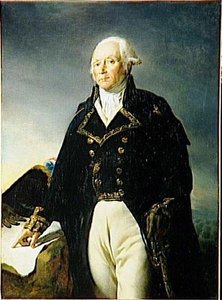
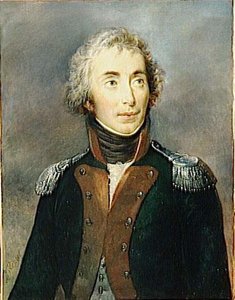
    • FRANCOIS CHASSELOUP LAUBAT, GENERAL DE DIVISION (1754 1833)
  • Born: 1783
  • Topics explored:
    • portrait
    • dignified

Art Quiz

There is only one correct answer for each question.

Question 1:
Q1
Question 2:
Q2
Question 3:
Q3
Question 4:
Q4
Question 5:
Q5

The Apprentice of Grandeur

Born into the burgeoning energy of late 18th-century Paris, Marie-Georges Louis Rouget was destined to become a silent architect of visual history. His journey began within the prestigious halls of the École des Beaux-Arts, where he first learned the rigors of classical form under masters such as Jean-Victor Carrier Sabre and Alexandre François Bouchardy. Yet, it was his entry into the legendary atelier of Jacques-Louis David in 1797 that would irrevocably alter the course of his life and art. In this crucible of Neoclassicism, Rouget did not merely learn to paint; he learned to breathe the very spirit of an era. As David’s most trusted assistant, he became a vital conduit for the master's revolutionary vision, absorbing a technique defined by dramatic lighting, idealized anatomy, and a profound commitment to heroic narrative. This formative period instilled in him an unwavering dedication to portraying monumental historical events with a sense of scale and conviction that would define his entire career.

A Canvas of Empire

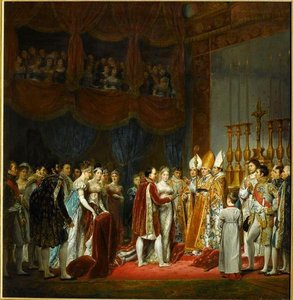
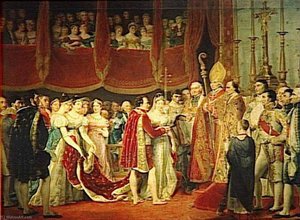
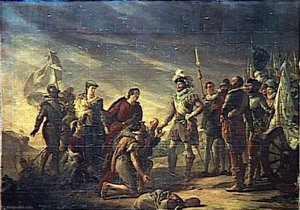
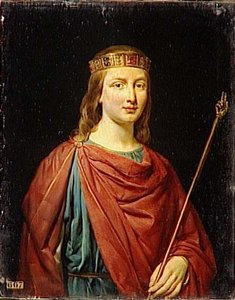
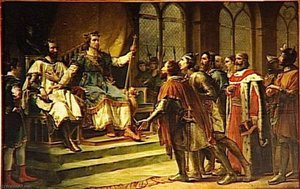
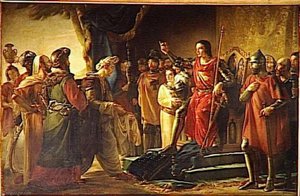
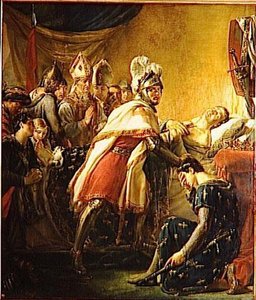
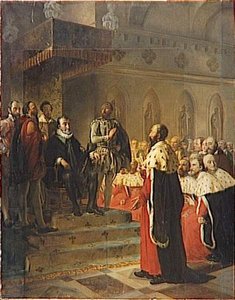
As Napoleon Bonaparte ascended the throne, Rouget’s brush became an instrument of imperial grandeur and historical record. His career was inextricably woven into the fabric of the First Empire, earning him the evocative reputation as the painter of Napoleon. This was not a role of mere imitation, but one of profound creative symbiosis between student and master. Working alongside David, Rouget contributed to some of the most iconic imagery of the age, including meticulously crafted interpretations of Bonaparte at the Grand Saint Bernard and the monumental The Coronation of Napoleon. His work captured the tension between the weight of history and the soaring ambition of a single man, utilizing a palette of deep blues, regal reds, and earthen tones to evoke a sense of permanence and power. Through his hands, the fleeting triumphs of the battlefield and the political maneuvers of the court were transformed into eternal monuments of oil and canvas, much of which eventually adorned the hallowed halls of Versailles.

The Legacy of Neoclassical Precision

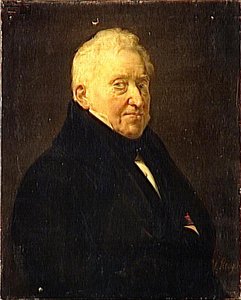
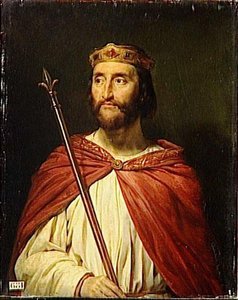
Beyond the sweeping historical panoramas, Rouget found his greatest expression in the intimate dignity of portraiture. His ability to capture the essence of the era's leading figures—from military commanders like François Chasseloup Laubat to the quiet authority of the French elite—demonstrated a mastery of Neoclassical realism. In these works, one finds an exquisite attention to texture and light; the subtle sheen of gold embroidery, the heavy drape of a uniform, and the soft, diffused glow that sculpts a subject's features are all rendered with breathtaking precision. While he may not have shared the singular, household fame of David or Ingres, Rouget’s presence in the annals of French art is undeniable. His legacy remains a testament to an age where art served as the ultimate mirror to human ambition, leaving behind a visual lexicon of strength, formality, and grace that continues to resonate with the spirit of the Napoleonic era.