 Preview
 Send
Send Share
Share
 Details

 Download
 Similars
 X-Ray
X-Ray Diaporama
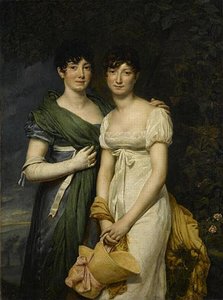
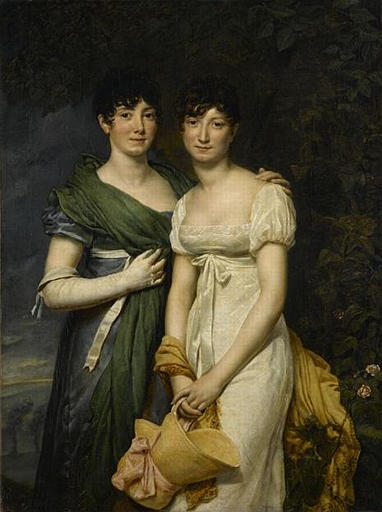
MESDEMOISELLES MOLLIEN


 Read More
Hand Made Oil Reproduction
Hand-painted oil on canvas in your size and frame, made to order by our artists. ( Buy Print Buy Image)




P118B $10

P118H $10

P118W $10

P438Z $10

P508JH $12

P508YH $12

P805H $10

P805Z $10

P919BZ $10

P919G $10

P919XJ $10

P959ZH $10

P968JZ $12

W106C $8

W218G $10

W218JH $8

W218Y $10

W307PJ $10

W316G $10

W316PJ $8

W316Y $10

W398PJ $8

W4111J $10

W500HY $15

W500JH $15

W692G $12

W849H $8

W940BG $15

W953PJ $8




Pick from our preset sizes that match the artwork's original proportions.

You may enter your own dimensions to fit a specific frame or space. If your selected size does not match the original image's proportions, we will either crop the artwork or extend the painting with additional hand-painted elements. A digital mockup will be sent for your approval before production begins.
Please note that the on-screen preview does not reflect the actual cropping or extension. Only the mockup will accurately show the final composition.
While custom sizes are available, we recommend selecting a dimension from the predefined list to preserve the original proportions.
After order, ArtsDot.com team will email client for instructions and provide a mockup preview
Worldwide Delivery () in 3/4 weeks instead of standard 5 weeks. (16 August). No compromise on quality.

Free Worldwide Express Shipping

High-Quality Linen Canvas

Full Shipping Insurance

Customs Tax Refund Guarantee

True Color Matching Guarantee

60-Day Return Policy (Defects Only)

100% Money-Back Guarantee

Bulk Discount Offer
 Glass option is only available in size under 110 CM

MESDEMOISELLES MOLLIEN
Reproduction Medium
Reproduction Size
-


Total Price
$ 288
Artwork Description
A Portrait of Grace and Quiet Dignity: Exploring Georges Rouget’s “Mesdemoiselles Mollien”
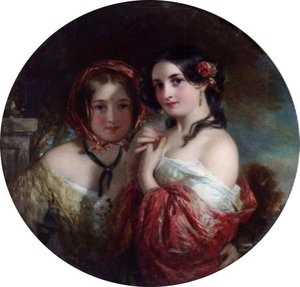
Georges Rouget's "Mesdemoiselles Mollien," painted in 1811, is more than just a portrait; it’s a window into the refined world of early 19th-century French society and a testament to the enduring power of Neoclassical elegance. Commissioned for a wealthy family – the Molliens, prominent figures within Napoleon's administration – the painting captures two young women, Françoise-Elisabeth and Gaspard-Pauline, as they stand poised in a moment of serene contemplation. Rouget, a favored student of David and deeply embedded within the artistic circles surrounding Versailles, masterfully blends classical ideals with subtle Romantic undertones, creating an image that is both formally structured and emotionally resonant.
The scene unfolds against a backdrop of muted greens and browns – a carefully constructed landscape suggesting a secluded garden or perhaps a shaded courtyard. This deliberate choice in color palette immediately establishes a mood of quiet intimacy and understated luxury. The women, dressed in elegant white gowns adorned with delicate green accents, are positioned close together, their bodies subtly overlapping, conveying a sense of familial connection and shared experience. Their expressions are remarkably composed, reflecting the social expectations of the time – dignified yet approachable, hinting at an inner life beyond the confines of formal portraiture.
Neoclassical Composition and Delicate Brushwork
Rouget’s artistic approach is firmly rooted in Neoclassicism, a style characterized by its emphasis on balance, order, and idealized beauty. The composition adheres to strict geometric principles, with the figures arranged symmetrically within the frame, creating a sense of visual harmony. However, subtle Romantic elements peek through – the diffused lighting, reminiscent of Turner’s atmospheric landscapes, softens the overall effect and imbues the scene with a gentle melancholy. The artist's meticulous brushwork is particularly noteworthy; he employs delicate layering techniques to render the textures of the women’s clothing—the smooth silkiness of their gowns, the soft folds of their shawls—with remarkable realism. Close inspection reveals the subtle variations in tone and color that contribute to the painting’s overall depth and luminosity.
- Technique: Oil on canvas – a medium favored for its ability to capture nuanced colors and textures.
- Brushwork: Smooth blending, layered application creating realistic skin tones and fabric details.
- Color Palette: Muted greens, creams, browns, accented with gold and pink—evoking a sense of wealth and refinement.
Symbolism and the Portrait’s Narrative
Beyond its formal beauty, “Mesdemoiselles Mollien” carries layers of symbolic meaning. The close proximity of the two women suggests a strong familial bond – perhaps sisterhood or a deep friendship—a connection valued within aristocratic society. Their serene expressions convey a sense of social standing and inner composure, reflecting the expectations placed upon young women of their era. The painting can be interpreted as a celebration of female beauty and grace, while also subtly hinting at the constraints imposed by societal norms. The inclusion of the landscape adds another layer of meaning; it serves not merely as a backdrop but as a reflection of the women’s inner lives—a space for contemplation and connection.
A Legacy of Napoleonic Grandeur
Georges Rouget's “Mesdemoiselles Mollien” stands as a significant example of Neoclassical portraiture from the era of Napoleon. His work, deeply intertwined with the ambitions of the French Empire, adorned the halls of Versailles and served as a visual record of a pivotal moment in European history. Reproductions of this captivating artwork offer a glimpse into the refined tastes and social dynamics of 19th-century France, inviting viewers to appreciate the enduring beauty and symbolic richness of Rouget’s masterful creation. It remains a poignant reminder of the elegance and quiet dignity that defined an era.
Related Artworks
Artist Biography
The Apprentice of Grandeur
Born into the burgeoning energy of late 18th-century Paris, Marie-Georges Louis Rouget was destined to become a silent architect of visual history. His journey began within the prestigious halls of the École des Beaux-Arts, where he first learned the rigors of classical form under masters such as Jean-Victor Carrier Sabre and Alexandre François Bouchardy. Yet, it was his entry into the legendary atelier of Jacques-Louis David in 1797 that would irrevocably alter the course of his life and art. In this crucible of Neoclassicism, Rouget did not merely learn to paint; he learned to breathe the very spirit of an era. As David’s most trusted assistant, he became a vital conduit for the master's revolutionary vision, absorbing a technique defined by dramatic lighting, idealized anatomy, and a profound commitment to heroic narrative. This formative period instilled in him an unwavering dedication to portraying monumental historical events with a sense of scale and conviction that would define his entire career.A Canvas of Empire
As Napoleon Bonaparte ascended the throne, Rouget’s brush became an instrument of imperial grandeur and historical record. His career was inextricably woven into the fabric of the First Empire, earning him the evocative reputation as the painter of Napoleon. This was not a role of mere imitation, but one of profound creative symbiosis between student and master. Working alongside David, Rouget contributed to some of the most iconic imagery of the age, including meticulously crafted interpretations of Bonaparte at the Grand Saint Bernard and the monumental The Coronation of Napoleon. His work captured the tension between the weight of history and the soaring ambition of a single man, utilizing a palette of deep blues, regal reds, and earthen tones to evoke a sense of permanence and power. Through his hands, the fleeting triumphs of the battlefield and the political maneuvers of the court were transformed into eternal monuments of oil and canvas, much of which eventually adorned the hallowed halls of Versailles.The Legacy of Neoclassical Precision
Beyond the sweeping historical panoramas, Rouget found his greatest expression in the intimate dignity of portraiture. His ability to capture the essence of the era's leading figures—from military commanders like François Chasseloup Laubat to the quiet authority of the French elite—demonstrated a mastery of Neoclassical realism. In these works, one finds an exquisite attention to texture and light; the subtle sheen of gold embroidery, the heavy drape of a uniform, and the soft, diffused glow that sculpts a subject's features are all rendered with breathtaking precision. While he may not have shared the singular, household fame of David or Ingres, Rouget’s presence in the annals of French art is undeniable. His legacy remains a testament to an age where art served as the ultimate mirror to human ambition, leaving behind a visual lexicon of strength, formality, and grace that continues to resonate with the spirit of the Napoleonic era.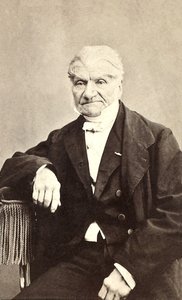
Georges Rouget
1783 - 1869
Quick Facts
- Artistic Movement Or Style: Neoclassical
- Artists Or Movements Influenced By This Artist: Versailles
- Artists Who Influenced This Artist: David
- Date Of Birth: August 26, 1783
- Date Of Death: April 9, 1869
- Full Name: Georges Rouget
- Nationality: French
- Notable Artworks:
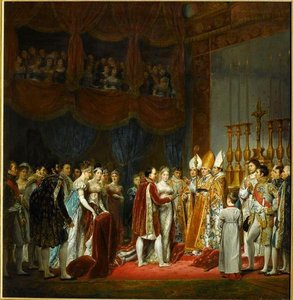
- Marriage of Napoleon and Marie Louise
- Cupid pleading Venus to forgive Psyche
- Leonidas at Thermopylae
- Place Of Birth: Paris, France
Related Articles

Georges Braque's Masterpieces: 25 Paintings That Defined Cubism & Modern Art | ArtsDot
Explore 25 iconic Georges Braque paintings that revolutionized Cubism & modern art. Discover the stories behind his masterpieces, from Fauvism to Analytical Cubism. Find museum-quality reproductions & elevate your home decor with ArtsDot.com.

Georges Seurat's Masterpieces: 25 Paintings That Defined Pointillism | ArtsDot
Explore 25 iconic Georges Seurat paintings & discover the brilliance of Pointillism. From 'La Grande Jatte' to his harbor scenes, delve into art history with ArtsDot.com. Find museum-quality reproductions for your home decor. Explore the full collection online!
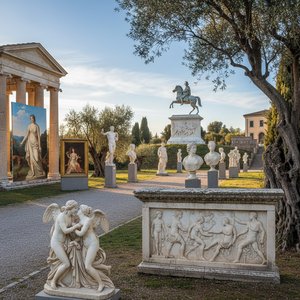
Neoclassical Art: 10 Masterpieces That Shaped History |
Explore 10 defining Neoclassical masterpieces by David, Ingres & Canova. Discover the history, symbolism & artistry behind these iconic paintings and sculptures. Find museum-quality art reproductions at – elevate your home with timeless beauty.
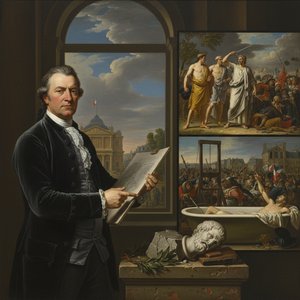
Jacques-Louis David: Neoclassical Ideals & Revolutionary Witness
Explore the life & art of Jacques-Louis David, leading Neoclassical painter of the French Revolution. Discover iconic works like 'The Death of Marat' and his lasting impact on art history. Expert analysis & high-quality reproductions at ArtsDot.
Jean-Georges Béraud: Capturing Parisian Life in the Belle Époque
Explore the captivating world of Jean-Georges Béraud, master painter of Belle Époque Paris. Discover his iconic scenes, artistic evolution, and social commentary. A deep dive into 19th-century French art.