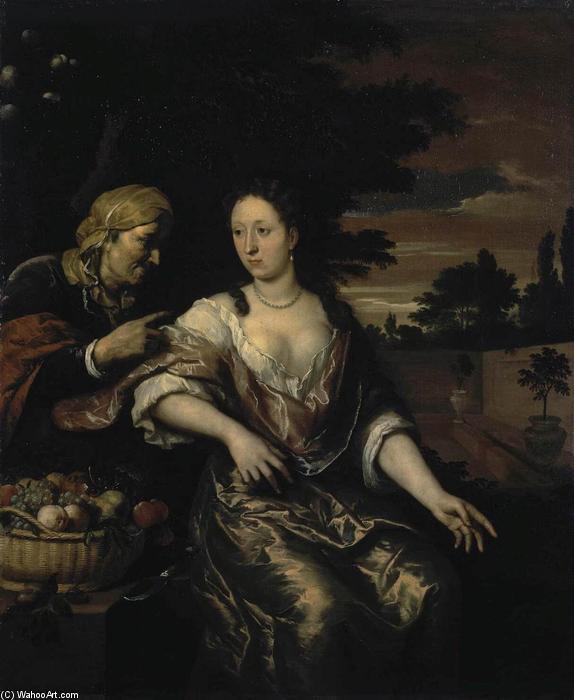
Experience Baroque drama with Gerard I Hoet's Vertumnus and Pomona, a lush 1700 mythological scene capturing transformation; discover this masterpiece today.
Explore the works of Gerard Hoet, a Dutch Golden Age painter & engraver known for historical & mythological scenes. Discover his art history contributions!
Explore the Hermitage Museum in St. Petersburg! Discover masterpieces from Renaissance to modern times within stunning historic palaces – a cultural journey awaits.
Vertumnus And Pomona – A Baroque Embrace of Fertility
The painting “Vertumnus and Pomona” by Gerard I Hoet, completed around 1700, stands as a testament to the artistic fervor of the Dutch Golden Age and embodies the profound influence of classical mythology on European art. Housed within The Hermitage Museum in St. Petersburg, Russia—a treasure trove of Baroque masterpieces—this canvas measures 65 x 54 cm and is executed with meticulous detail in oil on canvas, reflecting the prevailing artistic conventions of its time. More than just a depiction of deities, it’s an exploration of themes central to humanist thought: transformation, desire, and the cyclical rhythms of nature.
A Scene From Arcadia Revisited
Hoet's composition transports viewers back to the idealized landscapes of Arcadia—the legendary realm of pastoral innocence and divine harmony—a setting deeply rooted in Greek mythology. The painting captures a pivotal moment from Ovid’s Metamorphoses: Vertumnus, god of seasons and capricious weather, subtly persuades Pomona, goddess of fruit trees and orchards, to reveal herself to him. This narrative embodies the Baroque fascination with dramatic storytelling and psychological complexity—a deliberate contrast between youthful beauty and aged wisdom. The artist skillfully utilizes chiaroscuro – the interplay of light and shadow – to heighten the emotional impact of the scene, emphasizing the vulnerability of Pomona and the persuasive power of Vertumnus’s gaze.
Technique and Style: Baroque Precision
The painting's execution exemplifies the hallmarks of Baroque art—characterized by dramatic realism, opulent ornamentation, and a masterful command of technique. Hoet employs meticulous brushwork to render textures with remarkable accuracy, capturing the delicate foliage of Pomona’s orchard and the flowing robes of Vertumnus. The artist’s palette leans heavily on earthy tones – ochres, siennas, umbers – creating a warm, inviting atmosphere that reinforces the painting's connection to the natural world. Furthermore, Hoet’s attention to detail extends beyond mere representation; he imbues the figures with palpable emotion, conveying both Vertumnus’s ardent desire and Pomona’s initial apprehension.
Symbolism: Fertility and Transformation
Beyond its aesthetic beauty, “Vertumnus and Pomona” is laden with symbolic significance. The orchard itself represents fecundity and abundance—a visual metaphor for the promise of springtime and the renewal of life. Vertumnus embodies change and adaptability, mirroring the cyclical transformations inherent in the seasons. His disguise as an old woman serves as a deliberate allusion to the myth’s central theme: overcoming youthful vanity through acceptance of age and experience. Pomona symbolizes purity and innocence—a counterpoint to Vertumnus's persuasive charm—highlighting the importance of balance within the natural order. The painting speaks to broader philosophical ideas about human nature, suggesting that true beauty lies in embracing both strength and vulnerability.
A Legacy Enduring Through Reproduction
Today, reproductions of “Vertumnus and Pomona” continue to inspire artists and collectors alike. Its masterful composition, evocative color palette, and profound thematic depth resonate across centuries—a testament to Hoet’s artistic genius and the enduring power of classical mythology. The painting's ability to capture a fleeting moment of human emotion within a grand narrative ensures its place as an iconic image of Baroque art and a captivating subject for interior design projects seeking warmth, sophistication, and a connection to timeless beauty.