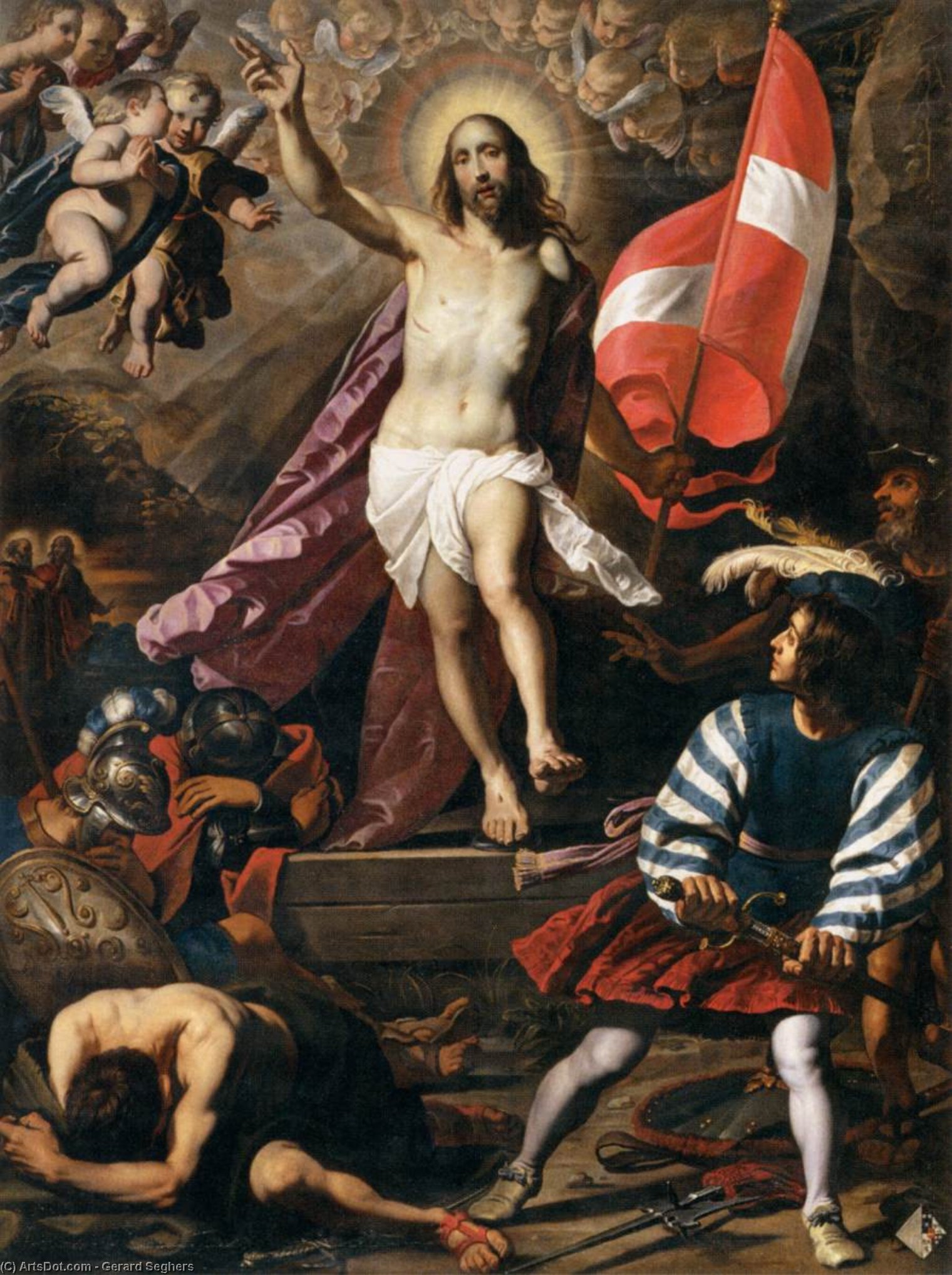
The Resurrection of Christ – A Baroque Masterpiece by Gerard Seghers
Gerard Seghers’s “Resurrection of Christ,” painted around 1620, is not merely a depiction of a biblical event; it's a visceral embodiment of faith and hope rendered in the dramatic chiaroscuro characteristic of the Caravaggisti movement. This monumental work, now housed within the Louvre Museum in Paris, transcends its religious subject matter to become a profound exploration of human experience – the triumph over death, the promise of eternal life, and the sheer power of divine intervention. Seghers, born in Antwerp in 1591 and tragically passing away in 1651, skillfully bridged the transition between the High Renaissance and the burgeoning Baroque era, inheriting and adapting the stylistic innovations of Michelangelo Merisi da Caravaggio while forging his own distinct artistic identity.
The painting immediately commands attention with its dynamic composition. At the center, Christ’s body, rendered in meticulous detail, is dramatically lifted from the stone tomb by a multitude of angels – not idealized figures of serene beauty, but powerful, muscular beings radiating an almost overwhelming energy. The scene unfolds within a richly textured interior, illuminated by a single, intensely focused light source that casts deep shadows and highlights the contours of the figures with startling realism. This masterful use of light and shadow, a hallmark of Caravaggio’s style, creates a theatrical atmosphere, drawing the viewer directly into the heart of the event.
A Caravaggisti Vision: Technique and Style
Seghers's artistic approach is deeply rooted in the principles of Caravaggism. He meticulously studied and emulated Caravaggio’s techniques – particularly his use of *tenebrismo*, a dramatic contrast between light and dark, and his preference for realistic depictions of human anatomy. The figures are not idealized; they possess a palpable physicality, their muscles strained with exertion as they bear the weight of Christ's ascent. The artist employs a loose, expressive brushstroke, contributing to the painting’s sense of immediacy and movement. Notice the subtle variations in color – the deep reds of the drapery, the earthy tones of the tombstone, and the luminous whites of the angels’ garments – all carefully orchestrated to heighten the emotional impact.
Symbolism and Narrative Depth
Beyond its immediate depiction of the resurrection, “Resurrection of Christ” is laden with symbolic meaning. The flag prominently displayed on the right side of the painting represents victory over death and the triumph of Christianity. The sword near Jesus’s feet symbolizes divine justice and the sacrifice he made for humanity's salvation. The kneeling figure at the base of the scene, often interpreted as a witness to this miraculous event, underscores the profound significance of Christ’s resurrection for all believers. Even the architectural details – the rough-hewn stone of the tomb, the simple yet sturdy construction – contribute to the painting’s narrative depth, grounding the divine in the earthly realm.
Historical Context and Artistic Legacy
Created during a period of intense religious fervor and artistic experimentation, “Resurrection of Christ” reflects the broader cultural landscape of 17th-century Flanders. The rise of Protestantism had fueled a renewed interest in biblical themes, while the influence of Caravaggio’s dramatic style spread rapidly throughout Europe. Seghers's work stands as a pivotal example of this artistic movement, demonstrating his ability to synthesize Caravaggio’s innovations with his own unique vision. His legacy extends beyond this single masterpiece; he was also a successful art dealer and collector, actively shaping the artistic climate of Antwerp and contributing significantly to the development of Flemish Baroque painting.
A Timeless Testament: Emotional Impact
Ultimately, “Resurrection of Christ” is more than just a historical or stylistic artifact. It’s an emotionally resonant work that continues to captivate viewers centuries after its creation. The sheer drama of the scene – the struggle, the triumph, the promise of eternal life – evokes a powerful sense of awe and wonder. Whether viewed as a religious icon or simply as a stunning example of Baroque artistry, this painting remains a testament to the enduring power of faith, hope, and the transformative potential of art.