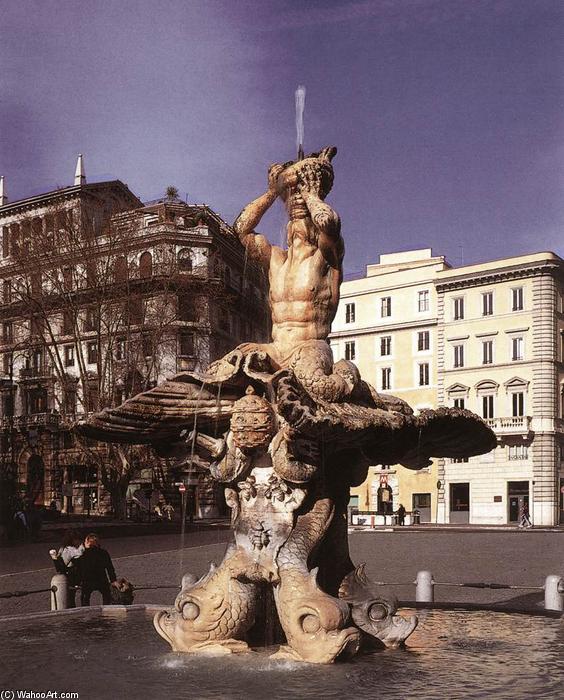
A Symphony in Stone: Gian Lorenzo Bernini’s Fontana del Tritone
The heart of Piazza Barberini in Rome beats with a vibrant pulse – a pulse inextricably linked to the magnificent Fontana del Tritone, sculpted by the unparalleled genius of Gian Lorenzo Bernini. Completed in 1643, this colossal fountain isn't merely a decorative element; it’s a dramatic tableau vivant, a testament to Baroque artistry and a profound exploration of mythology and power. Standing before it is akin to stepping into a theatrical stage, where water, stone, and light converge to create an experience that transcends mere observation.
Bernini's mastery lies not just in his technical skill – though undeniably breathtaking – but in his ability to imbue inanimate stone with life and emotion. The centerpiece is Neptune, the Roman god of the sea, rendered in a state of dynamic action. His muscular physique, captured with astonishing realism, suggests both immense strength and a fierce, almost restless energy. He’s not a static deity; he's actively engaged in his domain, raising his right hand to unleash a torrent upon the monstrous sea serpent at his feet – a creature born from the depths of legend and embodying chaos itself. The tritons, Bernini’s youthful companions, are depicted with playful exuberance, adding a vital counterpoint to Neptune’s commanding presence.
The Baroque Embrace: Form, Movement, and Light
The Fontana del Tritone is the quintessential embodiment of the Baroque style. Bernini rejected the static formality of the Renaissance in favor of dramatic movement, intense emotion, and a masterful manipulation of light and shadow. The fountain’s design isn't simply about depicting a scene; it’s about creating an *illusion* of movement. The water itself is key to this effect – cascading down the sculpted figures, splashing against the surrounding pavement, and reflecting the sunlight in dazzling displays. Bernini employed a complex system of pipes and channels to ensure that the water flowed with a naturalistic rhythm, further enhancing the sense of dynamism.
The sculptor’s use of *contrapposto*, a technique borrowed from classical sculpture but dramatically amplified, is particularly evident in Neptune's pose. His weight shifts subtly, creating an impression of balance and power while simultaneously suggesting movement. The intricate details – the texture of the sea serpent’s scales, the individual droplets of water, the expressions on the tritons’ faces – are rendered with painstaking precision, demonstrating Bernini’s unparalleled attention to detail.
Mythological Roots and Papal Patronage
The subject matter itself is steeped in Roman mythology. The story depicted here draws upon ancient tales of Neptune battling a monstrous sea serpent. However, Bernini wasn't simply recreating a myth; he was using it as a vehicle to explore themes of power, control, and the triumph of order over chaos. The fountain was commissioned by Cardinal Maffeo Barberini, Pope Urban VIII’s nephew, who sought to elevate his family’s prestige and demonstrate his piety through a grand public work.
Interestingly, the choice of Neptune as the central figure reflects the Barberini family's own ambition – a desire for dominion and influence. The fountain became a powerful symbol of papal authority, strategically placed in the heart of Rome to impress visitors and reinforce the Church’s position at the center of European power.
A Legacy of Wonder: Emotional Resonance and Timeless Beauty
More than three centuries after its creation, the Fontana del Tritone continues to captivate audiences with its sheer scale, dramatic composition, and technical brilliance. It’s a work that speaks directly to the senses – the sound of rushing water, the sight of shimmering light, the feeling of being enveloped by a monumental sculpture. Bernini masterfully combined artistic skill with emotional depth, creating an experience that is both visually stunning and profoundly moving.
Reproductions of this iconic masterpiece offer a remarkable opportunity to bring its grandeur into any setting. Whether adorning a grand hall or adding a touch of theatrical drama to a contemporary space, the Fontana del Tritone remains a timeless symbol of artistic achievement and enduring beauty – a testament to the genius of Gian Lorenzo Bernini.