A Glimpse into Colonial Grandeur: Gilbert Stuart's Portraiture
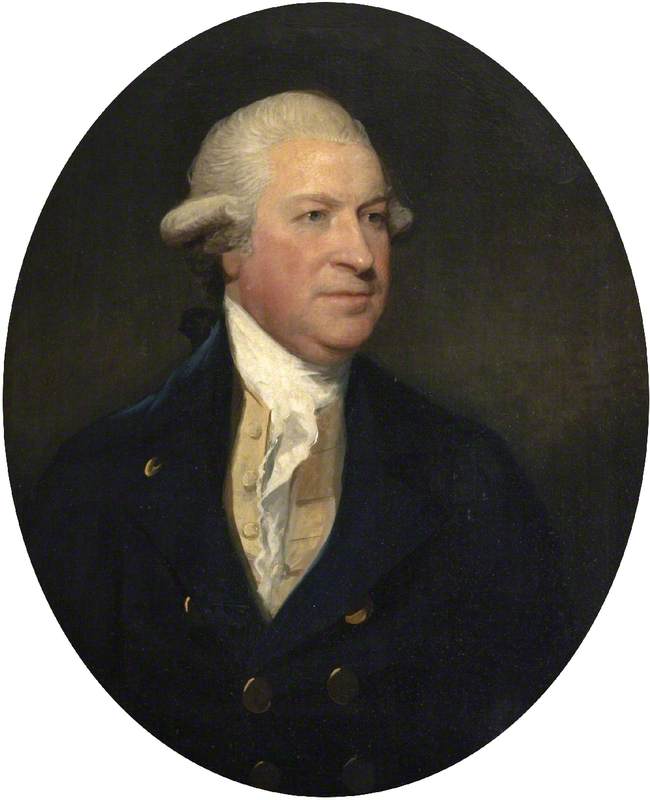
To stand before this portrait of Richard Coffin is to step directly into the sophisticated drawing rooms of late eighteenth-century America. Painted in 1781 by the masterful hand of Gilbert Stuart, the work transcends a mere likeness; it is a carefully constructed monument to status and civic importance. The subject, clad in the imposing blue coat trimmed with crisp white accents, exudes an air of established authority. His wig, the immaculate cravat, and his direct gaze all conspire to present us not just with a man, but with a portrait of prominence—perhaps a statesman, a merchant prince, or a figure whose influence shaped the nascent American landscape.
The Artistry of Gilbert Stuart: Technique and Vision
Gilbert Stuart, an artist whose career spanned the pivotal years of America's transformation, captured this moment with remarkable technical precision. His training, which took him from early promise to rigorous study in London under masters like Benjamin West, is evident in every brushstroke. Notice how the dark background serves not as emptiness, but as a deliberate theatrical curtain, allowing the illuminated figure to emerge with breathtaking clarity. Stuart possessed an unparalleled ability to render texture—the sheen of fine wool on the coat, the soft cascade of the white cravat, and the subtle highlights catching in the wig’s curls. This mastery of light and shadow, characteristic of Neoclassicism, gives the painting a timeless, almost sculptural quality.
Historical Resonance: Life at the Crossroads
The date, 1781, places this portrait squarely within one of the most tumultuous and defining periods in American history. The sitter, Richard Coffin (formerly Bennett), was a man living through revolutionary fervor and the dawn of a new republic. Owning or commissioning such a piece was an act of cultural statement; it tethered the subject to the established order while simultaneously celebrating his personal success within that changing world. For the modern admirer, this painting offers a tangible connection to the very genesis of American identity—a moment suspended between colonial tradition and revolutionary promise.
Emotional Impact and Decorative Presence
The emotional core of the piece lies in its unwavering directness. Coffin meets the viewer’s eye with an intelligence that feels both commanding and approachable. For those considering this work for a grand hall, library, or formal reception area, it promises immediate gravitas. It is art that speaks volumes without uttering a word. Reproducing such a masterpiece allows one to infuse a space with historical depth, lending an air of cultivated pedigree and enduring dignity to any interior design scheme.