 Preview
 Send
Send Share
Share
 Details

 Download
 Similars
 X-Ray
X-Ray Diaporama
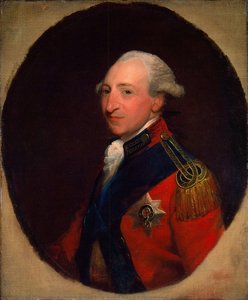
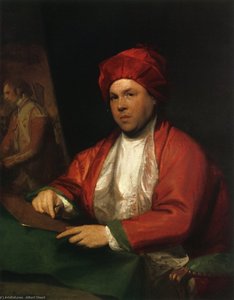
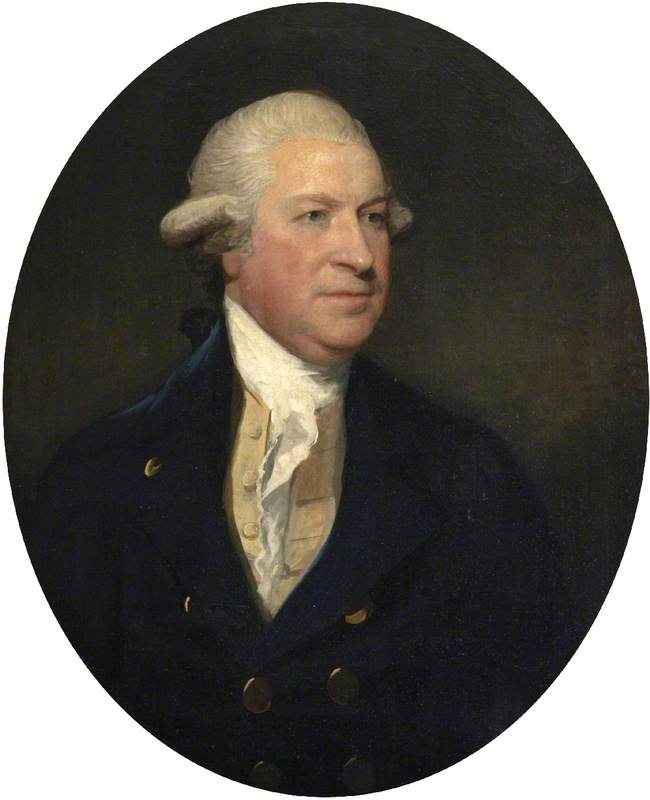
Richard Coffin (d.1796) (formerly Bennett)
 Oil On Canvas
- WallArt
- Neoclassicism
 1781
1781 76.0 x 64.0 cm
 National Trust
 Read More
Hand Made Oil Reproduction
Hand-painted oil on canvas in your size and frame, made to order by our artists. ( Buy Print Buy Image)




P118B $10

P118H $10

P118W $10

P438Z $10

P508JH $12

P508YH $12

P805H $10

P805Z $10

P919BZ $10

P919G $10

P919XJ $10

P959ZH $10

P968JZ $12

W106C $8

W218G $10

W218JH $8

W218Y $10

W307PJ $10

W316G $10

W316PJ $8

W316Y $10

W398PJ $8

W4111J $10

W500HY $15

W500JH $15

W692G $12

W849H $8

W940BG $15

W953PJ $8




Pick from our preset sizes that match the artwork's original proportions.

You may enter your own dimensions to fit a specific frame or space. If your selected size does not match the original image's proportions, we will either crop the artwork or extend the painting with additional hand-painted elements. A digital mockup will be sent for your approval before production begins.
Please note that the on-screen preview does not reflect the actual cropping or extension. Only the mockup will accurately show the final composition.
While custom sizes are available, we recommend selecting a dimension from the predefined list to preserve the original proportions.
After order, ArtsDot.com team will email client for instructions and provide a mockup preview
Worldwide Delivery () in 3/4 weeks instead of standard 5 weeks. (17 August). No compromise on quality.

Free Worldwide Express Shipping

High-Quality Linen Canvas

Full Shipping Insurance

Customs Tax Refund Guarantee

True Color Matching Guarantee

60-Day Return Policy (Defects Only)

100% Money-Back Guarantee

Bulk Discount Offer
 Glass option is only available in size under 110 CM

Richard Coffin (d.1796) (formerly Bennett)
Reproduction Medium
Reproduction Size
-


Total Price
$ 263
Artwork Description
A Glimpse into Colonial Grandeur: Gilbert Stuart's Portraiture
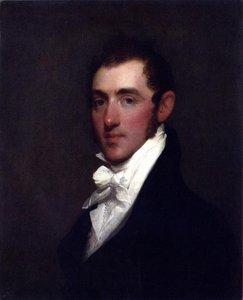
To stand before this portrait of Richard Coffin is to step directly into the sophisticated drawing rooms of late eighteenth-century America. Painted in 1781 by the masterful hand of Gilbert Stuart, the work transcends a mere likeness; it is a carefully constructed monument to status and civic importance. The subject, clad in the imposing blue coat trimmed with crisp white accents, exudes an air of established authority. His wig, the immaculate cravat, and his direct gaze all conspire to present us not just with a man, but with a portrait of prominence—perhaps a statesman, a merchant prince, or a figure whose influence shaped the nascent American landscape.
The Artistry of Gilbert Stuart: Technique and Vision
Gilbert Stuart, an artist whose career spanned the pivotal years of America's transformation, captured this moment with remarkable technical precision. His training, which took him from early promise to rigorous study in London under masters like Benjamin West, is evident in every brushstroke. Notice how the dark background serves not as emptiness, but as a deliberate theatrical curtain, allowing the illuminated figure to emerge with breathtaking clarity. Stuart possessed an unparalleled ability to render texture—the sheen of fine wool on the coat, the soft cascade of the white cravat, and the subtle highlights catching in the wig’s curls. This mastery of light and shadow, characteristic of Neoclassicism, gives the painting a timeless, almost sculptural quality.
Historical Resonance: Life at the Crossroads
The date, 1781, places this portrait squarely within one of the most tumultuous and defining periods in American history. The sitter, Richard Coffin (formerly Bennett), was a man living through revolutionary fervor and the dawn of a new republic. Owning or commissioning such a piece was an act of cultural statement; it tethered the subject to the established order while simultaneously celebrating his personal success within that changing world. For the modern admirer, this painting offers a tangible connection to the very genesis of American identity—a moment suspended between colonial tradition and revolutionary promise.
Emotional Impact and Decorative Presence
The emotional core of the piece lies in its unwavering directness. Coffin meets the viewer’s eye with an intelligence that feels both commanding and approachable. For those considering this work for a grand hall, library, or formal reception area, it promises immediate gravitas. It is art that speaks volumes without uttering a word. Reproducing such a masterpiece allows one to infuse a space with historical depth, lending an air of cultivated pedigree and enduring dignity to any interior design scheme.
Related Artworks
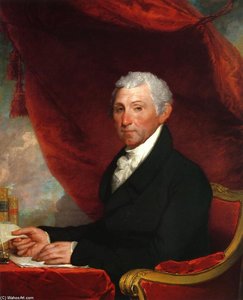
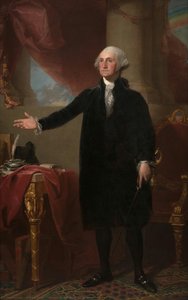
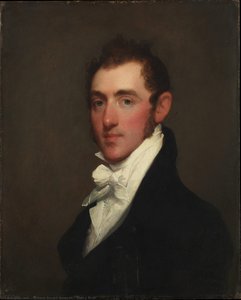
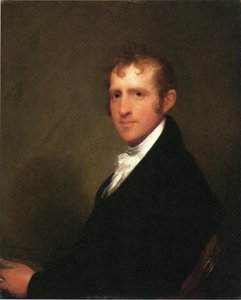
Artist Biography
Gilbert Stuart: A Life in Portraiture
- Born: December 3, 1755, Saunderstown, Rhode Island
- Died: July 9, 1828, Boston, Massachusetts
- Nationality: American
- Movement: Neoclassicism
- Known for: Portraiture, particularly portraits of prominent figures in early American history.
Early Life and Training
- Gilbert Stuart was born into a family with Scottish roots; his father, also named Gilbert, was an inventor who established the first snuff mill in Rhode Island.
- His artistic talent emerged at a young age, demonstrating skill even as a child.
- At 14, he painted "Dr. Hunter's Spaniels," showcasing early promise.
- He traveled to Scotland around 1771 to study under Cosmo Alexander, but returned after Alexander’s death in 1775.
- Further training occurred in London with Benjamin West, a prominent American painter residing in England, from 1775 to 1780. This period was crucial for developing his artistic style and gaining recognition within the Royal Academy.
Artistic Career and Major Works
- Stuart's career faced challenges during the American Revolution, prompting him to relocate to England in 1775.
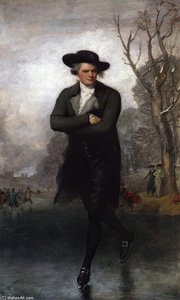
- He achieved early success with "The Skater" (1782), a portrait that established his reputation.
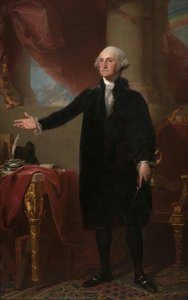
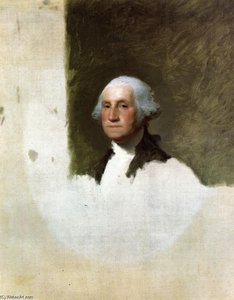
- His most famous work is the unfinished portrait of George Washington, known as the Athenaeum Portrait (begun in 1796). This image has become iconic, appearing on U.S. currency and postage stamps. Stuart produced numerous copies of this portrait for patrons across America and Europe.
- He painted portraits of several other prominent figures including John Adams, Thomas Jefferson, James Madison, and many members of the Federalist elite.
- Stuart’s style was characterized by a Neoclassical approach, emphasizing realism and capturing the likeness and character of his subjects. He often employed a dramatic use of light and shadow to enhance the portraits' impact.
Influences and Development
- Cosmo Alexander provided early training in technique and composition.
- Benjamin West’s influence was significant, shaping Stuart’s understanding of portraiture and artistic principles.
- The Neoclassical movement, with its emphasis on classical forms and ideals, heavily influenced his style.
- Stuart's own observations and interactions with his subjects contributed to the psychological depth and realism in his portraits. He aimed to capture not just a likeness but also the character and personality of those he painted.
Historical Significance and Legacy
- Gilbert Stuart is considered one of America’s foremost portraitists, playing a vital role in documenting the early years of the United States.
- The Athenaeum Portrait of George Washington has become an enduring symbol of American identity and leadership.
- His portraits provide valuable historical insights into the lives and appearances of prominent figures from the late 18th and early 19th centuries.
- Stuart’s work is represented in major museums across the United States and Europe, ensuring his legacy continues to be appreciated by generations.
- He established a distinct American style of portraiture that blended European techniques with uniquely American sensibilities.
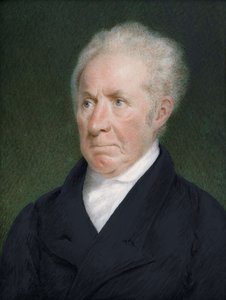
Gilbert Stuart
1755 - 1828 , United Kingdom
Quick Facts
- Artistic Movement Or Style: Neoclassical
- Artists Who Influenced This Artist:
- Cosmo Alexander
- Benjamin West
- Date Of Birth: December 3, 1755
- Date Of Death: July 9, 1828
- Full Name: Gilbert Charles Stuart
- Nationality: American
- Notable Artworks:
- Dr. Hunter's Spaniels
- The Skater
- Athenaeum Portrait of Washington
- Place Of Birth: Saunderstown, United Kingdom
Related Articles

Giclée Prints: Archival Quality & Aesthetic Nuances for the Discerning Collector
Explore the world of giclée prints with ArtsDot. Learn about archival quality, aesthetic nuances & investment potential. Expert guidance for discerning art collectors seeking museum-quality reproductions and lasting value.

The Enduring Legacy of Fine Art Prints: Technique, History & Aesthetic Impact
Explore the rich history & techniques of fine art prints. Discover investment potential, assess authenticity, and learn how to preserve your collection with expert guidance. Trusted insights for discerning collectors.

Echoes of Time: Exploring the Enduring Appeal & Historical Context of Vintage Art Prints
Explore the captivating world of vintage art prints! Discover their history, collecting tips & enduring appeal. Expert insights on chromolithography and building a legacy collection with ArtsDot.

The Enduring Legacy of Printmaking: Techniques, Themes & Artistic Innovation Across Centuries
Explore the rich history of printmaking with ArtsDot. Discover techniques from intaglio to lithography, learn about collecting valuable prints & find museum-quality reproductions. Expert insights for art enthusiasts and collectors.
The Enduring Legacy of Woodblock Printmaking: Technique, History & Artistic Expression
Explore the rich history of woodblock printmaking – from ancient techniques to Ukiyo-e masterpieces. Discover expert insights on collecting, preserving & appreciating this enduring art form.