A Venetian Secret Revealed: Giorgione’s “Virgin and Child” (The Tallard Madonna)
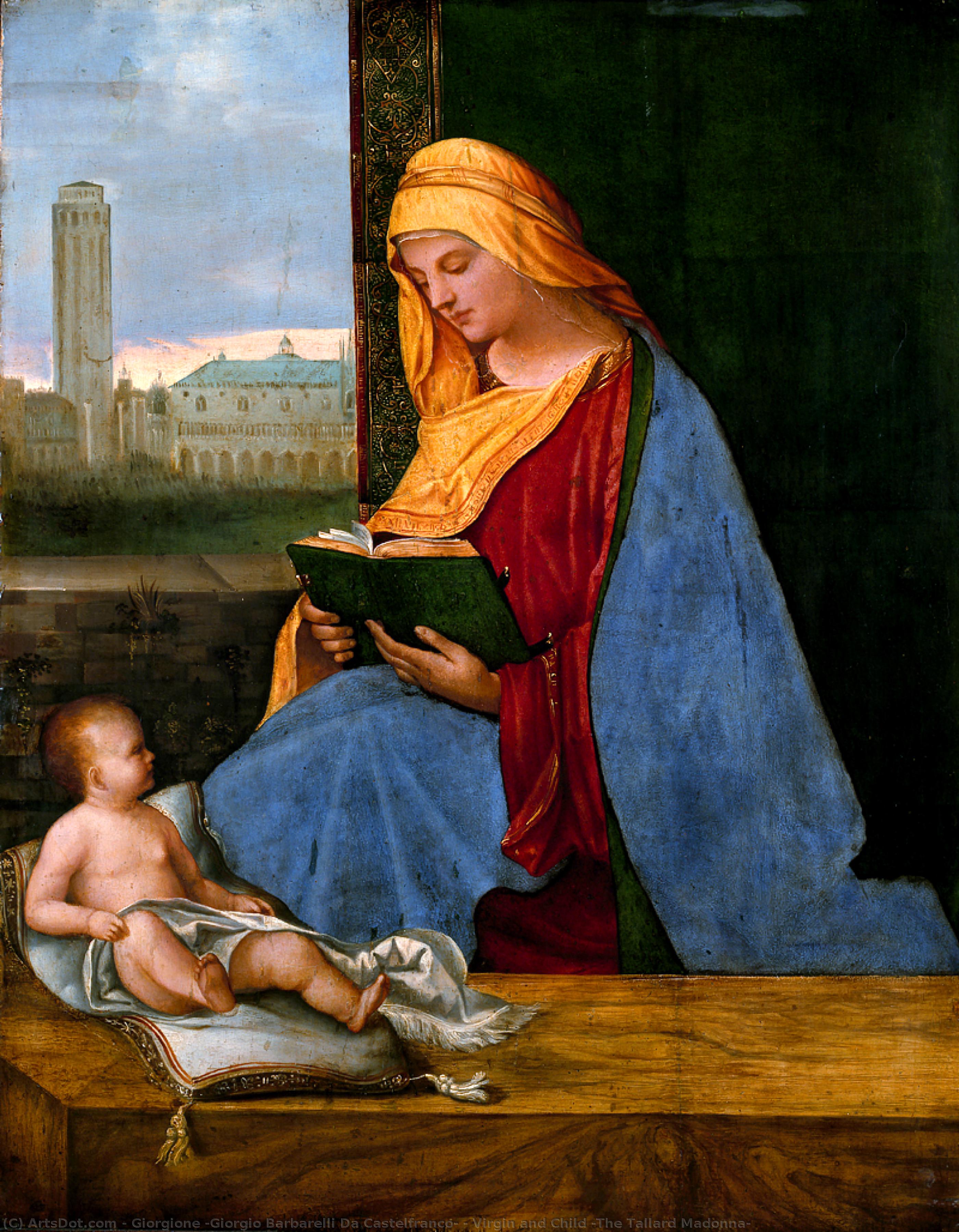
Giorgione's "Virgin and Child," often referred to as the “Tallard Madonna,” is not merely a painting; it’s an enigma wrapped in Venetian light, a whispered secret from one of art history’s most elusive figures. Painted in 1510, just before his untimely death at the age of thirty-two, this masterpiece offers a glimpse into the mind of a master who defied easy categorization and continues to captivate viewers centuries later. The work resides within the confines of a relatively small canvas – 76 x 60 cm – yet it explodes with an almost unbearable richness of color and detail, demanding prolonged contemplation.
The scene unfolds with a quiet intimacy: Mary, dressed in a sumptuous red and blue gown, holds her infant son close. Her expression is serene, thoughtful even, as she gazes down at the child. The boy, bathed in soft light, appears utterly absorbed in his mother’s presence, his small hand resting gently on her garment. The architectural backdrop – a stylized church with a soaring tower – isn't merely decorative; it subtly anchors the scene within a religious context, hinting at the sacred nature of this maternal bond. The cloudy sky above adds an atmospheric depth, suggesting both serenity and perhaps a touch of melancholy—a fitting reflection on the artist’s own brief life.
The Painter’s Palette: Technique and Venetian Innovation
Giorgione's genius lay not in dramatic gestures or bold outlines, but in his masterful manipulation of color and light. He employed a technique known as *sfumato*, perfected by Leonardo da Vinci, to create hazy, almost dreamlike effects. Observe how the edges of forms soften, blending seamlessly into one another—particularly noticeable in Mary’s drapery and the child's features. This deliberate blurring contributes significantly to the painting’s ethereal quality, evoking a sense of timelessness.
- The use of muted earth tones – ochres, siennas, and umbers – forms the foundation of the palette, creating a harmonious and subtly luminous effect.
- Bold splashes of red and blue draw the eye to Mary’s garments, emphasizing her importance within the composition.
- Giorgione's layering of thin glazes—a hallmark of Venetian painting—allows light to penetrate through the paint, creating a remarkable sense of depth and luminosity.
A Portrait of a Lost Master: Historical Context and Symbolism
Understanding Giorgione’s life is intrinsically linked to understanding his art. Born in Castelfranco Veneto, he was deeply rooted in the vibrant artistic community of Venice, a city renowned for its patronage of the arts and its embrace of sensual beauty. He likely apprenticed under Giovanni Bellini, absorbing the established Venetian style before developing his own distinctive approach – one characterized by an almost poetic sensibility.
The “Tallard Madonna” is believed to be inspired by a miraculous image of the Virgin Mary said to have appeared in the chapel of the Tallard family in France. This connection adds another layer of intrigue, suggesting that Giorgione was not simply depicting a religious scene but also engaging with a powerful devotional tradition. The book held open by Mary could symbolize her role as a teacher and guide, while the architectural setting subtly references the Church and its role as a sanctuary.
Capturing Emotion: The Enduring Appeal
Despite the mystery surrounding Giorgione’s life and artistic intentions, “Virgin and Child” continues to resonate with viewers today. Its quiet intimacy, luminous colors, and masterful use of *sfumato* create an atmosphere of profound serenity and contemplation. It's a painting that invites us to slow down, to observe closely, and to connect with the timeless beauty of motherhood and faith. ArtsDot’s meticulously crafted hand-painted reproductions offer a unique opportunity to experience this Venetian masterpiece in stunning detail, bringing Giorgione’s enigmatic vision into your home or studio.