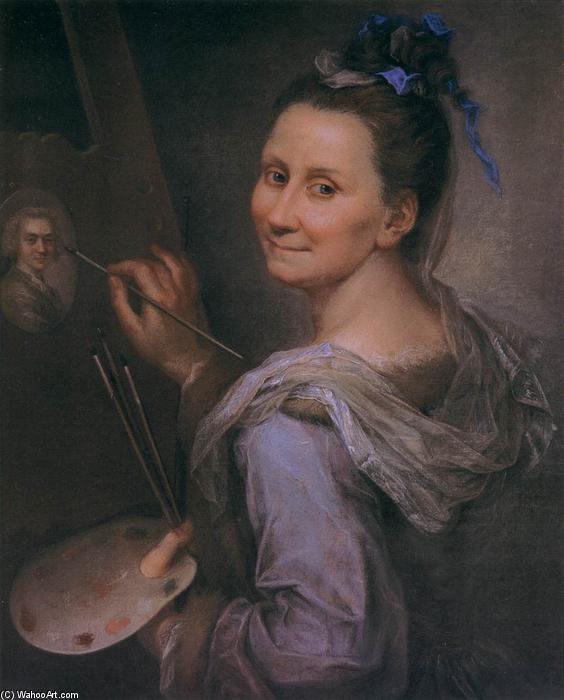
A Glimpse of a Florentine Lady: The Self-Portrait by Giovanna Fratellini
The pastel on paper “Self-Portrait” by Giovanna Fratellini, created in 1720 and now residing within the hallowed halls of the Galleria degli Uffizi in Florence, is more than just a likeness; it’s a carefully constructed invitation into the world of a remarkable artist. This intimate work transcends mere representation, offering a poignant glimpse into the life, artistic sensibilities, and quiet confidence of a woman navigating the complexities of courtly society during the height of the Baroque period. Measuring 72 x 57 cm, it’s a deceptively small canvas that holds within it a wealth of detail and emotional resonance.
Giovanna Fratellini's story is intertwined with the grandeur of the Medici court. As lady-in-waiting to Grand Duchess Vittoria della Rovere, she benefited from an unparalleled opportunity for artistic refinement – a privilege afforded to few women of her era. This position not only provided access to influential patrons but also immersed her in the vibrant cultural landscape of Florence, shaping her style and informing her subject matter. The portrait itself speaks volumes about this privileged existence, hinting at the elegance and sophistication that defined Florentine nobility during the 18th century.
The Language of Pastel: Technique and Atmosphere
What immediately captivates the viewer is Fratellini’s masterful use of pastel. Unlike the bolder hues often associated with Baroque painting, pastel lends a remarkable softness and delicacy to the portrait. The subtle gradations of color – from the blush of her cheeks to the delicate shading around her eyes – create an ethereal atmosphere, almost as if capturing a fleeting moment of contemplation. The technique itself is incredibly demanding, requiring meticulous layering and blending to achieve the desired effects. Notice how she builds up texture in the folds of her dress, suggesting both fabric’s weight and its luxurious quality.
Beyond the pastel medium, Fratellini's attention to detail is truly impressive. The intricate rendering of her hair – styled with a graceful blue ribbon or bow – speaks to her meticulous nature and her desire to capture every nuance of her subject’s appearance. The palette held in her left hand, a vibrant collection of colors, isn’t merely decorative; it's a symbolic representation of her profession as an artist, highlighting the tools of her trade. The careful positioning of these elements reinforces the portrait’s central theme: self-reflection and artistic identity.
Symbolism and Intimacy
The subject’s gentle smile and direct gaze are particularly striking. It's not a boisterous, theatrical expression; rather, it conveys a quiet confidence and an awareness of her own beauty and intelligence. Her eyes meet the viewer’s directly, creating a powerful connection that transcends time. The inclusion of the palette is significant – it’s a declaration of her profession, but also a subtle invitation to understand her creative process. It suggests she's not just presenting herself as an object of admiration, but as a woman engaged in a deeply personal and skilled craft.
The dark background serves to further emphasize the subject, drawing our attention entirely to her face and attire. This compositional choice is typical of portraiture during this period, prioritizing the sitter’s presence and personality. Ultimately, “Self-Portrait” by Giovanna Fratellini is a testament to her artistic skill, her understanding of Baroque aesthetics, and her ability to capture not just a likeness but also the essence of a woman living within a remarkable historical context. It remains a captivating work that continues to inspire appreciation for the artistry of this often-overlooked figure of the Florentine Baroque.