A Divine Encounter with the Early Renaissance
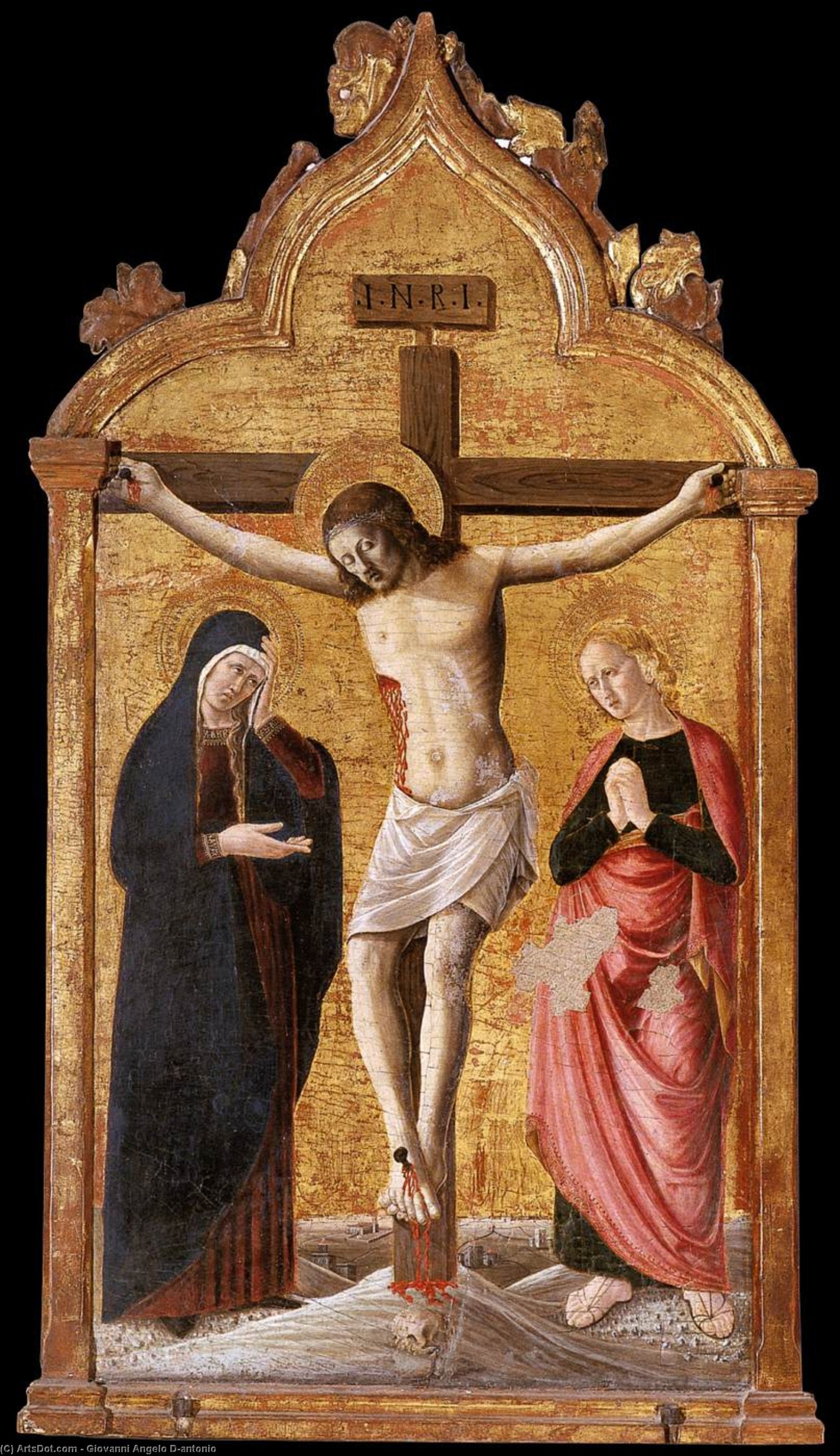
In the quiet, hallowed atmosphere of the mid-15th century, certain works of art were conceived not merely as decorations, but as windows into the divine. Giovanni Angelo d’Antonio’s The Crucifixion, dating to 1456, stands as a profound testament to this era of spiritual intensity. This exquisite tempera on panel painting captures the pivotal moment of Christian theology with a raw, devotional power that has captivated viewers for centuries. As one gazes upon the central figure of Christ, suspended upon the cross, there is an immediate sense of being drawn into a sacred narrative where every brushstroke serves to bridge the gap between the earthly and the eternal.
The composition is masterfully structured to direct the soul's eye toward the center of sacrifice. Flanked by the poignant figures of Mary Magdalene and Mary, the mother of James the Less, the scene is a study in human grief and divine endurance. The artist utilizes a shallow perspective, a hallmark of the Early Renaissance, which pushes the figures toward the viewer, creating an intimate, almost confrontational encounter with the sacred event. This lack of deep spatial recession ensures that the emotional weight of the mourning figures remains at the forefront, preventing any architectural distraction from the central tragedy.
Mastery of Light and Pigment
Technically, the work is a triumph of the tempera medium. The smooth application of paint allows for a meticulous rendering of anatomical detail and the heavy, rhythmic folds of drapery that define the figures' presence. D’Antonio employs a dramatic lighting scheme, where an unseen, celestial light source casts deep, evocative shadows across the flesh of Christ and the sorrowful faces of his companions. This chiaroscroll effect lends a sculptural volume to the bodies, making the suffering feel tangible and real.
The color palette is both somber and regal, dominated by rich ochres, deep reds, and midnight blues that emerge from a dark, atmospheric background. These tones are harmoniously balanced by the glint of gold, which lends the panel an ethereal glow. Such a palette does more than provide aesthetic beauty; it reinforces the symbolic weight of the scene, where the warmth of the earth meets the cold reality of death. For the discerning collector or interior designer, this piece offers a sophisticated interplay of light and shadow that can serve as a profound focal point in any curated space.
Symbolism and Emotional Resonance
Beyond its technical brilliance, The Crucifixion is a dense tapestry of religious symbolism. The halo above Christ’s head serves as a singular, luminous circle of divinity amidst the surrounding darkness, while the very structure of the ornate gilded frame acts as a visual reliquary, containing and protecting the sacred scene within. Every element—from the slumped posture of the mourners to the precise rendering of the cross—is designed to evoke a sense of reverence, sorrow, and deep contemplation.
For those seeking to bring a piece of history into their homes, a high-quality reproduction of this masterpiece offers more than just visual elegance. It brings an atmosphere of timelessness and spiritual depth. Whether placed in a quiet study, a grand hallway, or a dedicated gallery space, the painting invites a moment of pause, encouraging the viewer to reflect on the themes of sacrifice and enduring faith that have resonated through the ages.